
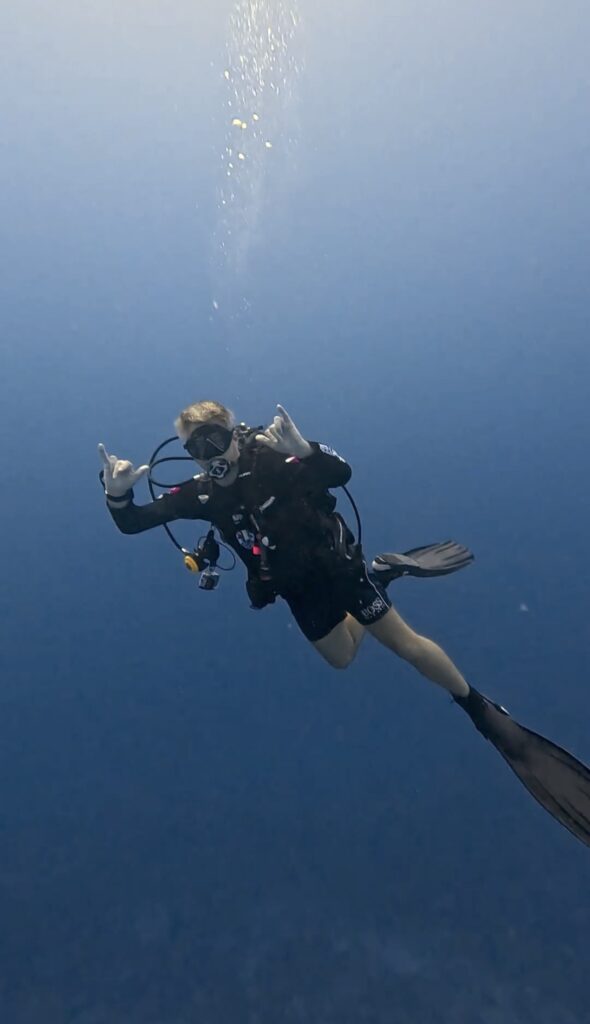
Scuba diving is more than swimming underwater. It is a mix of physics, pressure, buoyancy, breathing gases, body control, equipment design, and safe dive planning. Once you descend below the surface, the underwater world works by different rules than life on land.
If you understand the science of diving, scuba starts to make much more sense. Equalizing your ears, controlling buoyancy, breathing calmly, ascending slowly, and respecting depth limits all come back to simple science.
This guide explains scuba diving science in a practical way: underwater pressure, pressure at 10 meters, 50 meters and deeper depths, buoyancy, decompression, gases, slow ascents, the Venturi effect, surge, water temperature, and why the sea bottom can change dive conditions.
Fast answer: The science of scuba diving is mainly about pressure, buoyancy, breathing compressed gas, equalizing air spaces, managing nitrogen, ascending slowly, and staying within safe dive limits. Good training turns these ideas into calm, safe habits underwater.
Why Scuba Diving Has So Much Science Behind It
When you enter the water, your body enters an environment where pressure increases, air spaces compress, gases behave differently, light changes, sound travels differently, and movement becomes slower. Scuba equipment helps you breathe, control buoyancy, monitor depth, and stay underwater safely, but the diver still needs to understand the basics.
This is why scuba diving is not only about swimming. It is about learning how pressure affects your body, how to control your position in the water, how to breathe slowly, and how to follow safe ascent rules.
If you are new to diving, you do not need to master every theory before your first experience. For a beginner-friendly introduction, start with Discover Scuba Diving. If you want to become certified and learn the theory properly, the next step is the PADI Open Water Diver Course.
How Does Pressure Change Underwater?
Pressure is one of the most important concepts in scuba diving. At the surface, your body is under about 1 atmosphere of pressure, also called 1 ATA. As you go deeper, the weight of the water above you increases the pressure.
In seawater, pressure increases by about 1 atmosphere every 10 meters of depth. That means the deeper you go, the more pressure affects the air spaces in your body and equipment.
What is the pressure at 10 meters underwater?
At 10 meters underwater, the pressure is about 2 atmospheres absolute, or 2 ATA. That is roughly twice the pressure you experience at the surface.
This is why beginner divers quickly notice pressure changes in their ears and mask. The air spaces compress as you descend, so you need to equalize early and often.
What is the pressure at 50 meters underwater?
At 50 meters underwater, the pressure is about 6 atmospheres absolute, or 6 ATA. This is far beyond normal beginner recreational diving and requires advanced training, planning, and experience.
For most recreational divers, the important lesson is not to chase depth. The important lesson is to understand that every 10 meters adds a large pressure change. This affects your air consumption, buoyancy, decompression risk, and safety limits.
What about pressure at 100 meters underwater?
At 100 meters underwater, pressure is about 11 atmospheres absolute, or 11 ATA. This is not recreational diving. Dives at this depth belong to technical diving and require specialized training, equipment, gas planning, decompression procedures, and experience.
For normal recreational divers, 100 meters is useful only as an example of how dramatically pressure increases with depth. It is not a realistic recreational dive goal.
Why does pressure increase with depth?
Pressure increases with depth because water has weight. The deeper you go, the more water is above you, and that water pushes on your body from every direction.
Unlike air, water is dense. Even a small change in depth can create a noticeable change in pressure. That is why equalization, controlled descents, buoyancy control, and proper dive planning are essential parts of scuba diving.
Why Do Divers Need to Equalize?
As pressure increases underwater, air spaces in your body compress. The most obvious places are your ears, sinuses, and mask. Equalizing adds air into those spaces so the pressure inside matches the pressure outside.
If you do not equalize, you can feel pressure or pain in your ears. During scuba training, divers learn to equalize gently and often, especially during descent.
The rule is simple: equalize before it hurts. If you feel pressure, stop descending, signal your instructor or guide, go slightly shallower if needed, equalize, and continue only when you are comfortable.
For a detailed skill guide, read How to Equalize Your Ears While Scuba Diving.
Beginner tip: Equalization should feel gentle. Do not force your ears. If you cannot equalize, stop descending and ask your instructor or guide for help.
How Are Gases Affected When You Dive Deeper?
Scuba divers breathe compressed gas underwater. In recreational diving, most divers breathe regular air, which is mainly nitrogen and oxygen. As you go deeper, pressure changes how these gases behave in your body.
There are three simple ideas every diver should understand:
- Boyle’s Law: as pressure increases, gas volume decreases. As pressure decreases, gas volume expands.
- Henry’s Law: under higher pressure, more gas can dissolve into body tissues.
- Dalton’s Law: at depth, each gas you breathe has a higher partial pressure.
You do not need to be a scientist to dive safely, but these ideas explain why divers equalize, control buoyancy, monitor depth, ascend slowly, and follow dive computer limits.
Why Do Divers Have to Ascend Slowly?
Divers ascend slowly because pressure decreases as they come up. As pressure decreases, gases expand and dissolved nitrogen leaves the body.
If a diver comes up too fast, nitrogen can form bubbles in the body, increasing the risk of decompression sickness. A slow ascent gives the body more time to release nitrogen safely.
Slow ascents also help divers control buoyancy. As you ascend, the air in your BCD and wetsuit expands, which can make you rise faster if you do not control it. This is why divers release air from the BCD during ascent and maintain a controlled ascent rate.
What Is Decompression in Scuba Diving?
Decompression is the process of allowing dissolved gases, mainly nitrogen, to leave your body as pressure decreases during ascent.
Most beginner recreational dives are planned as no-decompression dives. This means the diver can ascend directly to the surface while following a safe ascent rate and making a safety stop when recommended.
Dive computers help track depth, time, nitrogen loading, ascent rate, and safety stop information. This is one reason certified divers should understand their dive computer and follow the dive plan.
What is decompression sickness?
Decompression sickness, often called DCS, can happen when nitrogen forms bubbles in the body after pressure decreases too quickly. Symptoms can vary and may include joint pain, fatigue, dizziness, numbness, breathing problems, or more serious signs.
The best prevention is simple: stay within your training limits, follow your dive computer, ascend slowly, make safety stops when needed, stay hydrated, and avoid aggressive dive profiles.
Safety Stops: Why Divers Pause Before Surfacing
A safety stop is a short pause near the end of a dive, usually around 5 meters / 15 feet for about 3 minutes. It gives your body more time to release nitrogen before returning to the surface.
Safety stops are a simple habit that adds a margin of safety, especially after deeper dives or repetitive dives.
For a full explanation, read Safety Stops in Scuba Diving: Depth, Time & Why They Matter.
How Does Buoyancy Work in Scuba Diving?
Buoyancy is the force that makes an object float, sink, or stay neutral in the water. In scuba diving, buoyancy control is one of the most important skills.
A diver can be:
- Positively buoyant: floating upward
- Negatively buoyant: sinking downward
- Neutrally buoyant: staying at the same depth without sinking or rising
Good buoyancy control helps you save air, protect coral, avoid silting in cenotes, stay relaxed, and enjoy the dive more. It is especially important during cenote diving, reef dives, and deeper dives.
What is neutral buoyancy?
Neutral buoyancy means you are neither sinking nor floating upward. You can hover in the water with small breathing adjustments and good body position.
This is one of the key skills divers practice during the Open Water Course and improve during Advanced Open Water, buoyancy training, and regular guided dives.
At what depth do you lose buoyancy?
You do not lose buoyancy at one exact depth. Instead, buoyancy changes gradually as pressure increases. As you descend, the air in your wetsuit and BCD compresses, which can make you more negatively buoyant.
This is why divers add small amounts of air to the BCD during descent and release air during ascent. The goal is to stay controlled, not over-inflate, and make small adjustments.
How Does Breathing Affect Buoyancy?
Your lungs also affect buoyancy. When you inhale, your lung volume increases slightly and you may rise a little. When you exhale, your lung volume decreases and you may sink slightly.
Experienced divers use calm breathing to fine-tune buoyancy. They do not hold their breath. They breathe normally and use small lung volume changes to hover smoothly.
This is one reason relaxed breathing is so important. Good breathing control helps with buoyancy, air consumption, comfort, and safety.
If you want practical advice, read How to Improve Air Consumption While Diving.
Why Divers Never Hold Their Breath
The most important breathing rule in scuba diving is simple: never hold your breath. This rule exists because air expands as pressure decreases during ascent.
If a diver holds their breath while ascending, expanding air in the lungs can create serious risk. That is why divers are trained to breathe continuously and ascend slowly.
This is one of the first safety rules taught in scuba training. It is also one reason why professional supervision matters for beginners.
If you have never dived before and want a safe introduction, choose Discover Scuba Diving in Playa del Carmen. If you want full training, choose the PADI Open Water Course.
What Is the Venturi Effect in Scuba Diving?
The Venturi effect describes how moving air can create a pressure difference that helps airflow continue. In scuba diving, this idea is used in many regulators to make breathing feel easier once inhalation begins.
Some scuba regulators have a Venturi switch or a dive/pre-dive switch. In dive mode, airflow is assisted so breathing feels smoother underwater. In pre-dive mode, the regulator is less likely to free-flow at the surface or when entering the water.
For divers, the practical point is simple: your regulator is designed to help deliver air comfortably at depth, but you should understand how your equipment works and listen carefully during the dive briefing.
What Is Surge in Scuba Diving?
Surge is the back-and-forth underwater movement of water caused by wave action, especially in areas close to shore or over shallow reefs.
If you have ever felt the water move you forward and backward during a dive, that is surge. It is not the same as current. Current usually moves water in one main direction, while surge moves divers back and forth with the energy of waves.
Surge can affect buoyancy control, photography, comfort, and how close you should stay to the reef or bottom. On days with stronger surge, divers need better body control and awareness.
Why Does the Sea Bottom Affect Diving Conditions?
The type of bottom can make a big difference during a dive. Sand, silt, coral, rock, and seagrass all behave differently when water moves over them.
Fine sand or silt can reduce visibility quickly if it is stirred up by fins, surge, or current. Rocky or coral areas may keep visibility better because they do not create the same cloud of sediment. This is why good fin technique and buoyancy control matter, especially in sensitive environments.
In cenotes, poor buoyancy or bad finning can create a silt cloud that affects visibility for everyone behind you. On reefs, good control helps protect coral and marine life.
How Does Water Temperature Affect Divers?
Water removes heat from the body much faster than air. Even in the warm Mexican Caribbean, divers can get cold during longer dives, repetitive dives, or cenote dives.
Cenotes are usually cooler than the ocean, so exposure protection matters. A wetsuit helps slow heat loss and keeps divers more comfortable throughout the dive.
Comfort is not only about feeling warm. Cold divers can get tired faster, use more air, and enjoy the dive less.
Light, Color, and Sound Underwater
The underwater world looks and sounds different because water changes how light and sound travel.
Light and color underwater
Colors fade as you go deeper. Red disappears first, then orange and yellow. This is why underwater photos often look blue or green unless you use lights, filters, or color correction.
Sound underwater
Sound travels differently underwater. It can be harder to tell exactly where a sound is coming from. Divers use hand signals, eye contact, lights, and guide communication instead of speaking underwater.
For more about the connection between divers underwater, read Bonds Beneath the Waves.
How Dive Gear Uses Science
Scuba gear is designed around the same scientific principles: pressure, air delivery, buoyancy, thermal protection, visibility, and safety.
- Regulator: delivers breathable air at the correct pressure.
- BCD: helps control buoyancy.
- Weights: help offset natural buoyancy from the body and wetsuit.
- Mask: creates an air space so your eyes can focus underwater.
- Fins: help you move efficiently with less effort.
- Wetsuit: slows heat loss and adds comfort.
- Dive computer: tracks depth, time, ascent rate, nitrogen loading, and safety-stop information.
Understanding what the gear does makes divers more confident. It also helps explain why fit, maintenance, and proper setup matter.
How Science Makes Diving Safer
The science of diving is not only theory. It is the reason divers follow practical safety rules.
- Equalize early and often because pressure affects air spaces.
- Never hold your breath because expanding air can be dangerous during ascent.
- Ascend slowly because nitrogen needs time to leave the body safely.
- Control buoyancy because pressure changes air volume in your BCD and wetsuit.
- Use a dive computer because depth and time affect nitrogen loading.
- Stay within your certification, comfort level, and dive plan.
These rules are introduced during the Open Water Course, reinforced during continuing education, and used on every safe dive.
How This Applies to Diving in Playa del Carmen
Playa del Carmen is a great place to experience scuba diving science in real life. Local reef dives show how buoyancy, current, surge, and marine life interact. Cenote dives show why trim, buoyancy, and visibility control are so important. Cozumel drift dives show how water movement changes the dive experience.
If you are new to diving, the PADI Open Water Course in Playa del Carmen teaches the essential science and safety skills in a practical way. If you are already certified and want more confidence, the Advanced Open Water Course helps you improve buoyancy, navigation, deeper dive awareness, and overall comfort.
If you have not dived in a while, the PADI ReActivate Refresher Course is one of the best ways to rebuild confidence before joining reef dives, cenotes, Cozumel, or deeper dive sites.
If you want to better understand enriched air and no-decompression planning, the PADI Enriched Air Nitrox Course is a strong next step for certified divers.
If you are already certified and want to apply these skills in real ocean conditions, start with a 2-tank local reef dive in Playa del Carmen. It is one of the easiest ways to get comfortable in the area before planning cenotes, Cozumel, wreck diving, or bull sharks.
What If You Feel Nervous Underwater?
Feeling nervous is normal, especially for new divers or people returning after a long break. The solution is not to force yourself into a harder dive. The solution is to choose the right experience, move slowly, breathe calmly, and dive with professional support.
If fear or anxiety is your main concern, read How to Stay Calm Underwater While Scuba Diving.
If you are certified but rusty, the PADI ReActivate Refresher Course is usually the best first step.
Quick Science-to-Dive Guide
| Science Concept | What It Means Underwater | Useful Next Step |
|---|---|---|
| Pressure | Air spaces compress and expand with depth changes. | Open Water Course |
| Equalization | Your ears and mask need pressure adjustment during descent. | Equalizing Guide |
| Buoyancy | Controls whether you float, sink, or hover. | Advanced Open Water |
| Breathing | Slow breathing helps comfort, control, and air consumption. | Air Consumption Tips |
| Nitrogen | Depth and time affect no-decompression limits. | Nitrox Course |
| Ascent rate | Slow ascents and safety stops add safety margin. | Safety Stops |
| Training | Turns diving science into safe habits. | Discover Scuba Diving |
Frequently Asked Questions About the Science of Diving
“`
What is the science behind scuba diving?
The science behind scuba diving includes pressure, buoyancy, breathing compressed gas, equalization, nitrogen absorption, decompression, no-decompression limits, ascent rates, safety stops, equipment behavior, and how the body responds underwater.
How much pressure is there at 10 meters underwater?
At 10 meters underwater, pressure is about 2 atmospheres absolute, or 2 ATA. That is roughly double the pressure at the surface, which is why divers need to equalize their ears and mask during descent.
How much pressure is there at 50 meters underwater?
At 50 meters underwater, pressure is about 6 atmospheres absolute, or 6 ATA. This is beyond beginner recreational diving and requires advanced training, planning, and experience.
Why do scuba divers ascend slowly?
Scuba divers ascend slowly because nitrogen absorbed during the dive needs time to leave the body safely. A slow ascent also helps control expanding air in the BCD, wetsuit, and lungs.
What is decompression in diving?
Decompression is the process of allowing dissolved gases, mainly nitrogen, to leave the body as pressure decreases during ascent. Recreational divers manage this with dive computers, ascent rates, safety stops, and depth limits.
Why do divers need to equalize?
Divers equalize because air spaces in the ears, sinuses, and mask are affected by pressure changes during descent. Equalizing helps match the pressure inside those air spaces with the surrounding water pressure.
What is neutral buoyancy?
Neutral buoyancy means a diver can stay at the same depth without sinking or floating upward. It is one of the most important scuba diving skills because it helps protect the reef, save energy, improve air consumption, and make diving more comfortable.
What is the Venturi effect in scuba diving?
In scuba diving, the Venturi effect helps explain how some regulators assist airflow, making breathing feel easier once inhalation begins. Many regulators use a dive/pre-dive switch related to this airflow behavior.
What is surge in scuba diving?
Surge is the back-and-forth movement of water caused by wave action, usually near shore or over shallow reefs. It can move divers forward and backward during a dive and requires good buoyancy, body control, and awareness.
Do I need to understand all the science before trying scuba?
No. If you try scuba for the first time, your instructor will explain what you need to know in a simple and practical way. If you want full certification, the Open Water Course teaches the theory and skills step by step.
What should I do if I am certified but forgot the theory?
If it has been a long time since your last dive or the theory feels unfamiliar, take a refresher before joining more advanced dives. A refresher helps rebuild confidence, review key skills, and make your next dive safer and more enjoyable.
See our PADI ReActivate Refresher Course.
“`
Final Thoughts: Diving Is Science You Can Feel
The science of diving is not just something you read in a manual. You feel it every time you descend, equalize, control your buoyancy, breathe from a regulator, hover above a reef, or ascend slowly after a dive.
Understanding pressure, gases, buoyancy, decompression, surge, equipment behavior, and safe ascent rules makes you a safer and more confident diver. And the best way to understand it is to experience it with proper training and professional guidance.
Ready to experience it? If you are new to scuba, start with Discover Scuba Diving. If you want to become certified, choose the PADI Open Water Course. If you are certified but rusty, choose the PADI ReActivate Refresher Course. If you are already certified and comfortable, apply these skills on a 2-tank local reef dive in Playa del Carmen.