
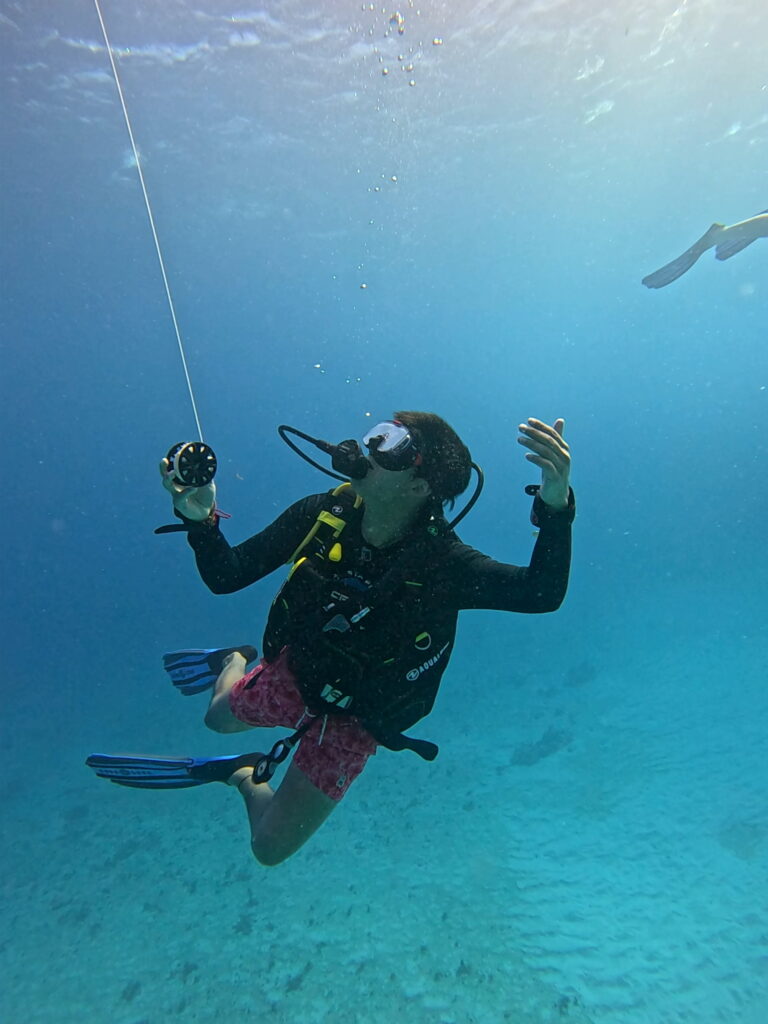
Safety stops are one of the most important habits in recreational scuba diving. They are simple, easy to understand, and give divers an extra safety margin before surfacing.
If you have ever wondered what a safety stop is, how deep it should be, how long it should last, or what happens if you miss one, this guide explains it in a clear and practical way.
At Xico Dive Center in Playa del Carmen, safety stops are part of normal dive planning for reef dives, Cozumel trips, cenotes, deeper dives, and training dives. They are not just a rule from a manual. They are a real habit that helps divers ascend slowly, stay in control, and finish the dive safely.
Fast answer: A safety stop is a short pause near the end of a scuba dive, usually at 5 meters / 15 feet for at least 3 minutes. It gives your body extra time to release nitrogen before surfacing and helps divers make a slower, more controlled final ascent.
What Is a Safety Stop in Scuba Diving?
A safety stop is a planned pause during your ascent before you return to the surface. Most recreational divers make this stop near the end of the dive at around 5 meters / 15 feet.
The main purpose is to give your body extra time to release nitrogen that was absorbed during the dive. When you dive, pressure increases and nitrogen dissolves into your body tissues. As you ascend and pressure decreases, your body releases that nitrogen. A slow ascent and a safety stop help this process happen more gradually.
A safety stop also gives divers time to check their buoyancy, stay with the group, check air supply, look for boat traffic or surface conditions, and finish the dive calmly instead of rushing to the surface.
How Deep Is a Safety Stop?
The standard safety stop depth is usually around 5 meters / 15 feet. Some dive computers may show a slightly different range, such as 3 to 6 meters or 10 to 20 feet, depending on the model and settings.
The exact number can vary slightly, but the idea is the same: stop shallow enough near the end of the dive to allow extra off-gassing before surfacing, while still staying underwater and in control.
During guided dives in Playa del Carmen, your dive guide will explain the safety stop plan during the briefing. On drift dives, the guide may deploy a surface marker buoy and the group will complete the safety stop together while drifting with the current.
How Long Should a Safety Stop Be?
A common recreational safety stop lasts at least 3 minutes. Many divers stay for 3 to 5 minutes, especially after deeper dives, repetitive dives, multi-day diving, or dives close to their no-decompression limit.
Your dive computer is the best tool to follow. If your computer asks for a longer stop, follow your computer and your guide’s instructions. If you are low on air, cold, uncomfortable, or there is another safety concern, the guide will make the best decision for the situation.
Why Are Safety Stops Important?
Safety stops are important because they add a conservative safety margin to recreational diving. They are not a replacement for good dive planning, but they help reduce risk and improve control at the end of the dive.
They give your body more time to release nitrogen
During a dive, nitrogen builds up in your body tissues. The deeper and longer the dive, the more important nitrogen management becomes. A safety stop gives your body extra time before you return to surface pressure.
They help prevent rushed ascents
Many problems happen near the end of a dive because divers are lighter, the air in the BCD expands, and the surface feels close. A safety stop slows everything down and reminds divers to ascend with control.
They improve buoyancy control
Holding a safety stop is excellent buoyancy practice. You need to stay at a stable depth, breathe calmly, avoid rising too fast, and make small BCD adjustments when needed.
They help the group stay together
On guided dives, the safety stop gives the group a chance to stay together before surfacing. This is especially useful on drift dives, boat dives, and dives with mixed experience levels.
They give time to check the surface
Before surfacing, divers should be aware of boats, waves, current, and the group position. The safety stop creates a calm moment to prepare for the final ascent.
Is a Safety Stop Mandatory?
For normal no-decompression recreational dives, a safety stop is generally considered an added precaution, not the same as a required decompression stop. However, it is a standard best practice and should be treated seriously.
Many dive computers will recommend or require a safety stop based on depth and time. Some dive centers and dive guides also make safety stops part of their normal procedures for all suitable dives.
At Xico Dive Center, the practical rule is simple: when conditions allow, we do the safety stop. It is a good habit, it adds a safety margin, and it helps divers finish the dive under control.
What Happens If You Miss a Safety Stop?
Missing a safety stop does not automatically mean something bad will happen. But it is not something to ignore, especially after a deeper or longer dive.
If you accidentally miss a safety stop, stay calm, tell your guide, monitor how you feel, and follow your dive computer’s instructions. Do not go back underwater on your own to “fix” the missed stop unless your guide and dive computer specifically allow a safe plan. In many cases, the correct response is to stay on the surface, rest, hydrate, avoid more diving until the situation is evaluated, and watch for symptoms.
If you feel unusual symptoms after diving, such as dizziness, numbness, tingling, joint pain, unusual fatigue, weakness, confusion, breathing difficulty, or skin changes, seek professional medical help and contact dive emergency support immediately. Do not try to self-diagnose decompression sickness.
Safety Stop vs Decompression Stop
A safety stop and a decompression stop are not the same thing.
A safety stop is an added precaution during a recreational no-decompression dive. It is usually done at 5 meters / 15 feet for at least 3 minutes.
A decompression stop is required by your dive plan or dive computer after exceeding no-decompression limits. If your computer gives you a decompression obligation, you must follow it. Recreational divers should stay within their training, certification level, and no-decompression limits unless they are properly trained for decompression diving.
Simple difference: A safety stop is an extra safety margin. A decompression stop is a required stop. Recreational divers should plan no-decompression dives and use safety stops as a conservative habit.
How to Do a Safety Stop Correctly
A good safety stop is calm, controlled, and planned. It should not feel like an emergency or a struggle to stay at depth.
1. Start your ascent early enough
Do not wait until you are almost out of air. A good safety stop starts with good gas management. Your guide will plan the dive so the group has enough gas for the ascent, safety stop, and surface.
2. Ascend slowly
Begin your ascent slowly and control your buoyancy. As you go shallower, air expands in your BCD and wetsuit, so you may need to release small amounts of air.
3. Stop around 5 meters / 15 feet
Use your dive computer or depth gauge to hold the correct depth. Do not bounce up and down. Try to stay relaxed and stable.
4. Hold the stop for at least 3 minutes
Follow your dive computer and your guide. If the plan is a 3-minute stop, stay for the full 3 minutes when conditions allow.
5. Keep breathing normally
Never hold your breath while scuba diving. Breathe calmly and continuously during the safety stop and final ascent.
6. Stay close to your buddy and guide
Do not swim away from the group during the safety stop. Stay close enough to communicate and surface together.
7. Make the final ascent slowly
After the safety stop, ascend slowly to the surface. Look up, listen, keep one hand raised if needed, and be aware of boats, waves, and other divers.
Common Safety Stop Mistakes
Most safety stop problems come from poor buoyancy, rushing, low air, or not paying attention to the dive computer.
- Ascending too fast before the stop: A safety stop does not fix a rushed ascent. The whole ascent should be controlled.
- Floating up during the stop: This usually happens when divers do not release enough air from the BCD during ascent.
- Holding the stop too deep or too shallow: Stay close to the depth shown by your computer or guide.
- Skipping the stop because you are bored: Three minutes is short. Stay patient and finish the dive properly.
- Arriving at the stop with very low air: Good gas management starts earlier in the dive.
- Ignoring the dive computer: Your dive computer tracks your profile. Pay attention to its warnings and instructions.
Safety Stops in Playa del Carmen
Playa del Carmen reef dives are often drift dives. This means the group moves with the current instead of swimming back to a fixed point. On these dives, the safety stop is usually done while drifting in open water, often with a surface marker buoy.
This makes buoyancy and group awareness very important. You should stay near your guide, watch your depth, control your breathing, and avoid floating away from the group.
For certified divers, local reef diving in Playa del Carmen is a great way to practice relaxed ascents and safety stops in real ocean conditions.
Safety Stops in Cozumel
Cozumel is famous for drift diving, clear water, walls, and current. Because many Cozumel dives can be deeper or longer than easy beginner reef dives, safety stops are an important part of the dive plan.
On a Cozumel dive trip from Playa del Carmen, divers should be comfortable with buoyancy, current, staying with the group, and following guide instructions during the ascent.
If you are certified but rusty, it is smart to do a refresher or local reef dive before joining more advanced drift dives.
Safety Stops in Cenotes
Cenotes are different from ocean dives. They are freshwater cavern environments with very clear visibility, rock formations, and sensitive areas where bad finning or buoyancy can reduce visibility.
Not every cenote dive profile is the same, but good buoyancy and calm ascents are always important. In cenotes, the focus is not only nitrogen management. It is also about trim, control, awareness, and respecting the environment.
If you are planning cenote diving near Playa del Carmen, tell us your certification level, last dive date, and experience. This helps us choose suitable cenotes and plan the dives safely.
Do Beginners Need to Learn Safety Stops?
Yes. Safety stops are introduced early because they are part of safe recreational diving habits. New divers learn that the end of the dive is not the time to rush.
If you have never dived before, Discover Scuba Diving is the easiest way to try scuba under direct professional supervision. If you want to become certified, the PADI Open Water Course in Playa del Carmen teaches you ascent control, buoyancy, dive planning, and safe diving habits.
Should Rusty Divers Do a Refresher Before Deeper Dives?
Yes, it is often a very good idea. If you have not dived for a year or more, or if you do not feel confident with buoyancy, air checks, mask skills, or ascents, a refresher can make your dives safer and more enjoyable.
A PADI ReActivate Refresher Course helps certified divers review important skills before joining reef dives, Cozumel, cenotes, wrecks, or seasonal bull shark dives.
Not sure if you need a refresher? If you do not remember how to control your ascent, hold a safety stop, clear your mask, check your air, or use your dive computer confidently, refresh first. You will enjoy your trip more.
Safety Stops and Dive Computers
Modern dive computers make safety stops easier. They track your depth, time, ascent rate, no-decompression limit, and safety stop countdown.
But a dive computer is only useful if you understand it. Before diving, make sure you know where to see:
- Current depth
- Maximum depth
- No-decompression limit
- Ascent rate warning
- Safety stop countdown
- Low battery or warning symbols
If you rent or use a new computer, ask your guide or instructor before the dive if you are unsure how to read it.
Frequently Asked Questions About Safety Stops
What is a safety stop in scuba diving?
A safety stop is a short pause near the end of a scuba dive, usually at 5 meters / 15 feet for at least 3 minutes. It gives your body extra time to release nitrogen before surfacing.
How deep should a safety stop be?
The standard safety stop depth is usually around 5 meters / 15 feet. Some dive computers may show a slightly different acceptable range.
How long should a safety stop last?
A common safety stop lasts at least 3 minutes. Some divers stay 3 to 5 minutes or longer depending on the dive profile, computer instructions, and conditions.
Is a safety stop required on every dive?
For normal no-decompression recreational dives, a safety stop is usually considered an added precaution, but it is a standard best practice and should be done when conditions allow.
What happens if I miss a safety stop?
Missing a safety stop does not automatically mean you will have a problem, but you should tell your guide, follow your dive computer, rest, avoid additional diving until the situation is evaluated, and watch for any unusual symptoms.
Is a safety stop the same as a decompression stop?
No. A safety stop is an extra safety margin during a no-decompression recreational dive. A decompression stop is required by your dive plan or computer after exceeding no-decompression limits.
Why do divers stop at 5 meters?
Divers stop near 5 meters because it is shallow enough to help the body continue releasing nitrogen before surfacing, while still allowing the diver to stay underwater and control the final ascent.
Can beginners do safety stops?
Yes. Beginners learn safety stops as part of safe recreational diving habits. The guide or instructor helps manage the stop during training and beginner dives.
Do I need a dive computer for a safety stop?
A dive computer is strongly recommended because it tracks depth, time, ascent rate, and safety stop information. Some divers also use a depth gauge and timer, but computers make it easier and safer.
Should I do a refresher if I forgot how to do a safety stop?
Yes. If you do not feel comfortable with buoyancy, ascents, safety stops, air checks, or your dive computer, a refresher is a smart first step before joining more advanced dives.
Final Thoughts: Safety Stops Are a Simple Habit That Matters
A safety stop is one of the easiest ways to add a margin of safety to recreational scuba diving. It gives your body extra time, helps you slow down, improves ascent control, and turns the final minutes of the dive into a calm routine.
Good divers do not rush to the surface. They plan the dive, monitor their air, control their buoyancy, ascend slowly, complete the safety stop when conditions allow, and surface as a group.
If you are learning to dive, coming back after a long break, or planning dives in Playa del Carmen, Cozumel, cenotes, or deeper sites, understanding safety stops will make you a more confident and safer diver.