
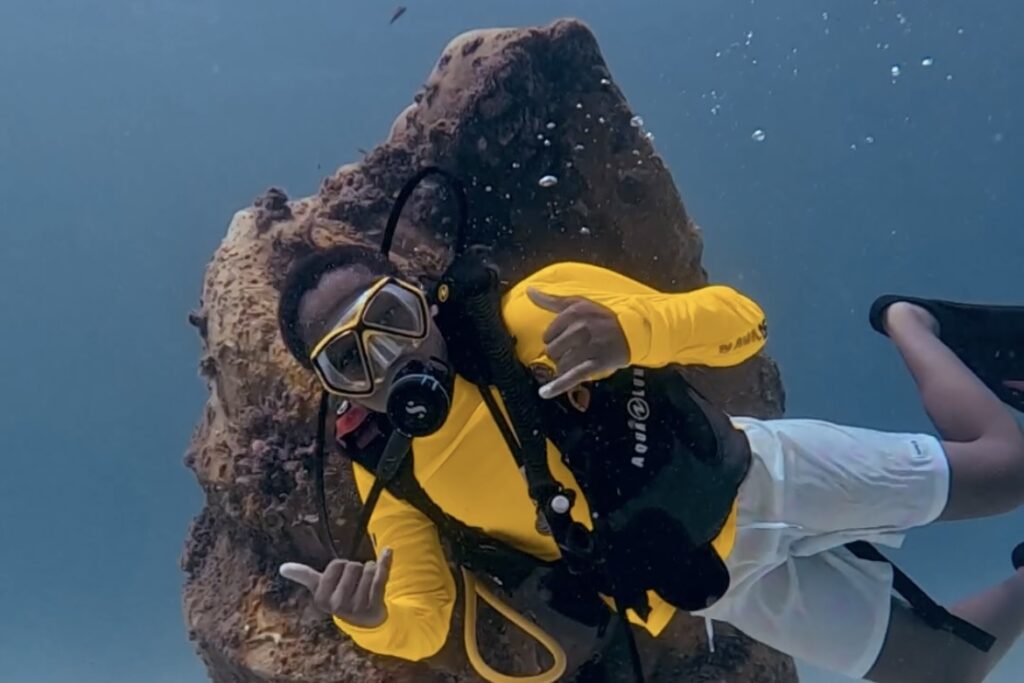
Ear pressure is one of the most common problems for new scuba divers. If you have ever felt pressure, discomfort, or pain in your ears while descending underwater, that usually means your ears are not equalizing properly.
The good news is that equalizing your ears while scuba diving is a skill you can learn. For most divers, the key is simple: start early, equalize often, descend slowly, stay relaxed, and never force it.
This guide explains what equalizing means, why your ears hurt underwater, the best equalization techniques, what to do if your ears will not clear, and when you should not dive.
Fast answer: To equalize your ears while scuba diving, start before you feel pain, descend slowly, pinch your nose and blow gently or try swallowing/yawning techniques, and equalize every few feet during descent. If your ears do not clear, stop descending, go slightly shallower, and try again. Never force equalization or push through ear pain.
What Does Equalizing Your Ears Mean?
Equalizing means balancing the pressure inside your middle ear with the pressure of the water around you. As you descend underwater, pressure increases quickly. The air space behind your eardrum needs to match that pressure.
Your Eustachian tubes connect the middle ear to the back of your nose and throat. When they open, air can move into the middle ear and balance the pressure. That is why techniques like gentle blowing, swallowing, moving your jaw, or yawning can help.
If you do not equalize, pressure can build against the eardrum. This can cause discomfort, pain, and in serious cases, ear barotrauma. That is why equalizing is one of the first skills new divers learn.
Why Do Your Ears Hurt When Scuba Diving?
Your ears hurt during descent because water pressure increases as you go deeper. The pressure outside your eardrum becomes stronger than the pressure inside your middle ear. If the pressure is not balanced, the eardrum gets pulled inward and you feel pressure or pain.
This is often called an ear squeeze. It is common among beginners, but it should not be ignored. Ear pain is a warning sign. You should not continue descending if your ears hurt.
The goal is to equalize before discomfort starts. If you wait until it hurts, equalizing can become harder because the pressure difference can make the Eustachian tubes harder to open.
When Should You Equalize Your Ears?
You should start equalizing before you feel pain. Many divers begin equalizing at the surface or immediately as they start descending.
During descent, equalize early and often. Do not wait until your ears feel blocked. A good habit is to equalize every few feet or every small change in depth during the first part of the descent.
The first few meters are especially important because the pressure change is proportionally strongest near the surface. Many divers feel the biggest ear-pressure challenge in the first 3 to 10 meters.
How Often Should You Equalize?
Equalize as often as needed to stay comfortable. For many divers, this means every few seconds during the descent, especially at the beginning of the dive.
There is no prize for equalizing only once or twice. Good divers equalize frequently, gently, and before discomfort appears.
If you are new to scuba, your instructor or guide will usually descend slowly and watch you carefully. Signal early if you feel pressure, need more time, or want to go slightly shallower.
Best Equalization Techniques for Scuba Diving
Different divers prefer different techniques. Some people equalize easily with a simple gentle blow. Others need to combine swallowing, jaw movement, or different methods. The best technique is the one that works gently and reliably for you.
Valsalva Maneuver
The Valsalva maneuver is the technique most new divers learn first. To do it, pinch your nose, close your mouth, and blow gently through your nose.
The important word is gently. Do not blow hard. Forcing air against blocked Eustachian tubes can make the problem worse and can increase the risk of injury.
Toynbee Maneuver
The Toynbee maneuver means pinching your nose and swallowing. Swallowing can help open the Eustachian tubes, while the closed nose helps create pressure balance.
This can be useful for divers who do not like blowing or who want a softer equalization method.
Frenzel Maneuver
The Frenzel maneuver uses the tongue and throat to move air toward the Eustachian tubes. It is popular with freedivers and experienced divers because it can be efficient and controlled.
For beginners, it may take practice. You do not need to master Frenzel before your first scuba dive, but it can be useful if you often struggle with equalization.
Jaw Movement and Yawning
Moving your jaw forward, wiggling your jaw, or making a yawning motion can help open the Eustachian tubes. Some divers combine jaw movement with a gentle Valsalva or swallowing technique.
Swallowing
Simple swallowing can help some divers equalize. You may already notice this on airplanes or during altitude changes.
Underwater, swallowing may work best when combined with slow descent, relaxed breathing, and gentle jaw movement.
What Should You Do If Your Ears Won’t Equalize?
If your ears will not equalize, do not continue descending. Stop immediately, signal your guide or buddy, and go slightly shallower until the pressure reduces. Then try again gently.
The correct response is not to blow harder. The correct response is to slow down, reduce the pressure difference, relax, and try a different method.
Simple rule: If your ears hurt, stop descending. Go a little shallower, try again gently, and only continue if the pressure clears. If your ears still do not equalize, end the dive or change the plan.
Can You Force Equalization?
No. You should never force equalization. Blowing too hard can damage delicate ear structures and may cause more problems than it solves.
If a gentle technique does not work, forcing it is not the answer. Ascend slightly, relax, try another technique, or stop the dive if needed.
Good dive professionals would rather stop a descent than have a diver push through pain. A missed dive is better than an ear injury.
Can You Dive With a Cold or Congestion?
You should not scuba dive if you are congested and cannot equalize comfortably. Colds, sinus congestion, allergies, and blocked Eustachian tubes can make equalization difficult or impossible.
Diving while blocked can increase the risk of ear or sinus barotrauma. It can also create problems on ascent if trapped air cannot move normally.
If you are sick, congested, or your ears feel blocked before the dive, tell your instructor or guide before getting in the water. Do not hide it because you do not want to miss the dive.
Should You Use Decongestants Before Diving?
Be careful with decongestants. Some divers use them, but they are not a magic fix and can create problems if they wear off during the dive. This can make equalizing on ascent difficult.
If you need medication to be able to equalize, you should be conservative. For medical questions, talk to a doctor familiar with diving medicine before diving.
At Xico Dive Center, if you cannot equalize normally and comfortably, the safer decision may be to postpone or change the dive plan.
Common Equalization Mistakes
Most equalization problems come from descending too fast, waiting too long, being tense, or forcing the technique.
- Waiting until it hurts: Equalize before discomfort starts.
- Descending too fast: Slow down, especially in the first few meters.
- Blowing too hard: Equalization should be gentle, not aggressive.
- Ignoring one blocked ear: Both ears need to equalize. Do not continue if only one side clears and the other hurts.
- Diving with congestion: Blocked sinuses or Eustachian tubes can make equalization unsafe.
- Being too tense: Stress can make equalization harder. Relax your jaw, shoulders, and breathing.
- Not telling the guide: Signal early. Do not wait until you are in pain.
Equalizing During Discover Scuba Diving
If you have never dived before, equalizing is one of the first skills you will learn during Discover Scuba Diving in Playa del Carmen.
You do not need to be perfect before your first dive. Your instructor will explain the technique, practice with you, and descend slowly. The most important thing is to communicate early if you feel pressure.
Discover Scuba Diving is designed for beginners. The goal is not to rush you underwater. The goal is to help you feel comfortable, safe, and in control.
Equalizing During the Open Water Course
During the PADI Open Water Course in Playa del Carmen, you learn how pressure affects your body, how to equalize, how to descend safely, and how to manage your comfort underwater.
Because the course includes pool/confined-water practice and open-water dives, students have time to practice equalizing in a controlled way before going deeper.
If you are worried about your ears, tell your instructor before the course starts. Many beginner divers need extra time during descent, and that is completely normal.
Equalizing for Kids and Junior Divers
Children can learn to dive, but equalization needs special attention. Kids may need more reminders to equalize early and often, and they may not always explain discomfort clearly.
For young divers, the dive professional should descend slowly, check often, and keep the experience calm. If a child cannot equalize comfortably, the dive should not continue deeper.
If your child is ready for a full certification course, the Junior Open Water Course in Playa del Carmen is the main certification path for young divers who meet the age, comfort, and swimming requirements.
Equalizing Before Reef Dives, Cenotes, Cozumel and Deeper Dives
Certified divers should also take equalization seriously. Even experienced divers can have a bad equalization day if they are tired, congested, stressed, or descending too quickly.
If you are joining reef diving in Playa del Carmen, tell your guide before the dive if you need more time during descent. Local reef dives can be relaxed, but ear pressure still needs to be handled correctly.
If you are planning cenote diving near Playa del Carmen, good buoyancy, trim, and calm descents are important. Cenotes are not a place to rush or fight with ear pressure.
If you are joining Cozumel diving from Playa del Carmen, you should be comfortable descending in current and staying with the group. If your ears need extra time, tell your guide before the dive.
If you want to improve your confidence with descents, buoyancy, deeper dives, and overall control, the Advanced Open Water Course can be a good next step.
Should Rusty Divers Do a Refresher?
If you have not dived in a while and do not feel confident with descents, equalizing, mask clearing, buoyancy, or safety stops, a refresher is a smart choice.
The PADI ReActivate Refresher Course helps certified divers review key skills before joining reef dives, cenotes, Cozumel, or more advanced dive plans.
A refresher is not a punishment. It is a way to enjoy your next dives more because you feel relaxed and prepared.
What If You Have Ear Pain After Diving?
If you have ear pain, blocked hearing, ringing, dizziness, fluid, bleeding, or unusual symptoms after diving, do not continue diving. Get medical advice from a qualified healthcare professional, ideally someone familiar with diving medicine.
Do not try to “fix” ear pain by diving again. Do not ignore symptoms because you are on vacation. Ear injuries can become worse if you keep diving before they heal.
Your ears are more important than one dive day.
Tips to Make Equalizing Easier
- Equalize before entering the water to check that your ears are clear.
- Start equalizing at the surface or as soon as you begin descending.
- Descend slowly, especially in the first few meters.
- Keep your head slightly up and your body relaxed.
- Use a line or visual reference if available.
- Do not wait for pain.
- Try different techniques if one method does not work.
- Stay hydrated and avoid diving when sick or congested.
- Tell your guide or instructor early if you need more time.
- Never force equalization.
Frequently Asked Questions About Equalizing Your Ears
How do you equalize your ears while scuba diving?
Most divers equalize by pinching the nose and blowing gently, swallowing, yawning, moving the jaw, or using techniques like Toynbee or Frenzel. The key is to equalize early and often, before pain starts.
Why do my ears hurt when I dive?
Your ears hurt because water pressure increases as you descend. If the air pressure in your middle ear does not match the outside pressure, your eardrum feels pressure and pain.
What should I do if my ears won’t equalize?
Stop descending, signal your guide, ascend slightly, relax, and try again gently. If your ears still do not clear, do not continue the dive deeper.
Can I push through ear pain while diving?
No. Never push through ear pain. Ear pain is a warning sign that pressure is not equalized. Continuing deeper can cause injury.
Can I dive with a cold?
You should not dive if you are congested and cannot equalize comfortably. A cold, sinus congestion, or blocked ears can increase the risk of ear or sinus injury.
What is the easiest equalization technique for beginners?
The easiest method for many beginners is a gentle Valsalva: pinch the nose, close the mouth, and blow gently. Some divers find swallowing, yawning, or jaw movement easier.
How often should I equalize while descending?
Equalize every few feet or every few seconds during descent, especially near the surface. Do it before you feel pressure or pain.
Can kids equalize their ears while scuba diving?
Yes, many kids can equalize, but they need clear instruction, slow descents, and close supervision. If a child cannot equalize comfortably, the dive should not continue deeper.
Can equalization problems happen to experienced divers?
Yes. Even experienced divers can struggle with equalization if they are congested, tired, stressed, or descending too quickly.
Should I do a refresher if I am nervous about equalizing?
Yes. If you are certified but nervous about descents, equalization, buoyancy, or basic skills, a refresher can help you rebuild confidence before joining more advanced dives.
Final Thoughts: Equalize Early, Often and Gently
Equalizing your ears is one of the most important comfort and safety skills in scuba diving. It should feel gentle and controlled, not painful or forced.
Start early, equalize often, descend slowly, stay relaxed, and communicate with your guide. If your ears do not clear, stop descending and go slightly shallower. If they still do not clear, the safest choice is to stop the dive or change the plan.
If you are new to diving, Xico Dive Center can help you learn this step by step during Discover Scuba Diving or the Open Water Course. If you are already certified but rusty, a refresher can help you feel confident before reef dives, cenotes, Cozumel, or deeper dive plans.