
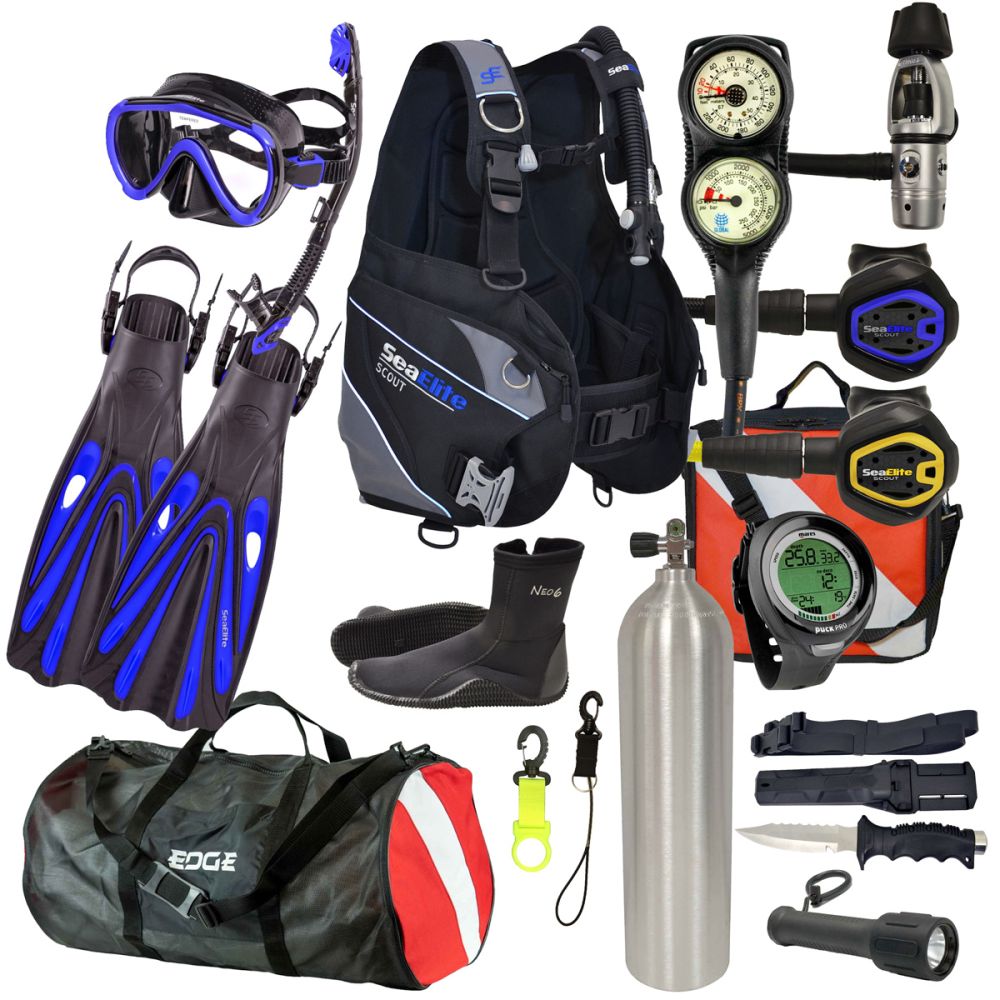
Dive gear has changed scuba diving completely. What started with heavy helmets, surface air hoses and limited movement has become modern scuba equipment that allows divers to move freely, breathe comfortably, control buoyancy, monitor depth, and explore the underwater world safely.
This guide explains the evolution of dive gear, from early diving bells to modern regulators, BCDs, wetsuits, fins, dive computers and smart scuba equipment. It also explains why good equipment still matters today, especially if you are renting gear, learning to dive, or buying your first mask, computer or set of essentials.
Fast answer: Dive gear evolved from heavy surface-supplied equipment into modern scuba systems with portable tanks, regulators, BCDs, wetsuits, fins, masks and dive computers. Today’s equipment is lighter, safer, more comfortable and easier to use, which is why high-quality rental gear and well-selected personal gear make a big difference underwater.
What Counts as Dive Gear?
Dive gear includes everything that helps a diver breathe, see, move, stay warm, control buoyancy, monitor the dive and stay safe underwater.
For recreational scuba divers, the main equipment usually includes:
- Mask: creates an air space so your eyes can focus underwater.
- Fins: help you move efficiently with less effort.
- Regulator: delivers breathable air from the tank.
- BCD: helps control buoyancy and carry the tank.
- Tank: holds compressed breathing gas.
- Weights: help balance natural buoyancy.
- Wetsuit or exposure protection: helps keep you warm and protected.
- Dive computer: tracks depth, time, ascent rate and no-decompression limits.
- Accessories: SMBs, cutting tools, lights, clips, boots, gloves, bags and other essentials depending on the dive.
If you need selected scuba gear, accessories or Xico apparel in Playa del Carmen, visit our Dive Gear Shop.
The Early Days: Diving Bells and Surface Air
Long before modern scuba, humans were already trying to work and explore underwater. Early divers used simple breath-hold techniques, weighted systems and later diving bells to stay below the surface longer.
A diving bell was open at the bottom and trapped air inside. Divers could descend inside the bell or use it as a temporary air pocket. It was a clever idea, but movement was extremely limited compared to modern scuba diving.
Later, surface-supplied diving systems allowed divers to receive air from pumps above the water. These systems were useful for underwater work, salvage and construction, but they were heavy, restrictive and not designed for the freedom recreational divers enjoy today.
Heavy Helmets and Early Diving Suits
Before lightweight scuba gear, divers often used heavy helmets connected to air hoses from the surface. These helmets were usually paired with thick suits, heavy boots and weights to keep the diver down.
This equipment made underwater work possible, but it was not easy. Divers had limited movement, depended on surface air supply, and needed support teams above the water.
Compared with modern diving, early helmet diving was more like underwater labor than recreational exploration. The equipment was strong and useful, but not flexible, comfortable or beginner-friendly.
The Birth of SCUBA: Freedom Underwater
SCUBA means Self-Contained Underwater Breathing Apparatus. The big change was simple but powerful: divers could carry their own breathing gas instead of depending on an air hose from the surface.
The development of open-circuit scuba systems made recreational diving possible. Divers could swim freely, follow reefs, explore wrecks, learn underwater skills and stay with a guide or buddy without being connected to the surface.
This freedom changed diving forever. It made scuba more accessible, more enjoyable and more practical for training, travel and marine exploration.
The Regulator: The Heart of Modern Scuba Gear
The regulator is one of the most important pieces of scuba equipment. It reduces high-pressure air from the tank and delivers breathable air when the diver inhales.
Modern regulators are designed to make breathing feel smooth and natural at recreational depths. They are much more comfortable and reliable than early systems, especially when properly serviced and matched to the diving conditions.
Why regulator quality matters
- It affects breathing comfort.
- It affects confidence underwater.
- It matters more in deeper dives, current or colder water.
- It must be maintained correctly.
- It is one of the first things divers notice if equipment quality is poor.
This is one reason good rental equipment matters. A diver who trusts the regulator can relax, breathe slowly and enjoy the dive more.
BCD Evolution: From Floating to True Buoyancy Control
Early divers used weights and basic flotation systems, but modern BCDs changed recreational diving by giving divers better control over buoyancy.
A BCD, or buoyancy control device, lets a diver add or release air to adjust buoyancy underwater. It also holds the tank and often provides pockets, attachment points and integrated weight options.
Good buoyancy control helps divers protect coral, stay relaxed, reduce air use, avoid touching the bottom and make safer ascents and descents.
If you want to improve your control underwater, the PADI Advanced Open Water Course is a strong next step after Open Water certification.
Masks and Fins: Small Gear, Big Difference
Masks and fins look simple, but they make a huge difference in comfort.
A good mask creates a comfortable seal, gives clear vision and does not constantly leak. A bad-fitting mask can make a dive stressful, especially for beginners. This is why many divers choose to buy their own mask before buying a full set of scuba gear.
Fins also changed a lot over time. Early fins were basic and heavy. Modern fins use better materials, blade designs and foot-pocket shapes to improve power, comfort and efficiency.
Why many divers buy their own mask first
- Fit is personal.
- A comfortable mask reduces stress.
- It is one of the easiest pieces of gear to travel with.
- It can be used for scuba and snorkeling.
- It helps beginners feel more confident underwater.
If you are looking for masks, fins or selected accessories in Playa del Carmen, see what is available in our Xico Dive Center shop.
Wetsuits, Drysuits and Thermal Protection
Thermal protection is another major part of dive gear evolution. Water removes heat from the body much faster than air, so divers can get cold even in tropical destinations.
Wetsuits help by trapping a thin layer of water between the suit and the body. Your body warms that water, and the neoprene slows heat loss. Drysuits are used mainly in colder environments and keep the diver dry with insulating layers underneath.
In Playa del Carmen, many divers are comfortable with a 3mm wetsuit for ocean dives, while cenotes may feel cooler and require more exposure protection depending on personal comfort.
Dive Computers: One of the Biggest Safety Improvements
Dive computers changed recreational diving because they make depth, time, ascent rate and no-decompression tracking much easier.
Before dive computers became common, divers relied more heavily on tables and fixed dive profiles. Dive computers track the actual dive profile in real time and help divers stay within safe limits.
A dive computer can help monitor:
- Current depth
- Maximum depth
- Dive time
- No-decompression limit
- Ascent rate
- Safety stop information
- Surface interval
- Repetitive dive planning
For certified divers who dive more often, a personal dive computer is one of the most useful pieces of equipment to own. It helps you understand your own dive profile and not depend only on the guide’s computer.
If you want to understand the pressure, gases and safety logic behind dive computers, read our guide to the science of diving.
How Modern Gear Changed Beginner Diving
Modern scuba equipment made diving more accessible for beginners. Today, new divers can use better regulators, more comfortable BCDs, easier-to-read pressure gauges, better masks, lighter fins and dive computers that help track important limits.
That does not mean equipment replaces training. Good equipment helps, but divers still need to learn how to use it correctly.
If you have never tried scuba before, start with Discover Scuba Diving. If you want to become certified and learn how all the equipment works, choose the PADI Open Water Diver Course.
Rental Gear vs Buying Your Own Gear
Many new divers ask whether they should rent or buy scuba equipment. The answer depends on how often you dive, what kind of diving you do, and how much you value personal fit and comfort.
Rental gear is a good choice if:
- You are new to diving.
- You only dive once or twice per year.
- You are traveling and do not want to carry full equipment.
- You are still learning what gear style you prefer.
- You are booking a guided dive and want easy logistics.
Buying your own gear makes sense if:
- You dive regularly.
- You want a mask that fits perfectly.
- You want your own dive computer.
- You know which fins or BCD style you prefer.
- You want consistent comfort from trip to trip.
For many divers, the best first purchases are a mask, dive computer and basic accessories. Full regulator and BCD purchases usually make more sense once you know your diving style and plan to dive more often.
Xico tip: You do not need to buy everything at once. Start with the gear that improves comfort and confidence the most: a well-fitting mask, the right exposure protection, and later a personal dive computer if you plan to keep diving.
Why High-Quality Rental Gear Matters
Rental gear can make or break a dive experience. Divers notice when equipment is old, uncomfortable, poorly fitted or not well maintained. They also notice when gear feels clean, modern and reliable.
For beginners, good equipment builds trust. For certified divers, good equipment makes the dive smoother. For rusty divers, good equipment can reduce stress and help them feel comfortable again.
This is why equipment quality is part of the customer experience, not just an operational detail. A comfortable mask, a smooth-breathing regulator, a properly sized BCD and correct weighting can change the entire dive.
If you are certified and want to dive with professional guides and quality equipment, start with our 2-tank local reef dive in Playa del Carmen.
Buying Dive Gear in Playa del Carmen
If you are already in Playa del Carmen and need selected scuba essentials, you can visit the Xico Dive Center shop. The shop focuses on useful dive gear, accessories and apparel available for pickup at the dive center.
This is especially helpful if you forgot something, want your own mask, need a dive computer, want accessories for future dives, or prefer to buy gear from a dive center that also uses equipment every day.
Good first gear to consider
- Mask: usually the best first purchase because fit matters so much.
- Dive computer: useful for certified divers who want to track their own dives.
- Fins and boots: good if you dive often and know what style you prefer.
- SMB or surface marker: useful for many ocean diving situations.
- Small accessories: clips, straps, defog, bags and replacement parts.
- Apparel: rash guards, shirts and Xico merchandise.
How Dive Gear Supports Different Types of Diving
Different dive environments place different demands on equipment.
| Dive Type | Gear Focus | Useful Xico Page |
|---|---|---|
| Beginner scuba | Comfortable mask, easy breathing, proper fit, calm instruction | Discover Scuba Diving |
| Open Water training | Learning regulator, BCD, mask, fins, weights and dive computer basics | Open Water Course |
| Local reef diving | Comfortable rental gear, proper weighting, reef-safe buoyancy | Reef Diving Playa del Carmen |
| Advanced diving | Better buoyancy, computer awareness, navigation and deeper dive planning | Advanced Open Water |
| Frequent diving | Personal mask, dive computer, fins, accessories and selected gear | Dive Gear Shop |
The Future of Dive Gear
Dive gear continues to evolve. Modern scuba equipment is becoming lighter, more comfortable, more connected and easier to monitor.
Future dive gear may include improved dive computers, better battery systems, more compact lights, smarter gas integration, improved communication tools, lighter materials and better environmental design.
But the goal remains the same: help divers breathe comfortably, move efficiently, control buoyancy, monitor the dive, protect the environment and enjoy the underwater world safely.
What New Divers Should Remember About Gear
New divers do not need to understand every technical detail before getting started. But they should understand that gear matters.
- A good mask makes the dive more comfortable.
- A good regulator makes breathing feel easier.
- A properly fitted BCD helps with confidence and control.
- Correct weighting makes buoyancy easier.
- A dive computer helps track important safety information.
- Good instruction teaches you how to use the gear safely.
The equipment is important, but the diver’s training, calm breathing and good habits matter just as much.
Frequently Asked Questions About the Evolution of Dive Gear
“`
How has dive gear changed over time?
Dive gear evolved from heavy surface-supplied helmets and diving bells into modern scuba systems with portable tanks, regulators, BCDs, wetsuits, fins, masks and dive computers. The biggest improvements are comfort, mobility, safety and control.
What is the most important scuba diving equipment?
The most important scuba equipment includes the regulator, BCD, tank, mask, fins, exposure protection, weights and dive computer. Each piece has a different role, and all must work together for a safe, comfortable dive.
What dive gear should beginners buy first?
Many beginners buy a mask first because fit is personal and a good mask improves comfort immediately. After that, frequent divers often consider a dive computer, fins, boots and selected accessories before buying a full regulator or BCD setup.
Is it better to rent or buy scuba gear?
Renting is usually best for new divers, occasional divers and travelers who do not want to carry full equipment. Buying makes more sense if you dive often, want consistent fit, or want your own computer, mask and accessories.
Why does rental gear quality matter?
Rental gear quality affects comfort, trust and confidence underwater. A smooth-breathing regulator, a well-fitting BCD, a good mask and correct weighting can make the dive feel much easier and more relaxed.
Can I buy dive gear in Playa del Carmen?
Yes. Xico Dive Center offers selected dive gear, accessories and apparel for pickup at the dive center in Playa del Carmen.
Visit the Xico Dive Center shop.
Do I need my own gear for the Open Water Course?
No. You can learn with rental equipment. However, many students eventually buy their own mask or computer because those items improve comfort and confidence over time.
See the PADI Open Water Course.
What is the difference between old diving helmets and modern scuba gear?
Old diving helmets were usually connected to air hoses from the surface and were heavy and restrictive. Modern scuba gear lets divers carry their own breathing gas, swim freely, control buoyancy and monitor dives with compact instruments and computers.
“`
Final Thoughts: Better Gear Changed Diving Forever
The evolution of dive gear made scuba diving safer, more comfortable and more accessible. From diving bells and heavy helmets to modern regulators, BCDs, wetsuits, masks, fins and dive computers, every improvement brought divers closer to the underwater world.
Today, good gear is still one of the biggest differences between a stressful dive and a comfortable one. Whether you rent equipment, buy your first mask, choose a dive computer or start your Open Water Course, the right equipment helps you dive with more confidence.
Need gear in Playa del Carmen? Browse selected masks, dive computers, fins, accessories and Xico apparel in the Xico Dive Center shop. If you want to experience modern scuba equipment in the water, start with Discover Scuba Diving, the Open Water Course, or a 2-tank local reef dive.
For the broader story of how scuba became a recreational sport, read our guide to the history of scuba diving.