
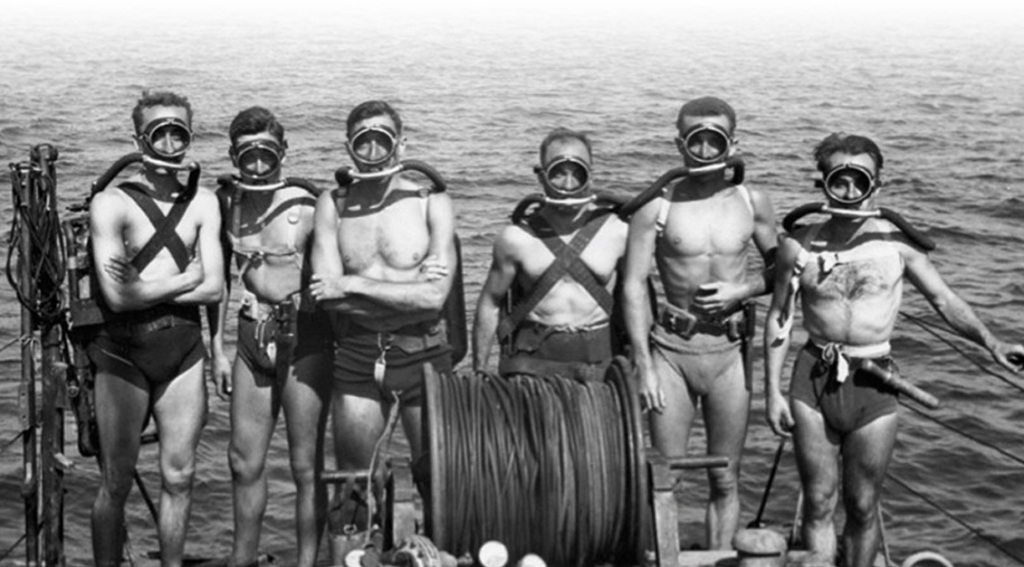
The history of scuba diving is the story of humans trying to explore a world we were not built to enter. Long before modern tanks, regulators, dive computers and training agencies, people were already diving for food, pearls, sponges, salvage, military work and curiosity.
Today, scuba diving is safer, more comfortable and more accessible than ever. Beginners can try scuba under professional supervision, students can earn an international certification, and certified divers can explore reefs, wrecks, cenotes and marine life around the world.
This guide explains how scuba diving evolved from ancient breath-hold diving to diving bells, surface-supplied helmets, the Aqua-Lung, recreational training and the modern diving industry.
Fast answer: Scuba diving evolved from ancient breath-hold diving and early diving bells into surface-supplied helmet diving, then modern self-contained scuba. The biggest breakthrough came when divers could carry their own breathing gas and move freely underwater. Today, training, equipment and dive planning make recreational scuba accessible to millions of people.
Why Humans Started Diving
People began diving long before scuba equipment existed. Early divers entered the water to collect food, pearls, shells, sponges and valuable materials. In some cultures, diving was also used for military operations, salvage work and underwater construction.
These early divers did not have tanks, regulators or dive computers. They relied on breath-hold ability, physical strength, local knowledge and experience. Every dive was limited by how long the diver could hold their breath and how safely they could return to the surface.
That basic human curiosity is still part of diving today. The difference is that modern scuba equipment and training allow people to explore the underwater world with far more control, comfort and safety.
Ancient Breath-Hold Divers
The earliest underwater explorers were breath-hold divers. Ancient divers entered the water without scuba equipment, often collecting shells, food, pearls or sponges from shallow areas.
Breath-hold diving required strong swimming ability and excellent body control. Divers had to manage pressure, limited air, cold, visibility, current and fatigue without modern equipment.
Modern freediving is much more structured than ancient diving, but the basic idea is similar: the diver relies on one breath and returns to the surface before breathing again.
Diving Bells: The First Step Toward Staying Underwater Longer
One of the earliest solutions for staying underwater longer was the diving bell. A diving bell is open at the bottom and traps air inside as it descends into the water.
This allowed divers to breathe from an underwater air pocket. It was not scuba diving, but it was an important step because it showed that humans could extend underwater time by bringing air below the surface.
Diving bells were limited and risky. Movement was restricted, depth was limited, and divers still depended on support from the surface. But the concept helped shape later underwater breathing systems.
Surface-Supplied Diving and Heavy Helmets
Before modern scuba, many working divers used heavy helmets connected to air pumps on the surface. These systems allowed divers to breathe underwater while wearing large helmets, heavy suits, weighted boots and surface air hoses.
This type of diving was important for underwater work such as salvage, construction, ship repair and harbor operations. It allowed divers to stay underwater longer than breath-hold divers, but movement was limited.
Surface-supplied diving was powerful, but it was not the same as recreational scuba. The diver was connected to the surface, needed a support team and carried heavy equipment. Modern scuba changed that by giving divers mobility and independence.
The Meaning of SCUBA
SCUBA stands for Self-Contained Underwater Breathing Apparatus. The important part is “self-contained.” Instead of receiving air from the surface, scuba divers carry their own breathing gas in a tank.
This changed underwater exploration completely. Divers could move freely, swim over reefs, explore wrecks, train with a buddy, follow a guide and experience the underwater world in a more natural way.
Modern recreational scuba is built around this freedom, but also around training, planning, equipment checks and safe limits.
The Aqua-Lung and the Birth of Modern Recreational Scuba
The development of open-circuit scuba systems in the 20th century was one of the biggest turning points in diving history. The Aqua-Lung made it possible for divers to carry compressed air and breathe underwater without being attached to the surface.
This created the foundation for modern recreational scuba diving. Divers could explore reefs, film marine life, train recreational students, and travel to dive destinations around the world.
Modern scuba did not become popular only because of the equipment. It also grew because underwater exploration became more visible through photography, film, training systems and dive travel.
If you want to understand how the equipment changed over time, read our guide to the evolution of dive gear.
How Recreational Diving Became Accessible
At first, scuba diving was mostly connected to military, scientific, commercial and exploration use. Over time, better equipment and organized training made diving more accessible to regular travelers and ocean lovers.
Training agencies helped standardize scuba education. Instead of learning informally or only through specialist groups, new divers could follow a structured course, practice skills, learn dive theory and earn a certification recognized by dive centers around the world.
This changed scuba from an extreme niche activity into a recreational sport that many people can learn safely with proper instruction.
The Role of Dive Training
Good training is one of the most important developments in scuba history. Equipment makes diving possible, but training makes diving safer and more enjoyable.
A scuba course teaches divers how to use equipment, breathe underwater, equalize, clear a mask, control buoyancy, communicate, monitor air, follow depth limits, ascend slowly and handle common problems calmly.
If you want to become a certified diver, the best starting point is the PADI Open Water Diver Course. If you are not ready for certification yet but want to try scuba first, choose Discover Scuba Diving.
How Scuba Equipment Changed the Sport
Modern scuba equipment made diving easier, safer and more comfortable. Regulators became smoother, masks became better fitting, fins became more efficient, BCDs improved buoyancy control, wetsuits improved thermal comfort and dive computers made planning easier.
These improvements changed the experience for beginners and certified divers. Instead of fighting heavy equipment, divers can focus more on breathing, buoyancy, marine life and the dive plan.
Major equipment improvements
- Regulators: made breathing from a tank smoother and more reliable.
- BCDs: gave divers better buoyancy control.
- Modern masks: improved fit, comfort and visibility.
- Fins: made movement more efficient.
- Wetsuits: improved comfort and warmth.
- Dive computers: helped divers track depth, time, ascent rate and no-decompression limits.
This is why equipment quality still matters today. Good gear helps divers feel more confident, breathe more comfortably and enjoy the dive more.
Underwater Photography and Film
Underwater photography and film helped make scuba diving famous. Before people saw underwater footage, the ocean below the surface was mysterious and mostly hidden from the public.
As cameras, housings and lights improved, divers could share reefs, wrecks, sharks, turtles, coral, caves and marine life with the world. This inspired more people to learn scuba diving and travel to dive destinations.
Today, many divers still choose dive trips because of what they have seen in photos, videos and social media. Modern cameras and action cameras have made underwater storytelling part of recreational diving.
Scuba Diving and Marine Conservation
As scuba diving grew, more divers began to understand the importance of protecting marine ecosystems. Seeing coral reefs, turtles, rays, sharks and reef fish underwater often changes the way people think about the ocean.
Divers can become strong advocates for conservation because they see both the beauty and the damage underwater. Good diving habits matter: control buoyancy, do not touch coral, do not chase animals, avoid standing on reefs and follow your guide’s instructions.
Modern scuba is not only about exploration. It is also about responsibility.
How Scuba Diving Became a Travel Experience
Scuba diving became a major part of travel because every destination offers something different. Some places are known for reefs, others for wrecks, sharks, walls, caves, cenotes, turtles, manta rays or clear tropical water.
Playa del Carmen is a good example of a flexible dive base. From one location, divers can experience local reefs, cenotes, Cozumel, wreck diving, night diving and seasonal bull shark diving depending on certification level and conditions.
If you want an easy first local ocean dive as a certified diver, start with a 2-tank local reef dive in Playa del Carmen.
How the History of Diving Connects to Today’s Beginner Diver
The biggest difference between early diving and modern beginner diving is support. Early divers had limited equipment, limited knowledge and much higher risk. Modern beginners can learn step by step with professional instruction and purpose-built equipment.
Today, a first-time diver does not need to invent techniques or guess how the equipment works. An instructor explains the basics, controls the environment, teaches safety rules and helps the diver build confidence.
That is why Discover Scuba Diving is such a good introduction. It lets beginners experience the underwater world without needing to commit immediately to a full certification course.
From Curiosity to Certification
The history of scuba diving shows one clear pattern: humans wanted to go underwater, and every generation found better ways to do it.
Today, the safest path is structured training. If you only want to try scuba once, start with Discover Scuba Diving. If you want to keep diving after your trip, take the Open Water Course and become certified.
Certification gives you the foundation to continue diving around the world, build experience, improve buoyancy, explore different dive environments and choose more advanced experiences over time.
Beginner path: Choose Discover Scuba Diving if you want to try scuba for the first time. Choose the PADI Open Water Course if you want to become certified and continue diving after your trip.
How Science and Gear Made Modern Diving Possible
Modern scuba exists because divers learned how to combine equipment, science and training. Gear lets divers breathe and move underwater. Science explains pressure, buoyancy, gases and safe ascents. Training turns that knowledge into calm habits.
If you want to understand why diving works, read the science of diving. If you want to understand how masks, regulators, fins, BCDs and dive computers changed over time, read the evolution of dive gear.
Quick Timeline of Scuba Diving History
| Period | What Changed | Why It Matters |
|---|---|---|
| Ancient times | Breath-hold diving for food, pearls, sponges and underwater work | Humans began exploring below the surface with no equipment |
| Early diving bells | Air was trapped underwater for short breathing periods | Divers could stay underwater longer than a single breath |
| Helmet diving | Divers received air from the surface through hoses | Underwater work became more practical but still restrictive |
| Open-circuit scuba | Divers carried their own breathing gas | Modern recreational scuba became possible |
| Organized training | Scuba education became standardized | More people could learn safely and confidently |
| Modern dive computers | Depth, time and ascent information became easier to monitor | Dive planning and repetitive diving became more practical |
| Today | Diving combines travel, education, conservation and technology | More people can safely explore reefs, wrecks, cenotes and marine life |
Frequently Asked Questions About the History of Scuba Diving
“`
Who invented scuba diving?
Scuba diving was not invented by one person in a single moment. It evolved over many centuries from breath-hold diving, diving bells, surface-supplied helmets and early breathing systems into modern self-contained scuba.
What does SCUBA stand for?
SCUBA stands for Self-Contained Underwater Breathing Apparatus. It means the diver carries their own breathing gas instead of relying on air supplied from the surface.
When did modern scuba diving begin?
Modern recreational scuba diving began to grow strongly in the 20th century after portable open-circuit scuba systems made underwater exploration more practical and independent.
How did scuba diving become popular?
Scuba became popular because of better equipment, underwater photography and film, organized training, dive travel and growing public interest in reefs, marine life and ocean exploration.
What was diving like before modern scuba?
Before modern scuba, divers mostly relied on breath-hold diving, diving bells or heavy surface-supplied helmets. These systems allowed underwater work, but they were much more restrictive than modern recreational scuba gear.
How did dive gear change scuba history?
Dive gear changed scuba history by giving divers more freedom, comfort and safety. Regulators, BCDs, masks, fins, wetsuits and dive computers made recreational diving easier to learn and more enjoyable.
Read more in our guide to the evolution of dive gear.
Can beginners try scuba diving today?
Yes. Modern beginners can try scuba diving under professional supervision with Discover Scuba Diving. If they want to keep diving after the trip, they can take the Open Water Course and become certified.
What is the best first step if I want to scuba dive?
If you want to try scuba once, start with Discover Scuba Diving. If you want a full certification, start with the PADI Open Water Course.
“`
Final Thoughts: Scuba Diving Has Come a Long Way
The history of scuba diving shows how far underwater exploration has come. What began with breath-hold divers and simple air pockets eventually became modern recreational scuba with reliable equipment, structured training and global dive travel.
Today, you do not need to be an explorer, soldier or commercial diver to experience the underwater world. With proper instruction and the right dive plan, beginners and certified divers can safely enjoy reefs, marine life and underwater adventure.
Ready to experience modern scuba? Start with Discover Scuba Diving if you are new, choose the Open Water Course if you want certification, or book a 2-tank local reef dive in Playa del Carmen if you are already certified.