
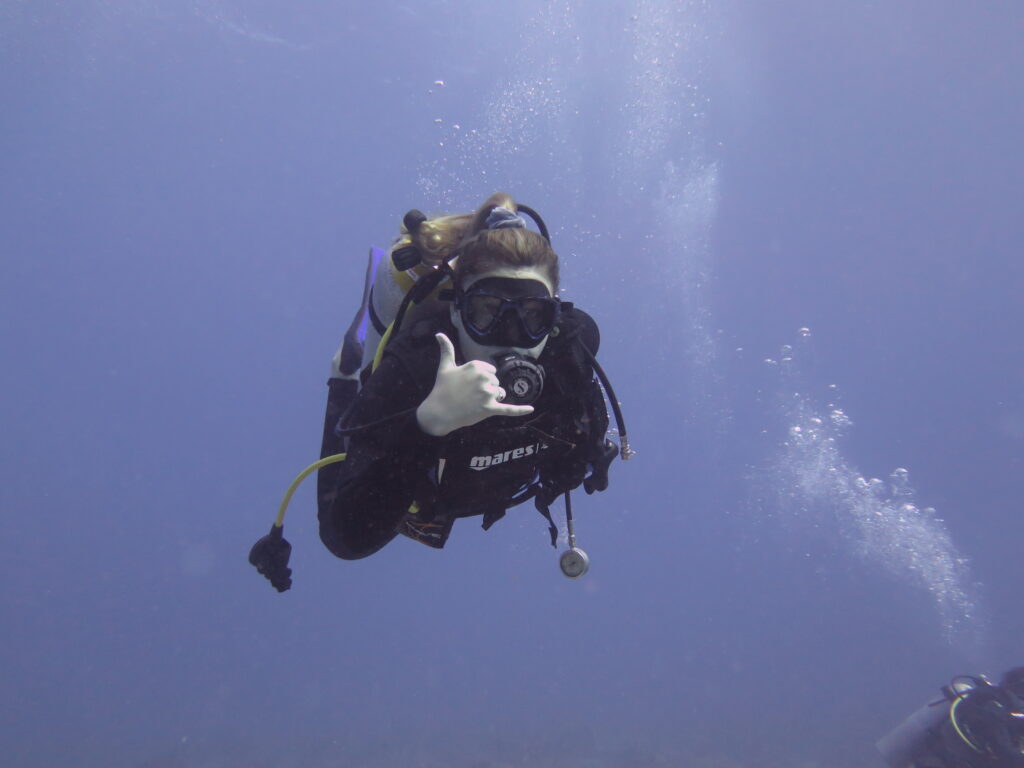
Deep dives can be exciting, but they also require more preparation, better awareness, and stronger dive planning than a shallow reef dive.
As depth increases, air consumption changes, no-decompression limits become shorter, nitrogen narcosis can become more noticeable, buoyancy adjustments matter more, and small mistakes can become harder to fix.
This guide explains how to prepare for deep dives, what changes at depth, what risks certified divers should understand, and when it makes sense to take the PADI Deep Diver Course.
Fast answer: To prepare for deep dives, you need the right certification, recent experience, a clear dive plan, gas awareness, good buoyancy, a dive computer, slow ascents, safety stops, buddy communication, and honest comfort with depth. If you want to dive beyond normal recreational limits for your current training, take proper deep-diving training first.
What Counts as a Deep Dive?
In recreational scuba diving, a deep dive usually means a dive deeper than 18 meters / 60 feet. Many recreational divers first experience deeper dives during Advanced Open Water training or guided dives with appropriate certification and experience.
Depth limits depend on your certification, age, training, local conditions, instructor or guide judgment, and the dive plan.
The important point is simple: deeper does not automatically mean better. A good deep dive is planned, controlled, and appropriate for the diver.
Why Deep Dives Are Different
Deep dives are different because depth affects almost everything underwater.
- You use air faster at depth.
- Your no-decompression limit is shorter.
- Buoyancy changes can feel stronger.
- Light and color may change.
- Communication and buddy awareness become more important.
- Nitrogen narcosis may affect thinking or comfort.
- Ascents need to be controlled and conservative.
This does not mean deep diving is only for experts, but it does mean deep diving should be treated with respect.
Know Your Certification Limits
Before planning a deep dive, be clear about what your current certification allows and what you are actually comfortable doing.
| Diver Level | Typical Recreational Limit | What It Means |
|---|---|---|
| Open Water Diver | 18 m / 60 ft | Good for many reef dives, but not for deeper profiles beyond training limits |
| Advanced Open Water Diver | 30 m / 100 ft | Introduces deeper diving, but does not replace full deep-diving specialty training |
| Deep Diver Specialty | 40 m / 130 ft | Focused training for planning and making deeper recreational dives |
If you are not sure where you fit, ask before booking. A good dive plan should match your certification, recent experience, comfort, and the daily conditions.
Do You Need Advanced Open Water Before Deep Diving?
For many deeper recreational dives, Advanced Open Water is an important step because it introduces deeper diving under instructor supervision.
If you are Open Water certified and want to build confidence beyond shallow dives, the PADI Advanced Open Water Course may be the right next step before choosing deeper specialty training.
If your goal is to plan and make deeper recreational dives with more confidence, the PADI Deep Diver Course is the more focused course.
Understand Nitrogen Narcosis
Nitrogen narcosis can affect some divers at depth. It may feel different for different people and can affect judgment, focus, reaction time, comfort, or decision-making.
Some divers describe it as feeling relaxed, slow, distracted, overconfident, or slightly confused. Others may not notice it clearly at first.
The safest approach is to know that narcosis can happen, stay close to your buddy and guide, follow the dive plan, and avoid pushing deeper just because you feel fine.
Gas Planning Matters More on Deep Dives
Air consumption increases at depth because the gas you breathe is denser under pressure. This means your tank can empty faster on a deep dive than on a shallow dive.
Before a deep dive, you should understand:
- Your starting tank pressure
- Your turn pressure or planned gas limits
- Your reserve pressure
- Your expected bottom time
- Your ascent plan
- When to communicate low air
If you often use air faster than other divers, do not hide it. Tell the guide before the dive. Our guide on how to improve air consumption while diving explains the main causes and fixes.
Use a Dive Computer and Understand Your Limits
A dive computer is especially useful on deeper dives because it helps you monitor depth, time, ascent rate, no-decompression limits, and safety-stop information.
But a computer is not a magic safety device. You still need to understand the plan and follow your training.
Do not treat the computer as permission to stay deeper until the last possible moment. Conservative diving is smarter, especially when you are still gaining experience with deeper profiles.
No-Decompression Limits Get Shorter
One of the biggest differences on deeper dives is that your no-decompression limit becomes shorter.
That means you have less time at depth before your computer or dive plan requires you to start ascending. This is why deep dives are not just “normal dives, but deeper.” They need a clearer plan.
Good deep-diving preparation includes knowing your depth, watching your time, and avoiding unnecessary delays at the deepest part of the dive.
Slow Ascents Are Essential
A slow, controlled ascent is one of the most important parts of a deep dive.
As you ascend, expanding gas affects your buoyancy. If you do not control your ascent early, you may start rising faster than planned.
Stay calm, monitor your computer, vent your BCD when needed, follow your guide’s instructions, and do not rush to the surface.
Safety Stops Matter
Safety stops are especially important after deeper recreational dives. They give your body extra time during ascent and help create a more conservative dive profile.
A safety stop is not the moment to stop paying attention. You still need to monitor depth, buoyancy, air, current, buddy position, and boat traffic procedures.
For a deeper explanation, read our guide to safety stops in scuba diving.
Buoyancy Control at Depth
Buoyancy control becomes more important on deep dives because small changes can have a bigger effect during the ascent.
At depth, your wetsuit compression, BCD air volume, breathing, trim, and body position all affect how stable you feel.
If you struggle to hover, constantly kick to stay up, sink too fast, or float up unintentionally, work on buoyancy before choosing deeper dives. Our guide to buoyancy control in scuba diving explains the skill in more detail.
Trim and Movement
Deep diving rewards calm, efficient movement. Fast kicking, poor trim, and constant hand movement waste air and make the dive feel harder.
Good trim helps you move through the water with less effort. Slow finning helps you conserve gas and stay relaxed.
If the dive includes current, a wall, a wreck, or a deeper reef profile, efficient movement becomes even more important.
Plan With Your Buddy and Guide
Deep dives are not the place for unclear communication. Before entering the water, make sure you understand the plan.
- Maximum depth
- Expected bottom time
- Turn pressure or gas plan
- Ascent route
- Safety stop plan
- Lost buddy procedure
- Emergency signals
- What to do if someone feels narcosis or discomfort
A good buddy is not just someone who swims near you. A good buddy communicates, checks air, stays aware, and follows the plan.
Equipment Checklist for Deep Dives
Your exact equipment depends on the dive, conditions, local rules, and training. But for deeper recreational dives, equipment preparation matters.
| Equipment / Item | Why It Matters |
|---|---|
| Dive computer | Tracks depth, time, ascent rate, limits, and safety-stop information |
| Reliable regulator | Comfortable breathing and proper function are essential |
| Alternate air source | Must be working, visible, and easy to access |
| BCD | Needs to inflate, deflate, and vent smoothly |
| Weights | Correct weighting helps control descent, bottom time, and safety stop |
| Exposure protection | Thermal comfort can change with depth, season, and dive length |
| SMB / signal device | Useful for surface visibility depending on boat procedures and conditions |
| Light | Useful for wrecks, lower light, color restoration, or looking into structure |
Check Your Gear Before Entering the Water
A careful pre-dive check is always important, but it matters even more before deeper dives.
- Confirm your tank is open and pressure is correct.
- Breathe from your regulator and alternate air source.
- Inflate and deflate your BCD.
- Check your weights and releases.
- Confirm your computer is active and set correctly.
- Secure dangling gear.
- Check your mask, fins, exposure protection, and accessories.
Small problems are easier to fix on the boat than at depth.
Fitness, Hydration and Rest
Deep diving does not require extreme athletic ability, but you should be rested, hydrated, and physically comfortable enough for the dive plan.
Avoid heavy alcohol before dive days. Sleep well, drink water, eat appropriately, and tell the dive team if you feel sick, dizzy, exhausted, hungover, or unsafe to dive.
If you have medical concerns, recent illness, surgery, medication questions, breathing issues, heart concerns, panic disorder, or another condition that could affect diving safety, get medical clearance before diving.
When Deep Diving Is Not the Right Choice
Sometimes the safest decision is to choose a different dive.
A deep dive may not be the right choice if:
- You are newly certified and not ready for depth.
- You have not dived in years.
- You feel nervous or pressured.
- Your buoyancy is not controlled.
- You often run low on air quickly.
- Conditions are not suitable.
- You are tired, sick, hungover, or medically unsure.
Choosing an easier dive first is not failure. It is good judgment.
Deep Diving, Wrecks and Local Dive Sites
Many divers become interested in deep diving because they want to explore deeper reefs, walls, wrecks, or specific sites that require better training and control.
In the Riviera Maya, wreck diving is one reason divers may want more depth experience. If wrecks interest you, read our guide to wreck diving in the Riviera Maya.
Not every wreck or deeper site is appropriate for every diver. Certification, experience, current, visibility, depth, and guide judgment all matter.
Deep Diving and Nitrox
Enriched Air Nitrox can be useful for many recreational dive plans, but it does not automatically make deep diving safer or allow unlimited depth.
Nitrox requires proper training and oxygen exposure awareness. It can help with certain profiles, but it must be used within correct limits.
If you want to understand when Nitrox makes sense, see the PADI Enriched Air Nitrox Diver Course.
When Should You Take the PADI Deep Diver Course?
The PADI Deep Diver Course is a good next step if you want structured training for deeper recreational diving.
It can be especially useful if you:
- Want to dive deeper than your current training comfortably allows
- Want to understand deep-dive planning better
- Want more confidence with gas planning and limits
- Want to learn more about narcosis and deep-dive procedures
- Want to prepare for deeper wrecks or reef profiles
- Already have good basic buoyancy and want to build the next skill level
This course is the right place to turn curiosity about deep diving into safer, structured training.
Deep Dive Preparation Checklist
| Preparation Area | What to Check |
|---|---|
| Certification | Confirm your training matches the planned depth |
| Experience | Be honest about your last dive date and comfort level |
| Gas plan | Know starting pressure, turn pressure, reserve, and expected air use |
| Computer | Monitor depth, time, no-decompression limit, ascent rate, and stops |
| Buddy plan | Review signals, separation procedure, air checks, and ascent plan |
| Buoyancy | Check weighting, trim, BCD control, and ability to hold a safety stop |
| Conditions | Respect current, visibility, waves, port status, and guide judgment |
| Health | Be rested, hydrated, and medically fit to dive |
Ready to Build Deep-Diving Confidence?
If you are curious about deeper dives, start with honest self-assessment. Tell us your certification level, last dive date, approximate number of logged dives, comfort with depth, and what type of deep dive you want to do.
We can recommend whether you should start with Advanced Open Water, a local reef dive, more buoyancy practice, or the PADI Deep Diver Course.
Frequently Asked Questions About Preparing for Deep Dives
How do I prepare for a deep dive?
Prepare for a deep dive by confirming your certification, planning depth and time, checking gas limits, using a dive computer, reviewing buddy procedures, controlling buoyancy, and diving within your training and comfort level.
What is considered a deep dive?
In recreational scuba diving, a deep dive usually means a dive deeper than 18 meters / 60 feet. Exact limits depend on certification, age, training, conditions, and the dive plan.
Can Open Water divers do deep dives?
Open Water divers are generally limited to 18 meters / 60 feet. Divers who want to go deeper should continue training, usually through Advanced Open Water and then Deep Diver specialty training if they want deeper recreational profiles.
What is nitrogen narcosis?
Nitrogen narcosis is an effect some divers may feel at depth. It can affect comfort, judgment, focus, or reaction time. Divers should understand it, stay within limits, and follow the dive plan.
Why do I use more air on deep dives?
You use more air at depth because the gas you breathe is denser under pressure. Workload, stress, current, buoyancy, trim, and breathing patterns can also affect air consumption.
Do I need a dive computer for deep dives?
A dive computer is strongly recommended for deeper recreational dives because it helps monitor depth, time, ascent rate, no-decompression limits, and safety-stop information.
Is Nitrox useful for deep diving?
Nitrox can be useful for certain recreational dive plans, but it requires training and oxygen-limit awareness. It does not automatically make deep diving safer or allow unlimited depth.
When should I take the PADI Deep Diver Course?
Take the PADI Deep Diver Course if you want structured training for deeper recreational dives, better gas planning, narcosis awareness, deep-dive procedures, and confidence with dives beyond basic recreational depths.
Is deep diving dangerous?
Deep diving has additional risks compared with shallow diving, but those risks can be reduced with proper training, conservative planning, good buoyancy, gas awareness, slow ascents, and diving within limits.
Final Thoughts
Deep diving is not about chasing numbers. It is about preparation, control, awareness, and respect for the limits that come with depth.
If you want to explore deeper recreational dives, build the right foundation first. The ocean will still be there when you are ready.