Buoyancy control is one of the most important skills in scuba diving. It affects your comfort, air consumption, trim, confidence, reef protection, photography, and how relaxed you feel underwater.
Many divers think buoyancy is only about adding or releasing air from the BCD, but real buoyancy control is more than that. It includes correct weighting, breathing, body position, trim, slow movement, awareness, and choosing dives that match your current skill level.
This guide explains why buoyancy control matters, what affects it, common mistakes divers make, and how to improve your control underwater.
Fast answer: Buoyancy control in scuba diving means staying neutrally buoyant so you neither sink nor float up unintentionally. Good buoyancy helps you save air, protect coral, stay relaxed, improve trim, move more efficiently, and enjoy safer, calmer dives.
What Is Buoyancy Control in Scuba Diving?
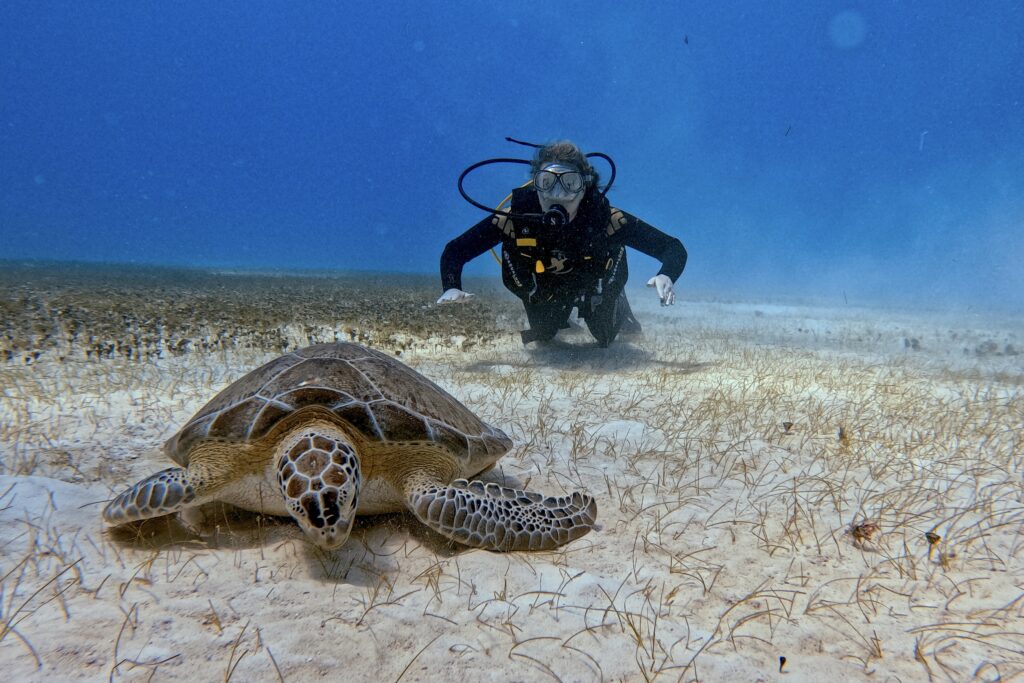
Buoyancy control is your ability to control your position in the water column. A well-controlled diver can hover without constantly kicking, touching the bottom, rising to the surface, or fighting the equipment.
The goal is neutral buoyancy. That means you are not sinking and not floating up. You can stay in place, move slowly, and adjust your depth with small controlled changes.
Good buoyancy is one of the biggest differences between a stressful dive and a relaxed dive.
Why Is Buoyancy Control Important?
Buoyancy control matters because almost everything underwater becomes easier when you are balanced and controlled.
- You use less energy.
- You often use less air.
- You avoid touching coral or marine life.
- You stay closer to the guide and group.
- You feel calmer and more confident.
- You improve your underwater photos and videos.
- You reduce the risk of uncontrolled ascents or descents.
A diver with good buoyancy looks calm. A diver with poor buoyancy is often working too hard, kicking too much, using hands, or constantly adjusting equipment.
Buoyancy Control Helps You Save Air
Air consumption is not only about lung size or fitness. Many divers use more air because they are overweighted, stressed, kicking too much, fighting their position, or constantly adding and releasing air from the BCD.
When your buoyancy improves, you can move more slowly, breathe more calmly, and stop wasting energy underwater.
If air consumption is one of your main problems, read our full guide on how to improve air consumption while diving.
Buoyancy Protects Coral Reefs and Marine Life
Good buoyancy is also an environmental skill. If you cannot control your position, it is much easier to kick coral, touch the reef, stir up sand, damage sponge life, or disturb marine animals.
In reef areas, cenotes, swim-throughs, wrecks, and sensitive environments, buoyancy becomes even more important.
Responsible divers stay off the bottom, avoid touching anything, secure dangling gear, and keep enough distance from the reef. For more responsible diving habits, see our guide to eco-friendly dive practices.
Buoyancy Is Not Only About the BCD
The BCD is important, but it is not the whole story. Many buoyancy problems come from weighting, breathing, trim, body position, and movement.
If you rely only on the inflator button, you may always feel like you are going up or down too much.
Better buoyancy comes from combining several small skills:
- Correct weighting
- Good trim
- Slow breathing
- Controlled finning
- Small BCD adjustments
- Awareness of depth changes
- Relaxed body position
Correct Weighting Is the Foundation
Many divers are overweighted without realizing it. Too much weight makes you sink more easily, forces you to add more air to the BCD, and makes buoyancy harder to control.
Too little weight can also be a problem because it may make it difficult to descend or hold a safety stop at the end of the dive.
The right amount of weight depends on your body, exposure protection, tank type, saltwater or freshwater, experience, breathing, and equipment setup.
If you always feel like you are fighting the water, your weighting may be part of the problem.
Breathing Affects Buoyancy
Your breathing affects your position underwater. When you inhale, your body becomes slightly more buoyant. When you exhale, you become slightly less buoyant.
Experienced divers use this naturally. They do not hold their breath, but they understand how calm, continuous breathing helps fine-tune buoyancy.
If you breathe fast because you are nervous or working too hard, buoyancy can feel more difficult. Slow, steady breathing helps you feel more stable.
Trim: Your Body Position Underwater
Trim is your horizontal body position underwater. Good trim helps you move efficiently and stay controlled.
If your legs drop, you may kick downward and stir sand. If your head is too high, you may work harder to move forward. If your weights or tank position are not balanced, you may feel unstable.
Good trim lets you glide with less effort and fewer unnecessary movements.
Move Slowly and Use Fins Efficiently
Fast kicking often makes buoyancy worse. The more you rush, the more you disturb the water, use air, and lose control.
Good divers move slowly. They use calm fin kicks, pause often, and avoid using their hands to swim.
Different finning techniques can also help depending on the environment. Frog kicks, modified flutter kicks, and back kicks can give better control in reefs, cenotes, and tight spaces.
Common Buoyancy Mistakes
Most buoyancy problems are fixable, but first you need to know what is happening.
| Mistake | What Happens | Better Habit |
|---|---|---|
| Too much weight | You sink, add too much air, and become unstable | Check weighting with a guide or instructor |
| Constant BCD inflation/deflation | You go up and down too much | Make small adjustments and give them time to work |
| Fast breathing | You feel less stable and use more air | Breathe slowly and continuously |
| Poor trim | You kick downward or work too hard | Improve body position and equipment balance |
| Using hands to swim | You waste energy and lose control | Use fins and body position instead |
| Not watching depth | You rise or sink without noticing | Check depth and surroundings often |
| Getting too close to the reef | You risk touching coral or marine life | Keep more distance until control improves |
Buoyancy Control for New Divers
New divers often struggle with buoyancy, and that is normal. It takes time to understand weighting, breathing, BCD control, trim, and how your body moves underwater.
The most important thing is to start with dives that match your current skill level. Do not rush into more demanding environments if you are still fighting buoyancy on basic dives.
Easy local reef dives can be a good place to practice calm movement, air checks, depth awareness, and body position.
Buoyancy Control for Rusty Divers
If you have not dived in a long time, buoyancy may feel strange again at first. Even certified divers can lose comfort after a long break.
If you are rusty, nervous, or unsure about your skills, start with a conservative plan. A refresher may be better than jumping straight into more demanding dives.
Good buoyancy usually comes back faster when you slow down and give yourself the right first dive back.
Buoyancy Control in Cenotes
Cenotes require very good control because the environment is different from the ocean. Divers need to avoid touching formations, stirring sediment, or moving outside the guide’s plan.
If you want to dive cenotes, make sure your buoyancy is comfortable before the dive. Cenotes are beautiful, but they are not the best place to discover that you are overweighted, unstable, or unable to hover calmly.
For first-time cenote divers, honest self-assessment is important.
Buoyancy Control on Reefs
On reefs, buoyancy control protects coral and marine life. You should be able to stay above the reef without standing, kneeling, grabbing, or kicking the bottom.
If you are diving in Playa del Carmen, local reef diving can be a good way to work on control while enjoying marine life and ocean conditions.
For certified divers who want a local ocean dive, see our local reef diving in Playa del Carmen page.
Buoyancy and Underwater Photography
Photography makes buoyancy even more important. Many divers lose control when they focus too much on the camera.
Before taking photos or videos, make sure you are not sinking, floating up, touching the reef, or blocking other divers.
- Control buoyancy before filming.
- Do not touch the reef for stability.
- Do not chase marine life.
- Keep camera accessories secured.
- Stay aware of your buddy and guide.
A good photo is never worth damaging coral or stressing marine life.
How to Improve Buoyancy Control
Improving buoyancy takes practice, but the process is simple when you focus on the right things.
- Check your weighting.
- Make smaller BCD adjustments.
- Slow down your breathing.
- Practice hovering.
- Improve trim and body position.
- Use controlled fin kicks.
- Stay relaxed instead of rushing.
- Choose dives that match your level.
If you want focused coaching, the PADI Peak Performance Buoyancy course is designed to help divers improve weighting, trim, control, movement, and confidence underwater.
When Should You Take a Buoyancy Course?
You may benefit from a buoyancy course if you:
- Use air faster than you want
- Feel unstable underwater
- Kick the bottom or reef by accident
- Have trouble staying at one depth
- Feel overweighted
- Use your hands to swim
- Want better underwater photos or videos
- Want to prepare for cenotes or more advanced dives
Better buoyancy can make almost every future dive easier.
Buoyancy Control Quick Checklist
| Skill | Why It Helps |
|---|---|
| Correct weighting | Reduces overinflation and makes control easier |
| Slow breathing | Helps fine-tune buoyancy and stay relaxed |
| Good trim | Improves efficiency and reduces effort |
| Small BCD adjustments | Prevents big up-and-down movements |
| Controlled finning | Reduces energy use and reef contact |
| Depth awareness | Helps avoid accidental ascents or descents |
| Relaxed movement | Saves air and makes the dive feel calmer |
Ready to Improve Your Buoyancy?
If buoyancy control, air consumption, trim, or relaxed movement are problems for you, focused coaching can make a big difference.
Tell us your certification level, last dive date, approximate number of logged dives, and what you struggle with underwater. We can recommend whether a local reef dive, refresher, or Peak Performance Buoyancy course is the best first step.
Frequently Asked Questions About Buoyancy Control in Scuba Diving
What is buoyancy control in scuba diving?
Buoyancy control is the ability to control your position in the water so you neither sink nor float up unintentionally. Good buoyancy lets you hover, move slowly, save energy, and protect the reef.
Why is buoyancy control important?
Buoyancy control is important because it affects comfort, air consumption, safety, reef protection, trim, photography, and confidence underwater.
How do I improve buoyancy control?
Improve buoyancy by checking your weighting, making smaller BCD adjustments, slowing your breathing, improving trim, using controlled fin kicks, and practicing hovering calmly.
Does buoyancy control help air consumption?
Yes. Better buoyancy often helps reduce air consumption because you use less energy, move more slowly, avoid overworking, and breathe more calmly underwater.
What is neutral buoyancy?
Neutral buoyancy means you are balanced in the water. You are not sinking and not floating up. This lets you hover and move with less effort.
Why do I keep floating up while diving?
You may be breathing too fast, adding too much air to your BCD, changing depth without noticing, being underweighted, or not controlling your ascent early enough. A guide or instructor can help identify the exact cause.
Why do I keep sinking while diving?
You may be overweighted, exhaling too much, not adding enough air to your BCD, or diving with poor trim. Correct weighting and small BCD adjustments can help.
Is Peak Performance Buoyancy worth it?
It can be very useful if you struggle with weighting, trim, air consumption, reef contact, hovering, or relaxed movement underwater. Better buoyancy can improve almost every future dive.
Do I need good buoyancy for cenote diving?
Yes. Good buoyancy is especially important in cenotes because divers need to avoid touching formations, stirring sediment, or moving outside the guide’s plan.
Final Thoughts
Buoyancy control is one of the most important scuba skills because it affects almost everything: comfort, safety, air consumption, reef protection, confidence, and enjoyment.
If you improve your buoyancy, you become a calmer, more efficient, and more respectful diver. That makes every dive better for you, your buddy, your guide, and the underwater environment.