
Scuba diving in Playa del Carmen is beautiful during the day, but the reef changes completely after sunset. A night dive reveals different animal behavior, different colors, and a quieter side of the ocean that many divers never experience during normal daytime dives.
Some animals become more active at night. Others hide, sleep, hunt, or feed in ways you rarely notice during the day. With a dive light, slow movement, and a professional guide, certified divers can see the reef from a completely different perspective.
This guide explains what marine life you may see on a night dive in Playa del Carmen, why the reef changes after dark, and why many certified divers remember their first night dive for years.
Fast answer: On a night dive in Playa del Carmen, certified divers may see octopuses, lobsters, crabs, moray eels, shrimp, sleeping turtles, sleeping parrotfish, resting reef fish, coral polyps feeding, and sometimes bioluminescent plankton. Sightings are never guaranteed, but the reef is usually much more active and mysterious after sunset.
Why Marine Life Changes After Sunset
The reef is not the same during the day and at night. Many daytime fish slow down or hide after sunset, while nocturnal animals become more active and start hunting, feeding, or moving across the reef.
This is one of the main reasons night diving feels so different. During the day, you may notice the big reef scene: coral, fish, turtles, rays, color, and movement. At night, your dive light creates a smaller field of view, so you notice details you may miss during a daytime dive.
Instead of looking at the whole reef at once, you focus on one coral head, one crack in the reef, one octopus, one lobster, or one sleeping fish. The dive feels slower, calmer, and more intimate.
Octopuses: The Highlight of Many Night Dives
For many divers, seeing an octopus is the highlight of a night dive. During the day, octopuses often hide deep in reef cracks and use camouflage to blend into their surroundings. At night, they may become more active and move across the reef while hunting.
Octopuses can change color, texture, and shape quickly. Watching one move, hunt, or disappear into the reef is one of the most fascinating experiences in scuba diving.
If you see an octopus, stay calm and keep distance. Do not chase it, touch it, or block its escape route. The best encounters happen when divers move slowly and let the animal behave naturally.
Lobsters and Crabs
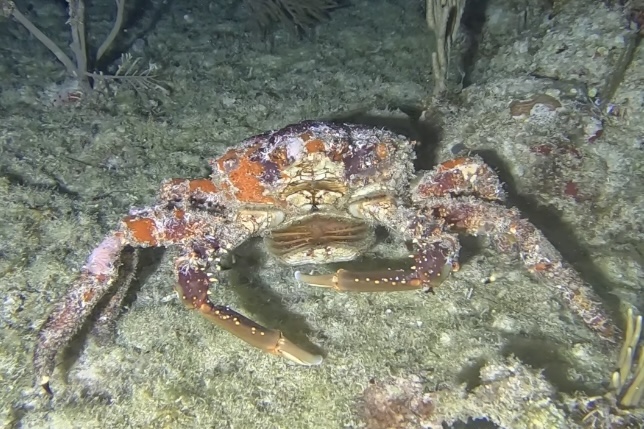
Lobsters and crabs are much easier to notice on a night dive. During the day, they often hide in holes, ledges, and reef structures. After dark, they may come out to search for food.
Caribbean spiny lobsters can sometimes be seen walking across the reef with their long antennae extended. Crabs may move across sand patches, hide in coral crevices, or freeze when a dive light catches them.
These small encounters are part of what makes night diving fun. You start noticing life in places that look empty during the day.
Moray Eels After Dark
Moray eels can be seen during the day, but at night they may become more active. During daytime dives, divers often see only the head of a moray eel sticking out from the reef. On a night dive, you may see one swimming freely or hunting.
Morays are not animals to touch or chase. Give them space, avoid blocking their path, and enjoy the encounter from a respectful distance.
Seeing a moray eel moving through the reef at night can be exciting because it shows a different side of reef behavior.
Sleeping Turtles
In Playa del Carmen, turtles are one of the most loved marine-life encounters. During a night dive, it may be possible to see a turtle resting or sleeping near the reef.
If you see a sleeping turtle, keep your distance and avoid shining your light directly into its face. The goal is to observe without disturbing it.
A sleeping turtle is a special sight because it shows how the reef becomes a resting place after dark, not only a feeding area.
Sleeping Parrotfish and Resting Reef Fish
Some reef fish settle into the reef at night. Parrotfish are especially interesting because some species create a protective mucus cocoon around their bodies while they rest.
During the day, parrotfish are often busy swimming and feeding around the reef. At night, they may be tucked into coral or rock structures, barely moving.
You may also see other fish resting in small reef spaces. This is why night dives reward slow movement. The more calmly you dive, the more details you notice.
Shrimp and Tiny Reef Creatures
Night dives are not only about larger animals. With a dive light, you may notice shrimp, small crabs, tiny fish, worms, and other small reef creatures that are easy to miss during the day.
Some of the best night-dive moments happen when you stop looking only for big animals and start paying attention to small movement in the reef.
Look carefully around coral heads, holes, sponges, and sand patches. The reef becomes full of tiny activity after dark.
Bioluminescence
One of the most magical parts of night diving can be bioluminescence. Tiny plankton may glow when the water is disturbed, creating small flashes of light around your movement.
Bioluminescence is not guaranteed on every dive, and it can depend on conditions. But when it appears, it feels like underwater stars.
If your guide decides it is safe, there may be a moment when divers cover or turn off lights briefly and gently move a hand through the water to see the glow. Always follow the guide’s instructions and never turn off your light randomly without planning.
Coral Polyps Feeding at Night
The reef itself can look different at night. Some coral polyps extend after dark to feed, giving the reef a softer and more alive appearance.
This is one reason night diving is not only about animals moving around. The whole reef ecosystem changes. Even coral structures that look still during the day may appear more active after sunset.
Move slowly, keep good buoyancy, and avoid touching the reef. Night diving is a chance to observe more closely, not to get closer physically.
Why Night Diving Feels So Different From Day Diving
During the day, you see the full reef in natural light. At night, your dive light controls what you see. This makes the dive feel more focused.
Many divers say night diving feels calmer than expected. You move slowly, stay close to the group, and watch the reef one small scene at a time.
The same reef you saw during the day can feel like a completely different dive site at night. That is why certified divers often book night dives even if they have already done reef dives in Playa del Carmen.
Is Marine Life Guaranteed on a Night Dive?
No. Marine-life sightings are never guaranteed. The ocean is not a zoo, and every dive is different.
However, night dives often give you a better chance to see nocturnal behavior because many animals become more active after dark.
Weather, visibility, current, season, moonlight, reef site, diver behavior, and luck can all affect what you see.
How to Get Better Marine-Life Encounters at Night
The best way to see more marine life at night is to dive slowly and calmly. Fast divers miss small details and can scare animals away.
Use these habits:
- Move slowly and avoid sudden movements.
- Stay close to your guide and buddy.
- Keep good buoyancy and avoid touching the reef.
- Do not chase animals.
- Do not shine your light aggressively into animal faces.
- Look carefully into reef cracks, holes, ledges, and sand patches.
- Control your breathing and finning.
- Let animals behave naturally.
Respectful divers usually have better encounters because the animals are less disturbed.
Is Night Diving Safe for Watching Marine Life?
Night diving can be safe when it is planned properly and done by certified divers with a professional guide, proper lights, suitable conditions, and a clear briefing.
The safety rules matter: stay close, communicate early, control your buoyancy, check your air, and follow the guide. You should not wander away just because you saw something interesting.
If safety is your main concern, read our full guide: Is Night Diving Safe?
Who Can Join a Night Dive in Playa del Carmen?
Night dives are for certified divers. They are not for non-certified guests or Discover Scuba Diving participants.
Xico Dive Center’s night dive requires at least Open Water certification and includes one guided night dive, dive lights, a professional certified guide, and the normal dive logistics shown on the activity page.
If you are certified and want to experience the reef after dark, see our Night Dive Playa del Carmen page.
Should You Do a Daytime Reef Dive First?
If you are rusty, nervous, or have not dived in Playa del Carmen before, a daytime reef dive first can be a smart choice. It lets you get comfortable with the local conditions, equipment, weighting, and guide style before adding darkness.
For many certified divers, reef diving in Playa del Carmen is the best warm-up before a first night dive.
Frequently Asked Questions About Night Dive Marine Life
What marine life can you see on a night dive in Playa del Carmen?
You may see octopuses, lobsters, crabs, moray eels, shrimp, sleeping turtles, sleeping parrotfish, resting reef fish, coral polyps feeding, and sometimes bioluminescent plankton.
Can you see octopus on a night dive?
Yes, octopuses are one of the most exciting possible night-dive sightings. They are usually more active after dark, but sightings are never guaranteed.
Can you see turtles on a night dive?
It may be possible to see sleeping or resting turtles on a night dive. If you do, keep your distance and avoid shining your light directly into the turtle’s face.
Can you see bioluminescence in Playa del Carmen?
Sometimes. Bioluminescence depends on conditions and is not guaranteed, but it can appear as small glowing flashes when plankton is disturbed.
Is night diving better than day diving for marine life?
It is not better or worse. It is different. Day dives are better for seeing the full reef, colors, and daytime fish activity. Night dives are better for seeing nocturnal behavior, hunting, resting fish, lobsters, crabs, octopuses, and a different reef atmosphere.
Do animals attack divers at night?
Marine animals are not waiting to attack divers at night. The best approach is to move slowly, respect distance, avoid touching animals, and follow your guide.
Do you need to be certified for a night dive?
Yes. Night diving is for certified divers. Xico Dive Center’s night dive requires at least Open Water certification.
Is night diving worth it in Playa del Carmen?
Yes, for many certified divers it is worth it because the reef changes after sunset and you can see behavior that is rare or harder to notice during the day.
Final Thoughts: The Reef Comes Alive Differently at Night
A night dive in Playa del Carmen is not only a darker version of a daytime dive. It is a different experience. The reef becomes quieter, your focus becomes sharper, and marine life behaves in ways you may never see during the day.
From octopuses and lobsters to sleeping turtles, moray eels, tiny shrimp, coral polyps, and possible bioluminescence, night diving shows certified divers another side of the Caribbean reef.
If you are certified, comfortable with basic skills, and curious about the reef after sunset, a guided night dive can be one of the most memorable dives of your trip.