
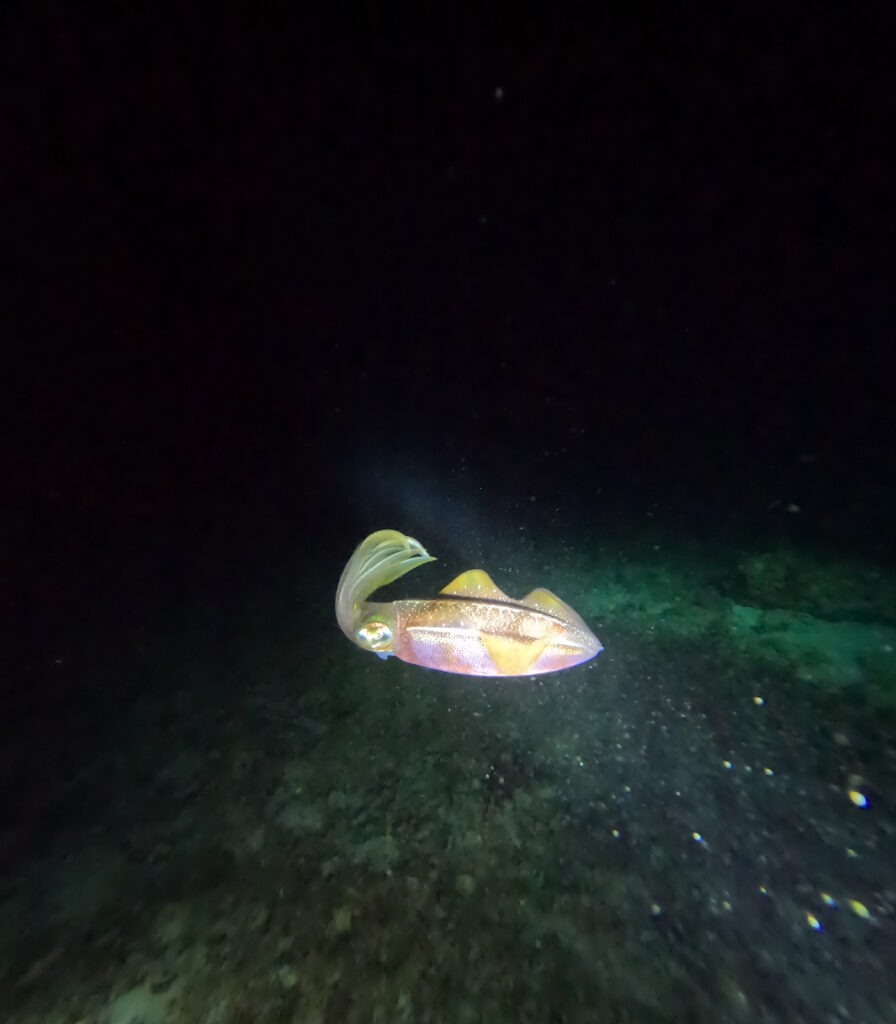
Night diving is one of the most exciting scuba experiences, but it is also one of the dives that makes many certified divers ask: is night diving safe?
The honest answer is yes, night diving can be safe when it is planned correctly, done with a certified guide, suitable conditions, proper lights, a clear briefing, and divers who are comfortable with basic scuba skills.
It is not a dive for non-certified guests, and it should not be treated like a normal daytime dive with less light. A night dive is still scuba diving, but the darkness changes how you communicate, navigate, observe marine life, and stay close to the group.
Fast answer: Night diving is safe for certified divers when it is done with a professional guide, proper dive lights, a clear briefing, calm conditions, close group control, and divers who are comfortable with buoyancy, air checks, equalizing, and following instructions. If you are rusty, nervous, or have not dived recently, a refresher or daytime reef dive first may be the safer choice.
Is Night Diving Safe?
Yes, night diving can be safe when it is done responsibly. The key is preparation. Before a night dive, your guide should explain the dive site, depth, route, light use, hand and light signals, buddy procedures, air checks, and what to do if someone feels uncomfortable.
Night diving is different because your field of vision is smaller. You see what your light shows you. That can feel strange at first, but it can also make the dive feel calm, focused, and beautiful.
In Playa del Carmen, night dives are usually planned on suitable local reef sites, depending on weather, sea conditions, port status, guide decision, and diver level.
Why Do Divers Ask If Night Diving Is Dangerous?
Divers ask if night diving is dangerous because the ocean feels different after sunset. You cannot see the full reef in the same way as during the day, communication is different, and some divers worry about getting lost, losing their buddy, or encountering marine life in the dark.
Those concerns are normal. But most night-diving risks are managed with the right system: professional guide, conservative site choice, proper lights, close spacing, slow movement, clear signals, and a good pre-dive briefing.
Night diving becomes riskier when divers ignore the briefing, separate from the group, shine lights carelessly, swim too fast, lose buoyancy control, or dive when they are already uncomfortable with basic scuba skills.
What Makes Night Diving Safe?
Night diving safety comes from several things working together. It is not just “bring a flashlight and jump in.” A proper night dive should be planned, guided, and controlled.
A professional guide
Your guide chooses the site, checks conditions, explains the plan, manages the group, monitors comfort, and keeps the dive within safe limits.
Proper dive lights
Dive lights are one of the most important pieces of night-diving equipment. A primary light helps you see the reef, your instruments, marine life, and the guide. A backup light adds extra security if your main light fails.
Clear communication
Communication is different at night. You use normal hand signals, but you also use your light to get attention, show “OK,” point at something, or signal a problem. Your guide should review these signals before the dive.
Close group control
At night, divers should stay closer to the guide and buddy than they might during the day. It is easier to lose visual contact in the dark, so spacing matters.
Slow movement
Night dives are not about covering distance. They are about moving slowly, observing carefully, and staying relaxed. Slow movement helps buoyancy, air consumption, group control, and marine-life encounters.
Who Can Do a Night Dive?
Night diving is for certified divers. For Xico Dive Center’s night dive, a minimum Open Water certification is required.
You do not need to be a professional diver, but you should be comfortable with normal scuba skills before diving after dark.
You should be comfortable with:
- Breathing calmly underwater
- Equalizing during descent
- Basic buoyancy control
- Mask clearing
- Checking your air
- Following a guide
- Staying close to your buddy or group
- Communicating if you feel uncomfortable
If you are already certified and ready to book, see our Night Dive Playa del Carmen page.
Who Should Not Do a Night Dive Yet?
Night diving is not the right choice for every diver on every day. You should choose a refresher or daytime reef dive first if your basic scuba skills are not comfortable yet.
You may not be ready for a night dive yet if:
- You are not scuba certified
- You panic easily underwater
- You are not comfortable clearing your mask
- You have poor buoyancy control
- You have not dived in years
- You are uncomfortable in low-light environments
- You do not want to stay close to the guide
- You are already nervous before entering the water
That does not mean you can never do a night dive. It may simply mean you should start with a local reef dive or refresher first.
Is Night Diving Safe for a First-Time Night Diver?
Yes, a first night dive can be safe for certified divers when it is done with the right guide, right site, right conditions, and clear briefing.
Your first night dive should not feel rushed. A good guide will explain how to use your light, how to signal, how close to stay, what marine life you may see, and how the dive plan works.
Many divers feel nervous before their first night dive, then relax once they realize their light gives them a clear focus point. The dive often feels slower and calmer than expected.
What Happens Before a Night Dive?
The briefing before a night dive is especially important. This is where the guide sets expectations and makes sure everyone understands the plan.
A good night-dive briefing should cover:
- The dive site and route
- Maximum depth and expected dive time
- Entry and exit procedures
- Primary and backup light use
- Light signals and hand signals
- Buddy and group spacing
- Air checks
- What to do if someone feels uncomfortable
- What marine life may appear after dark
If you have questions, ask before entering the water. A night dive feels much easier when you understand the plan.
What Equipment Do You Need for Night Diving?
Most of your scuba equipment is the same as during the day, but lights are the major difference.
For a night dive, divers normally use:
- A primary dive light
- A backup light
- Normal scuba equipment
- Exposure protection suitable for the water temperature
- A dive computer or timing/depth device
- A surface marker or boat procedures depending on the dive plan
On Xico Dive Center’s night dive, dive lights are included, and the dive is guided by a professional certified guide.
What If Your Dive Light Fails?
If your light fails, do not panic. Stop, stay close to your buddy or guide, switch to your backup light, and signal the problem.
This is one reason backup lights matter. The goal is not to continue exploring as if nothing happened. The goal is to communicate, stay together, and follow the guide’s plan.
How Do Divers Communicate at Night?
Divers communicate with hand signals and light signals. You should never shine your light directly into another diver’s eyes.
Common light communication includes:
- Moving the light slowly to get attention
- Making a circle with the light for “OK”
- Pointing the light at your hand signal
- Using the light to show marine life or a problem
Your guide will explain the signals before the dive. The most important rule is to communicate early if something does not feel right.
What Marine Life Can You See on a Night Dive?
Night diving is special because the reef changes after sunset. Some animals hide during the day and become active at night. Others settle down and sleep.
On a night dive in Playa del Carmen, it may be possible to see:
- Octopuses
- Lobsters
- Crabs
- Moray eels
- Sleeping turtles
- Shrimp
- Bioluminescent plankton
- Fish resting in the reef
This is one of the main reasons certified divers book night dives. The reef feels completely different from a daytime dive.
Are Sharks or Predators a Problem at Night?
Many divers worry that night diving means more danger from marine life. In reality, reef animals are not waiting to attack divers.
At night, you may see different animal behavior, but the best approach is the same as during the day: move slowly, do not chase animals, do not touch the reef, do not shine lights aggressively into animal faces, and follow your guide.
Respectful divers usually have better wildlife encounters because they stay calm and let animals behave naturally.
Is Night Diving Scary?
Night diving can feel intimidating before your first time because it is unfamiliar. But many divers are surprised by how peaceful it feels once they are underwater.
Your light creates a smaller field of view, which can actually make the dive feel focused and calm. Instead of trying to see everything, you observe one area at a time.
If you are nervous, tell your guide before the dive. A good guide can explain the plan, keep you close, and help you feel more comfortable.
Should Rusty Divers Do a Refresher Before Night Diving?
Yes. If you have not dived recently or you are not confident with basic skills, a refresher is a smart idea before night diving.
Night diving is not the best place to rediscover that you are uncomfortable with buoyancy, mask clearing, equalizing, or air checks.
The PADI ReActivate Refresher Course can help certified divers rebuild confidence before night diving, cenotes, Cozumel, or more advanced dive plans.
Should You Do a Daytime Reef Dive First?
If you are certified but rusty, nervous, or new to Playa del Carmen, a daytime reef dive first can be a good decision.
During a daytime reef dive, you can get comfortable with local conditions, your equipment, weighting, buoyancy, and guide style before adding the extra challenge of darkness.
For many certified divers, reef diving in Playa del Carmen is a smart warm-up before a first night dive.
Do You Need a Night Diver Specialty?
You do not always need a Night Diver specialty to join a guided recreational night dive, but you do need to meet the dive center’s certification and comfort requirements.
A Night Diver specialty can help if you want more training in low-light navigation, light communication, planning, and confidence after sunset.
For a guided night dive with Xico Dive Center, the key requirement is that you are already certified and comfortable enough for the dive plan.
How Xico Dive Center Manages Night Dive Safety
At Xico Dive Center, night dive safety starts before the boat leaves. We want to know your certification level, last dive date, and comfort level before recommending the dive.
Night dives are guided, planned around sunset, and confirmed based on conditions and operational decisions. The dive includes a professional certified guide and dive lights.
If the conditions are not suitable, the port is closed, or the plan is not safe, the dive can be changed, postponed, or canceled.
Night Diving Safety Tips
- Be honest about your certification and last dive date.
- Listen carefully to the briefing.
- Check your light before entering the water.
- Stay close to your guide and buddy.
- Move slowly and avoid sudden movements.
- Do not shine your light directly into another diver’s eyes.
- Do not chase or touch marine life.
- Check your air regularly.
- Signal early if you feel uncomfortable.
- End the dive safely if you cannot relax.
Frequently Asked Questions About Night Diving Safety
Is night diving dangerous?
Night diving can be dangerous if it is done without planning, proper lights, guide control, or diver comfort. With a professional guide, suitable conditions, clear briefing, and certified divers, night diving can be safe and enjoyable.
Can Open Water divers do night dives?
Yes, Open Water certified divers can often join guided night dives if they are comfortable with basic skills and meet the dive center’s requirements.
Can beginners do night diving?
Non-certified beginners cannot do night diving. If “beginner” means a certified diver doing a first night dive, then yes, it may be possible with a professional guide and suitable conditions.
Do I need my own dive light?
For Xico Dive Center’s night dive, dive lights are included. Divers who own personal lights can bring them, but the guide will explain what is needed for the dive.
What happens if my light stops working?
Stop, stay close to your buddy or guide, switch to your backup light, and signal the problem. Do not continue swimming away from the group.
What animals can you see on a night dive in Playa del Carmen?
It may be possible to see octopuses, lobsters, crabs, moray eels, sleeping turtles, shrimp, resting fish, and bioluminescent plankton.
Is night diving scary?
It can feel intimidating before the first time, but many divers find it calm and focused once they are underwater. A clear briefing and professional guide make a big difference.
Should I do a refresher before night diving?
If you have not dived recently or do not feel confident with buoyancy, mask clearing, equalizing, air checks, or following a guide, a refresher is the safer first step.
What time does a night dive start?
The start time depends on sunset. Xico Dive Center confirms the exact meeting time when you book.
Is night diving worth it?
Yes, for many certified divers night diving is one of the most memorable dives because the reef changes after dark and different marine life becomes active.
Final Thoughts: Night Diving Is Safe When It Is Done Correctly
Night diving is not about being brave in the dark. It is about preparation, good lights, a clear briefing, slow movement, close group control, and honest communication.
If you are certified, comfortable with basic skills, and ready for a different side of the reef, a night dive in Playa del Carmen can be a beautiful and memorable experience.
If you are rusty or nervous, start with a refresher or daytime reef dive first. The safest dive is always the one that matches your real comfort level.