
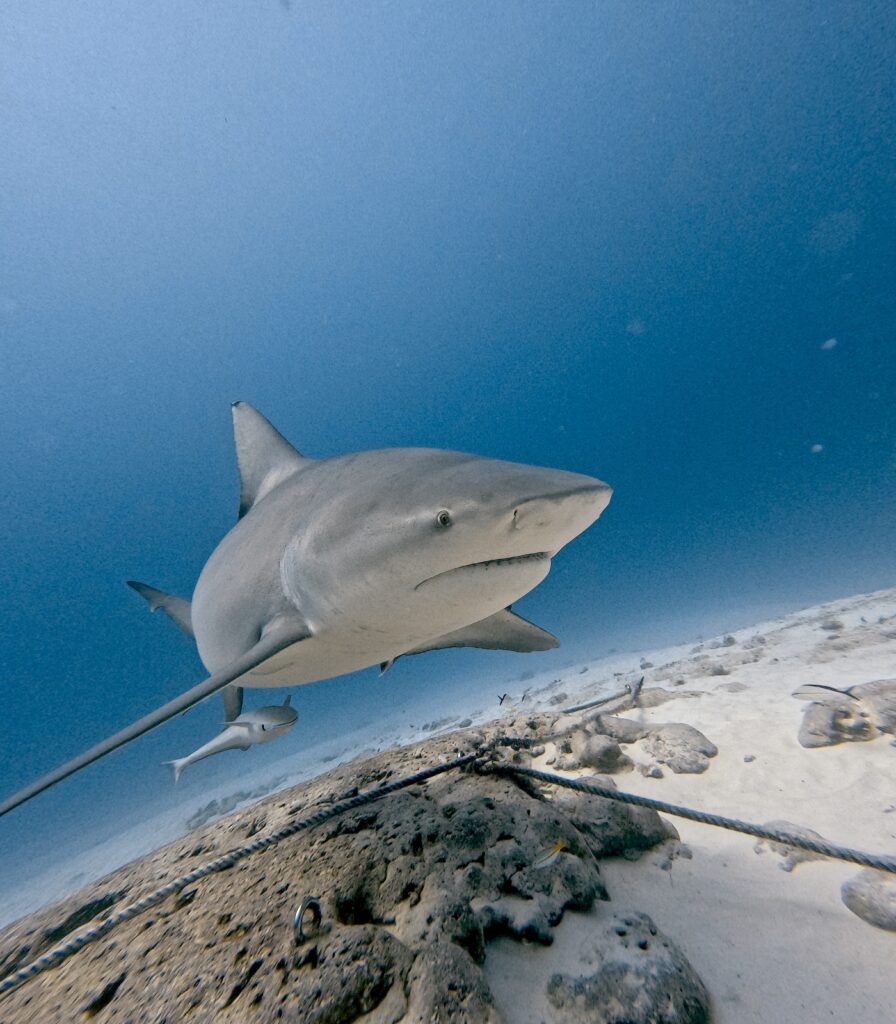
Bull shark diving is one of the most powerful scuba experiences in Playa del Carmen, but it is also one of the dives that makes certified divers ask: is diving with bull sharks safe?
The honest answer is yes, bull shark diving can be safe when it is done with professional guides, suitable conditions, strict procedures, and divers who are experienced enough to follow the briefing underwater.
But it is not a beginner dive, and it should not be treated like a normal reef dive. Bull sharks are large wild animals, the dive is deeper than many beginner dives, and every diver needs to stay calm, controlled, and close to the group.
Fast answer: Diving with bull sharks can be safe for qualified certified divers when the dive is professionally guided, conditions are suitable, the group follows strict procedures, and divers have good buoyancy, calm breathing, and recent ocean experience. At Xico Dive Center, bull shark diving requires Open Water certification or higher. Divers with 25 logged dives or fewer must complete a check dive first; divers with more than 25 logged dives still go through the normal suitability and recent-experience screening.
Is Diving with Bull Sharks Safe?
Yes, diving with bull sharks can be safe when it is done responsibly. The key is control. A bull shark dive should include a detailed briefing, experienced guides, clear group positioning, strict behavior rules, and divers who are comfortable underwater.
In Playa del Carmen, bull shark diving is a seasonal scuba experience. The sharks are wild animals, and the dive plan always depends on weather, visibility, current, port status, recent shark activity, and guide decision.
The goal is not to chase, touch, provoke, or disturb the sharks. The goal is to observe them calmly and respectfully while staying in the correct position with the guide.
Why Do Divers Ask If Bull Shark Diving Is Dangerous?
Divers ask if bull shark diving is dangerous because bull sharks have a strong reputation. They are powerful apex predators, and many people hear the words “bull shark” and immediately think of danger.
That fear is understandable, but it is not the full picture. A professionally guided scuba dive is very different from random contact with sharks at the surface, in poor visibility, near fishing activity, or in situations where sharks may confuse movement or food signals.
On a controlled bull shark dive, divers are briefed before entering the water, descend with guides, stay together, hold position, keep hands close, and avoid sudden movements. The whole dive is built around calm behavior and group control.
Are Bull Sharks Dangerous?
Bull sharks are powerful wild animals, so they deserve respect. They are not harmless pets, and no dive with large marine life should be treated casually.
But “dangerous” does not mean “actively trying to attack divers.” During organized bull shark dives in Playa del Carmen, the sharks usually move in calm, predictable patterns while guides manage the group and watch shark behavior.
The safest attitude is simple: respect the animal, follow the briefing, stay calm, and do not improvise underwater.
Are Bull Sharks Aggressive Toward Divers?
Bull sharks are often described as aggressive because of their strength, adaptability, and reputation in shark incident statistics. But the situation during a structured scuba dive is different.
Divers are not splashing on the surface, spearfishing, or swimming away from the group. They are underwater with scuba gear, staying together, following a guide, and behaving calmly.
That does not remove all risk, but it changes the interaction. The dive becomes safer when divers hold position, avoid fast movements, keep their hands close, and respect the guide’s instructions.
Who Can Do a Bull Shark Dive?
Bull shark diving is for certified divers who are comfortable, controlled, and able to follow instructions at depth.
At Xico Dive Center, the basic requirements are:
- Open Water certification or higher
- More than 25 logged dives, or a required check dive at 25 logged dives or fewer
- Good buoyancy control
- Comfortable breathing and staying calm underwater
- Ability to follow guide instructions exactly
- Comfort with deeper recreational dives
- Recent diving experience, or a check dive if needed
If you have 25 logged dives or fewer, a check dive is required before going to the shark site. This is not about selling another dive. It is about confirming that every diver can stay calm, hold position, and follow the safety protocol.
Who Should Not Do a Bull Shark Dive Yet?
Bull shark diving is not the right dive for every certified diver on every day. Some divers should start with a local reef dive or refresher first.
You may not be ready for a bull shark dive yet if:
- You are not scuba certified
- You are doing Discover Scuba Diving
- You have poor buoyancy control
- You panic easily underwater
- You are not comfortable at depth
- You have not dived in a long time
- You cannot stay close to the group
- You ignore guide instructions
- You are looking for a “crazy” or uncontrolled shark experience
That does not mean you can never do a bull shark dive. It may simply mean you should do a reef dive, check dive, or refresher first.
Why Xico Requires a Check Dive at 25 Logged Dives or Fewer
The check-dive rule exists because bull shark diving requires more than just a certification card.
During the dive, you need to control your buoyancy, stay in the correct position, monitor your air, manage depth, stay calm if a shark passes close, and follow the guide without hesitation.
A diver with limited experience may be certified but still not ready for this kind of dive. That is why a check dive is required for divers with 25 logged dives or fewer. It lets the guide see your real comfort level before deciding if the shark site is appropriate.
How Deep Is the Bull Shark Dive?
Bull shark dives in Playa del Carmen are usually deeper than easy beginner reef dives. The exact depth depends on the dive plan and conditions, but divers should be comfortable with deeper recreational profiles.
This is one reason buoyancy and air consumption matter. At depth, divers need to stay calm, avoid unnecessary movement, and follow the guide’s plan carefully.
If you are not comfortable with deeper dives yet, a local reef dive or refresher is the better first step.
What Makes Bull Shark Diving Safe?
Bull shark diving safety comes from several things working together. It is not only about the guide, and it is not only about the diver. The whole system matters.
Professional guides
Experienced guides choose the site, check conditions, explain the plan, position the group, watch shark behavior, and make decisions during the dive.
Clear briefing
The briefing should explain depth, descent, positioning, hand placement, group control, shark behavior, emergency procedures, and what not to do near the sharks.
Qualified divers
Divers need enough experience to stay calm, control buoyancy, follow the plan, and avoid sudden movements.
Group control
The group should stay close and follow the guide’s positioning. Separating from the group or swimming away from the guide increases risk.
Respectful behavior
Divers should never chase, touch, feed, grab, block, or harass sharks. Respectful divers usually have better and safer wildlife encounters.
Suitable conditions
Weather, visibility, current, port status, and recent shark activity all matter. If conditions are not suitable, the dive plan can change.
Safety Rules for Diving with Bull Sharks
The briefing matters. The safest bull shark dives happen when everyone follows the same rules from start to finish.
Important rules include:
- Listen carefully to the full briefing.
- Stay close to your guide and group.
- Hold the position your guide gives you.
- Keep your hands close to your body.
- Move slowly and calmly.
- Avoid sudden fin kicks or fast swimming.
- Do not chase the sharks.
- Do not touch the sharks.
- Do not swim away from the group for photos or video.
- Keep your gear streamlined so nothing dangles.
- Monitor your air and depth.
- Signal early if you feel uncomfortable.
What Happens Before the Dive?
Before a bull shark dive, the guide should explain the full plan clearly. This is not a dive where you want surprises underwater.
A good bull shark briefing should cover:
- The dive site and expected conditions
- Maximum depth and expected dive time
- Descent and ascent procedures
- Where divers should position themselves
- How close the group should stay
- What to do if a shark passes close
- What movements to avoid
- Hand signals and emergency communication
- Air checks and turn pressure
- What happens if someone feels uncomfortable
If you have questions, ask before entering the water. A bull shark dive feels much safer when every diver understands the plan.
Feeding Dive vs Observation Dive: Is One Safer?
In Playa del Carmen, there are different styles of bull shark diving. At Xico Dive Center, the two main options are the Bull Shark Feeding Dive and the Bull Shark Observation Dive.
The feeding dive is a structured shark dive where trained professionals use a controlled feeding setup while divers stay in position. The observation dive is a non-feeding shark dive focused on observing bull sharks more naturally, usually combined with another dive.
We do not present one as “safe” and the other as “unsafe.” They are different experiences. Safety depends on the operator, guide control, conditions, diver experience, and whether the group follows the briefing.
If you want the closest and most intense encounter, the feeding dive may be the right option. If you prefer a non-feeding experience, the observation dive may be a better fit.
You can compare both options on our main Bull Shark Diving Playa del Carmen page.
Common Myths About Bull Shark Diving
Many fears about bull shark diving come from movies, headlines, and misunderstandings about shark behavior. Bull sharks deserve respect, but they are not mindless monsters.
Myth 1: Bull sharks are always looking to attack people
Bull sharks are predators, but that does not mean they are constantly looking to attack divers. During a controlled scuba dive, divers are underwater, calm, grouped, and guided. That is very different from many surface situations where shark incidents are more likely to happen.
Myth 2: Bull sharks are unpredictable all the time
No wild animal is perfectly predictable, but experienced guides watch shark behavior and adjust the dive if something does not feel right. This is one reason professional supervision matters.
Myth 3: Cage-free shark diving means uncontrolled shark diving
Bull shark diving in Playa del Carmen is cage-free, but cage-free does not mean uncontrolled. The control comes from guide experience, diver positioning, briefing, conditions, and calm group behavior.
Myth 4: Feeding automatically makes sharks attack divers
Feeding dives are controversial in some destinations, and not every diver wants that style of encounter. That is why it is important to explain the difference honestly. A structured feeding dive depends on strict positioning and guide control. A non-feeding observation dive focuses on watching natural behavior. Both require serious procedures.
Myth 5: If sharks do not appear, the dive failed
Bull sharks are wild animals. Sightings are common in season, but they are never guaranteed. A responsible dive center gives honest information about recent activity, conditions, and realistic expectations.
Is Bull Shark Diving Safe for a First-Time Shark Diver?
Yes, bull shark diving can be safe for a first-time shark diver if that diver is already certified, experienced enough, calm, and comfortable with the dive plan.
“First shark dive” does not mean “first scuba dive.” A diver can be new to shark diving but still experienced enough for the site.
If you are a certified diver with good buoyancy, recent dives, and enough logged dives, your first bull shark dive can be an unforgettable experience. If you are rusty, nervous, or low on experience, do a reef dive or refresher first.
Should Nervous Divers Do a Bull Shark Dive?
Some nervousness is normal. Many divers feel excited and a little intimidated before their first bull shark dive. That does not automatically mean you should not go.
But there is a big difference between normal nerves and uncontrolled panic.
You may be okay if you can listen, breathe slowly, stay with the group, and follow instructions. You are probably not ready if you might bolt, swim away, ignore the guide, or lose buoyancy control.
If you are not sure, tell us before booking. We can recommend the safest path based on your certification, logged dives, last dive date, and comfort level.
Should Rusty Divers Do a Refresher First?
Yes. If you have not dived recently or you are not confident with basic skills, a refresher is a smart idea before bull shark diving.
Bull shark diving is not the best place to rediscover that you are uncomfortable with buoyancy, mask clearing, equalizing, air checks, or following a guide.
The PADI ReActivate Refresher Course can help certified divers rebuild confidence before bull shark diving, cenotes, Cozumel, or other advanced dive plans.
Should You Do a Reef Dive First?
If you are certified but rusty, nervous, or new to Playa del Carmen, a daytime reef dive first can be the smarter choice.
During a local reef dive, you can get comfortable with conditions, equipment, weighting, buoyancy, air consumption, and guide style before adding the extra pressure of a shark dive.
For many certified divers, reef diving in Playa del Carmen is the best warm-up before a bull shark dive.
When Is Bull Shark Season in Playa del Carmen?
Xico operates its scheduled bull shark diving season from November 1 through March 31. Bull sharks are wild animals, so individual sharks can still be seen outside the operating season, including spring or late summer; an off-season sighting does not mean Xico is operating the seasonal shark-dive product on that date.
The best period is often in the middle of the season, but bull sharks are wild animals and conditions change. Weather, visibility, current, port status, and shark activity can affect each dive.
For current availability, check our bull shark diving page or contact us before planning your trip.
Can Bull Shark Sightings Be Guaranteed?
No. Bull sharks are wild animals, and sightings cannot be guaranteed.
During the season, the chance of seeing bull sharks can be good, but no responsible dive center should promise a wild animal encounter with 100% certainty.
What we can do is give honest information about the season, recent sightings, weather, visibility, and the best option for your experience level.
How Xico Dive Center Manages Bull Shark Safety
At Xico Dive Center, bull shark safety starts before we confirm the dive. We want to know your certification level, number of logged dives, last dive date, and comfort level before recommending the shark site.
Our bull shark dives are guided, planned around conditions, and confirmed based on safety, port status, recent shark activity, and diver level.
If conditions are not suitable, the port is closed, or the plan is not safe for the group, the dive can be changed, postponed, or canceled.
Our goal is not to put every diver on the shark dive at any cost. Our goal is to put the right divers on the right dive under the right conditions.
Bull Shark Diving Safety Tips
- Be honest about your certification, logged dives, and last dive date.
- Do not exaggerate your experience level.
- Listen carefully to the briefing.
- Stay close to your guide and group.
- Hold your position when instructed.
- Keep your hands close to your body.
- Move slowly and avoid sudden movements.
- Do not chase, touch, or provoke sharks.
- Keep your gear streamlined.
- Check your air and depth regularly.
- Signal early if you feel uncomfortable.
- Accept the guide’s decision if conditions are not right.
Frequently Asked Questions About Bull Shark Diving Safety
Is diving with bull sharks dangerous?
Bull shark diving has risks because bull sharks are large wild animals and the dive requires control at depth. With professional guides, suitable conditions, strict procedures, and qualified divers, those risks can be managed.
Are bull sharks dangerous to divers?
Bull sharks are powerful predators and should be respected. During structured scuba dives, they are not usually aggressive toward divers who stay calm, follow the guide, and hold position.
Are bull sharks aggressive?
Bull sharks have a reputation for aggression, but that does not mean they are constantly looking to attack divers. In controlled scuba-diving conditions, behavior is usually calm when divers follow the rules.
What certification do I need for bull shark diving?
You need Open Water certification or higher. At Xico Dive Center, divers with 25 logged dives or fewer must complete a check dive first. With more than 25 logged dives, the automatic check-dive requirement does not apply, but normal suitability screening still does.
Can beginners do bull shark diving?
No. Non-certified beginners and Discover Scuba Diving participants cannot do bull shark diving. Certified divers also need enough experience and comfort to follow the dive plan safely.
Can Open Water divers do bull shark diving?
Yes, Open Water certified divers may be able to do the dive if they meet the experience requirements, have enough logged dives, and are comfortable with the depth and conditions.
What if I have 25 logged dives or fewer?
If you have 25 logged dives or fewer, Xico requires a check dive before the shark site. With more than 25 logged dives, the automatic check-dive requirement does not apply, but the guide still reviews certification, recent experience, buoyancy and comfort at depth.
Is the bull shark dive in a cage?
No. Bull shark diving in Playa del Carmen is cage-free. Safety comes from guide supervision, group positioning, strict procedures, suitable conditions, and diver discipline.
Is the feeding dive safe?
The feeding dive is a controlled shark dive for qualified divers. It requires strict positioning, guide control, and calm behavior. It is more intense than the observation dive, so divers should choose the option that matches their experience and comfort level.
Is the observation dive safer than feeding?
The observation dive is a non-feeding shark experience and may feel more natural for divers who do not want a feeding setup. Safety still depends on conditions, guide control, diver experience, and following the briefing.
When is bull shark season in Playa del Carmen?
Xico operates bull shark diving from November through March. Individual sharks can still be seen outside the operating season, but availability of Xico’s shark-dive product follows the seasonal operating schedule and current conditions.
Will I definitely see bull sharks?
No. Bull sharks are wild animals, and sightings cannot be guaranteed. During season the chance can be good, but every dive depends on conditions and shark activity.
What if I have not dived in a while?
If you have not dived recently, we recommend a refresher or local reef dive first. Bull shark diving requires calm buoyancy, comfort at depth, and the ability to follow instructions without stress.
Final Thoughts: Bull Shark Diving Is Safe When It Is Done Correctly
Bull shark diving is not about being fearless. It is about preparation, experience, calm behavior, professional guide control, and respect for wild animals.
If you are certified, experienced, comfortable at depth, and ready to follow the briefing, bull shark diving in Playa del Carmen can be one of the most unforgettable scuba experiences in Mexico.
If you are rusty, nervous, or not sure if you qualify, start with a refresher or local reef dive first. The safest dive is always the one that matches your real experience level.
If you want to compare the different options, visit our Bull Shark Diving Playa del Carmen page, or contact us with your certification level, logged dives, and last dive date.