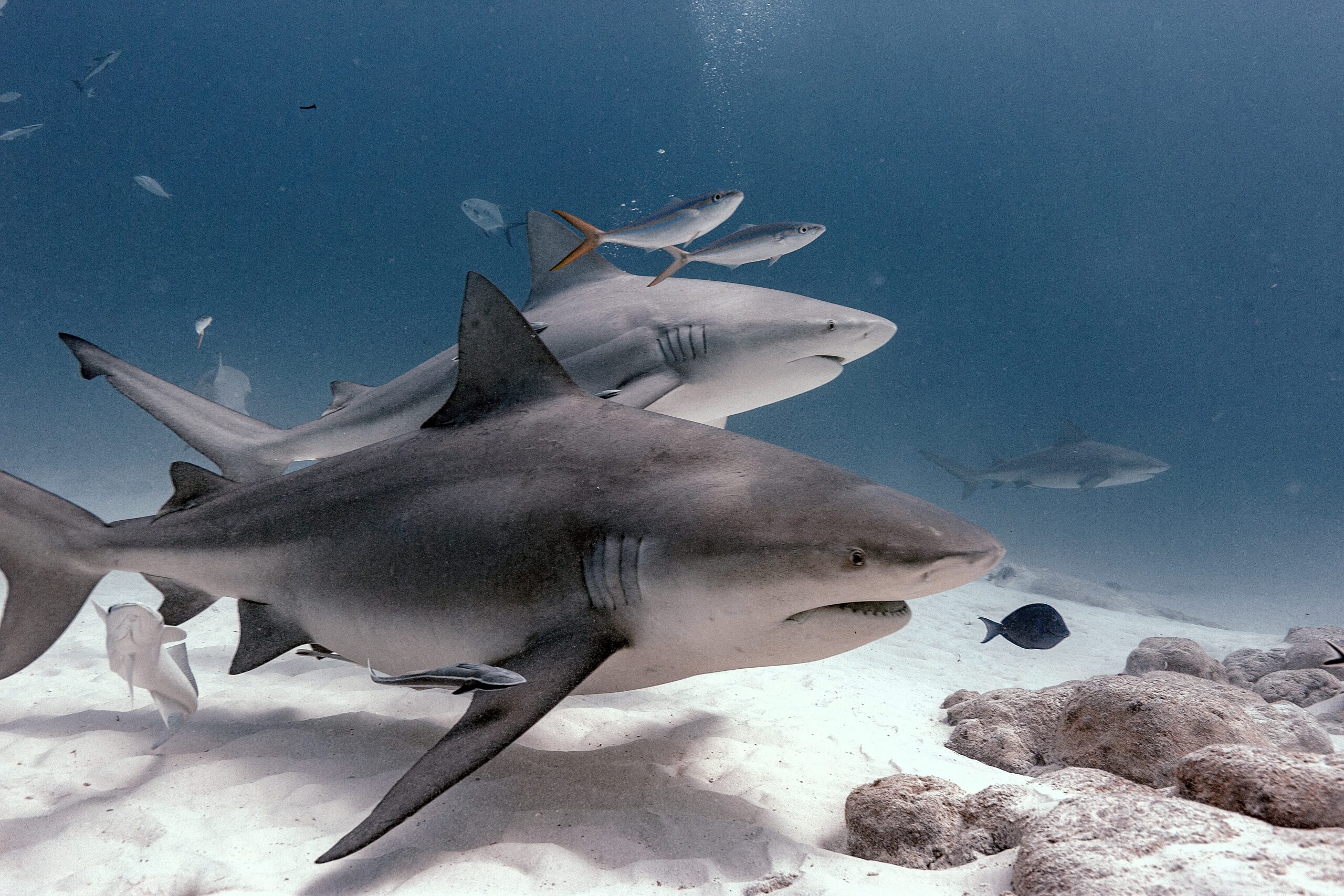
Shark diving is one of the most exciting experiences in scuba, but it is also one of the most misunderstood. Many people hear “diving with sharks” and immediately imagine danger, attacks, and movie-style fear.
The truth is very different. Shark diving can be safe when it is done with professional guides, suitable conditions, clear procedures, and divers who understand how to behave around marine life.
That does not mean sharks should be treated casually. Sharks are wild animals, and every shark encounter deserves respect. But fear should be based on facts, not movies, myths, or dramatic headlines.
Fast answer: Shark diving is not automatically dangerous. Most organized shark dives are planned, guided, and controlled. The safest shark encounters happen when divers stay calm, follow the guide, avoid chasing or touching animals, control buoyancy, and respect shark behavior. If you are specifically asking about bull sharks in Playa del Carmen, read our dedicated guide: Is Diving with Bull Sharks Safe?
Is Shark Diving Dangerous?
Shark diving can have risks, because sharks are wild predators and scuba diving itself requires training, planning, and good decision-making. But “risk” does not mean “reckless” or “unsafe.”
Most shark-diving experiences are designed around control. Divers receive a briefing, follow a guide, stay in a group, control their buoyancy, and avoid behaviors that could stress or disturb the animals.
In many cases, shark diving feels calmer than people expect. The sharks are not usually interested in divers as food. They may pass by, circle, observe, or keep their distance. The diver’s job is to stay calm and let the encounter happen naturally.
Why Are People Afraid of Diving with Sharks?
Most shark fear comes from movies, sensational news, and the way sharks are often described as aggressive monsters. This image is powerful, but it is not a fair picture of real shark behavior underwater.
Sharks are predators, but they are not mindless killers. They are important marine animals with behavior patterns, body language, and ecological roles. Many shark species are cautious around divers and may avoid close contact.
Fear usually gets stronger when people do not understand the difference between swimming at the surface, surfing, fishing, spearfishing, and scuba diving with a professional guide. Those are very different situations.
Why Sharks Usually Do Not Attack Divers
Scuba divers do not behave like normal prey. Divers are underwater, breathing from scuba equipment, moving slowly, staying with a group, and often making bubbles and mechanical sounds that are unfamiliar to sharks.
Most sharks are not looking for humans. In many encounters, they are curious, cautious, or simply passing through their environment.
This is why good shark-diving behavior matters. Calm movement, steady breathing, controlled buoyancy, and respect for distance help keep the encounter peaceful.
Common Myths About Shark Diving
Many people decide shark diving is dangerous before they understand how it actually works. Let’s separate the most common myths from reality.
Myth 1: Sharks are always looking to attack people
Sharks are predators, but humans are not their normal food source. Most shark encounters with divers are calm and observational. A shark may pass close, turn away, or continue moving through the area without showing interest in the divers.
Problems are more likely when humans create risky situations: poor visibility, surface splashing, fishing activity, spearfishing, feeding without control, or entering the water in unsafe conditions.
Myth 2: Diving with sharks is only for extreme divers
Some shark dives are advanced and require strong experience, but not all shark encounters are the same. Around the world, there are many types of shark diving, from calm reef shark dives to more intense encounters with bull sharks, tiger sharks, hammerheads, or great whites.
The important question is not “Are sharks dangerous?” The better question is: “Is this specific shark dive right for my certification, experience, comfort level, and the conditions today?”
Myth 3: Sharks attack when they see divers
Seeing a diver does not mean a shark will attack. In many dive destinations, sharks are used to seeing divers and continue their normal behavior. Divers who stay calm and follow the guide are usually able to observe sharks respectfully.
Sharks can be curious, but curiosity is not the same as aggression. Guides watch shark behavior and manage the group if the situation changes.
Myth 4: Shark diving is unsafe without a cage
Some shark experiences around the world use cages, especially certain great white shark encounters. Other shark dives are cage-free and rely on guide control, diver positioning, site selection, and strict procedures.
Cage-free does not automatically mean uncontrolled. It depends on the species, location, conditions, operator, and diver requirements. In Playa del Carmen, bull shark diving is cage-free, but it is still controlled through professional guides, briefing, diver positioning, and strict rules.
Myth 5: All shark dives are the same
They are not. A reef shark dive, bull shark dive, tiger shark dive, hammerhead dive, whale shark snorkeling tour, and great white cage experience are completely different activities.
Each has different conditions, rules, depth, animal behavior, diver requirements, and risk management. This is why you should always choose the experience that fits your real level.
What Makes a Shark Dive Safe?
Safe shark diving comes from preparation, professionalism, and diver behavior. It is not just about the animal. The way the dive is planned and managed makes a huge difference.
A professional operator
A good dive center checks conditions, uses trained guides, explains the plan clearly, screens divers when needed, and does not force a shark dive when the conditions are not right.
A clear briefing
The briefing should explain the dive site, depth, shark behavior, group position, hand placement, movement rules, emergency procedures, and what to do if a shark comes close.
Correct diver level
Some shark dives are suitable for many certified divers. Others require more experience. Divers should be honest about their certification level, logged dives, last dive date, buoyancy, and comfort underwater.
Calm behavior
Sharks respond to the environment around them. Calm divers are easier to manage and less likely to create stress. Fast swimming, chasing, touching, or separating from the group can increase risk.
Respect for the animal
Sharks are not props for photos. Divers should never grab, ride, chase, corner, harass, or block a shark’s path. The goal is respectful observation.
How to Behave When Diving with Sharks
Good behavior is simple, but it matters. Before any shark dive, listen carefully to the guide and follow the rules for that specific site.
General shark-diving rules include:
- Stay close to your guide and group.
- Move slowly and calmly.
- Control your buoyancy.
- Keep your hands close to your body when instructed.
- Do not chase sharks.
- Do not touch sharks.
- Do not swim away from the group for photos or videos.
- Do not block a shark’s path.
- Do not bring loose, shiny, or dangling gear unless your guide approves it.
- Signal early if you feel uncomfortable.
- Accept the guide’s decision if the dive plan changes.
Is Scuba Diving Safe from Sharks?
For most scuba divers, sharks are not the main risk in diving. More common scuba concerns include buoyancy problems, poor air management, current, depth, equalization, dehydration, overexertion, bad planning, or diving beyond your training.
That does not mean sharks should be ignored. It means they should be understood correctly. A well-managed shark encounter is usually about calm observation, not fighting danger.
If you are already scared before the dive, talk to your guide. A good guide can explain the plan, help you understand shark behavior, and recommend a different dive if shark diving is not the right choice for you that day.
What Are the Different Types of Shark Diving?
Shark diving is not one single activity. Around the world, shark encounters can look very different depending on the species and location.
Reef shark diving
In some destinations, reef sharks are commonly seen on normal reef dives. These encounters are often calm, with sharks swimming along the reef or passing near divers.
Bull shark diving
Bull shark diving is usually more intense because bull sharks are large, powerful animals. In Playa del Carmen, bull shark diving is a seasonal experience for certified divers who meet the requirements and follow strict procedures.
Tiger shark diving
Tiger shark dives in destinations like the Bahamas are famous for large animals and close encounters. These dives are generally for experienced divers and require strong guide control.
Hammerhead diving
Hammerhead dives often depend on season, location, depth, current, and visibility. Some hammerhead encounters are for advanced divers because of conditions and distance from shore.
Great white shark encounters
Great white experiences are often associated with cage diving in colder-water destinations. This is a very different style of shark encounter from reef shark or bull shark diving.
Whale shark snorkeling
Whale sharks are not the same type of experience as shark diving with predators. Whale shark tours are usually snorkeling experiences, not scuba dives, and whale sharks are filter feeders. This is a separate seasonal activity from bull shark diving.
If you want a gentle seasonal wildlife experience instead of a predator shark dive, see our Whale Shark Discovery tour.
How Does Playa del Carmen Shark Diving Compare?
Playa del Carmen is best known for seasonal bull shark diving. This is very different from cage diving with great whites, tiger shark diving in the Bahamas, reef shark dives in other Caribbean destinations, or whale shark snorkeling tours in the wider region.
The Playa del Carmen bull shark experience is close to town, done by boat, and focused on a specific seasonal encounter. It is not for non-certified guests, and it is not a casual beach activity.
If your goal is specifically to dive with bull sharks in Playa del Carmen, start with our main Bull Shark Diving Playa del Carmen page. If your main concern is safety, read Is Diving with Bull Sharks Safe?
Is Shark Diving Better Than Normal Reef Diving?
Shark diving and reef diving are different experiences. One is not automatically better than the other.
Reef diving is usually more relaxed and focused on coral formations, tropical fish, turtles, rays, moray eels, and general marine life. Shark diving is more focused, more emotional, and often more structured because divers need to follow specific behavior rules.
If you are nervous, rusty, or new to local conditions, reef diving in Playa del Carmen may be the smarter first step. If you are comfortable and qualified, a shark dive can become one of the most memorable dives of your trip.
Is Shark Diving Good for First-Time Shark Divers?
Yes, shark diving can be good for a first-time shark diver if the person is already certified, comfortable underwater, and choosing a shark experience that matches their level.
“First-time shark diver” does not mean “first-time scuba diver.” Some shark dives require real experience. Before booking, check the certification requirement, depth, current, conditions, and guide expectations.
If you are already a certified diver with good buoyancy and recent dives, your first shark encounter can be calm, beautiful, and confidence-building. If you have not dived in years, start with a refresher or easy reef dive first.
Should Nervous Divers Try Shark Diving?
Some nerves are normal. Many divers feel nervous before their first shark dive, then relax once they understand the briefing and see how calmly the sharks move underwater.
But uncontrolled fear is different. If you think you may panic, bolt to the surface, swim away from the guide, or lose buoyancy control, shark diving is not the right first step.
A nervous but controlled diver may be fine. A panicking diver is not. Be honest with your dive center before booking.
Do Sharks Attack Divers Because of Bubbles?
No, bubbles do not make sharks attack divers. In fact, the sound and appearance of scuba bubbles may make divers look unfamiliar to many animals.
Sharks may be curious, but curiosity does not mean aggression. The safest response is to stay calm, breathe normally, keep your position, and follow your guide.
Do Sharks Smell Fear?
No, sharks do not “smell fear” like in movies. They have strong senses, but fear itself is not a scent that attracts sharks.
What matters more is behavior. Fast movement, splashing, chasing, fishing activity, or uncontrolled panic can create a less safe situation. Calm divers are easier to manage and less likely to create stress.
Do Shiny Objects Attract Sharks?
Shiny or dangling objects can sometimes create visual interest underwater, depending on the situation and species. That does not mean a shark will automatically attack, but it is smart to keep gear streamlined.
Before a shark dive, your guide may ask you to remove or secure loose accessories, shiny items, cameras, dangling clips, or anything that could move around unnecessarily.
Do You Need Special Training to Dive with Sharks?
It depends on the dive. Some shark dives are suitable for certified recreational divers with good buoyancy and comfort. Others require advanced certification, deeper diving experience, strong current experience, or a specific number of logged dives.
For Playa del Carmen bull shark diving, divers should meet the requirements listed by the dive center and be honest about experience. If you are not sure if you qualify, ask before booking.
If you want to learn more about shark behavior and conservation, the PADI AWARE Shark Conservation specialty can be a good educational option.
What If You See a Shark on a Normal Dive?
If you see a shark on a normal reef dive, stay calm and keep following your guide. Do not chase it for a photo or swim away from the group.
Most surprise shark sightings are brief. The shark may pass by and leave. The best reaction is calm observation.
If you are diving in Playa del Carmen and want to understand which sharks are realistic in the area, read our local guide: Are There Sharks in Playa del Carmen?
Why Shark Diving Can Help Conservation
Responsible shark diving can change the way people see sharks. Many divers enter the water with fear and leave with respect.
When shark encounters are managed responsibly, they can support education, local awareness, conservation interest, and a better understanding of why sharks matter.
Sharks play an important role in ocean ecosystems. Fear-based thinking often leads people to see sharks as threats. Education helps people see them as animals that deserve protection.
When Shark Diving Is Not a Good Idea
Shark diving is not the right choice for every diver on every day. A responsible operator should be willing to say no or recommend a different dive when needed.
You should not do a shark dive if:
- You are not certified for the required dive.
- You are not comfortable with the planned depth.
- You have poor buoyancy control.
- You are likely to panic underwater.
- You cannot follow guide instructions.
- You have not dived recently and feel rusty.
- Conditions are not suitable.
- You want to chase, touch, provoke, or “test” the sharks.
The safest dive is always the one that fits your real experience level.
How to Prepare for Your First Shark Dive
If you want to try shark diving, preparation makes the experience safer and more enjoyable.
- Be honest about your certification and last dive date.
- Tell the dive center if you are nervous.
- Ask about depth, current, visibility, and requirements.
- Refresh your buoyancy if you have not dived recently.
- Listen carefully to the briefing.
- Secure dangling gear before entering the water.
- Stay close to the guide.
- Move slowly and avoid sudden actions.
- Remember that respectful observation is the goal.
Frequently Asked Questions About Shark Diving
Is shark diving dangerous?
Shark diving can have risks, but it is not automatically dangerous. With professional guides, suitable conditions, clear procedures, and divers who follow the briefing, shark diving can be a safe and memorable experience.
Is it safe to scuba dive with sharks?
It can be safe when the dive is appropriate for your level and managed by professionals. The key is calm behavior, good buoyancy, group control, and respect for the animals.
Why do sharks not attack scuba divers?
Sharks do not see scuba divers as normal prey. Divers are underwater, moving slowly, making bubbles, and usually staying in a group. Most sharks are cautious or curious rather than aggressive toward divers.
What should I do if a shark swims close to me?
Stay calm, keep your position, control your breathing, and follow your guide’s instructions. Do not chase, touch, block, or make sudden movements.
Do sharks smell fear?
No. Sharks do not “smell fear” like in movies. What matters more is behavior. Calm movement is safer than panic, splashing, or fast swimming.
Are shark cages necessary?
Not for every shark dive. Some shark experiences use cages, especially certain great white encounters. Other shark dives are cage-free and controlled through guide supervision, diver positioning, conditions, and strict procedures.
Is bull shark diving the same as other shark diving?
No. Bull shark diving is its own type of shark encounter. In Playa del Carmen, it is a seasonal, cage-free scuba experience for qualified certified divers. For details, visit our Bull Shark Diving Playa del Carmen page.
Is whale shark snorkeling the same as shark diving?
No. Whale shark snorkeling is a different seasonal experience. Whale sharks are filter feeders, and the tour is normally done as snorkeling, not scuba diving. For details, visit our Whale Shark Discovery tour.
Can beginners dive with sharks?
Non-certified beginners cannot do shark dives that require scuba certification. Certified divers doing their first shark dive may be able to join some shark experiences if they meet the requirements and are comfortable underwater.
Should I do a refresher before shark diving?
If you have not dived recently or you are not confident with buoyancy, air checks, equalizing, or following a guide, a refresher is a smart first step before shark diving.
Is shark diving worth it?
Yes, for many divers shark diving is one of the most memorable underwater experiences. It can replace fear with respect and give divers a deeper appreciation for the ocean.
Final Thoughts: Shark Diving Is About Respect, Not Fear
Shark diving is often described as extreme, but the best shark dives are not about reckless adrenaline. They are about preparation, calm behavior, professional guidance, and respect for wild animals.
Sharks are not monsters. They are important marine animals that deserve understanding and protection. When divers learn the facts and follow the right procedures, shark diving can be safe, powerful, and unforgettable.
If you want a local shark experience in Playa del Carmen, start with our Bull Shark Diving Playa del Carmen page. If you are worried about bull shark safety, read Is Diving with Bull Sharks Safe?. If you simply want to know which sharks live around Playa del Carmen, read Are There Sharks in Playa del Carmen. For a seasonal snorkeling experience with gentle whale sharks, visit our Whale Shark Discovery tour.