
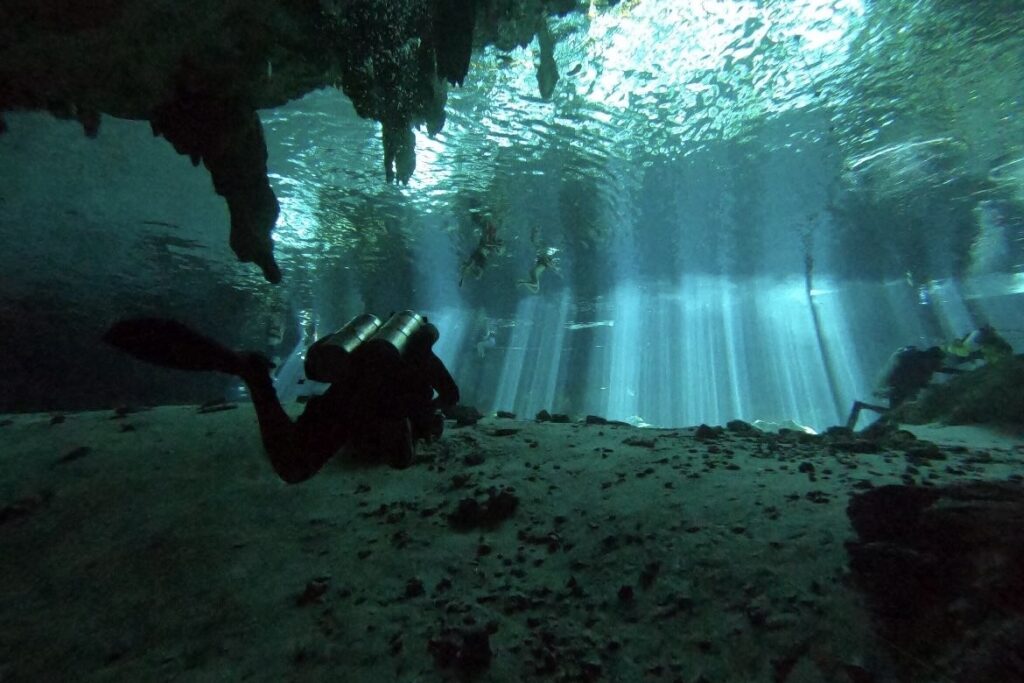
Not every cenote dive in the Riviera Maya is right for every diver. Some cenotes are excellent for certified divers doing their first cavern dives, while others are better for advanced or experienced divers with strong buoyancy, recent dive experience, and calm finning.
This guide is for Open Water divers, newer certified divers, and certified divers who are new to cenote diving. It explains which cenotes are usually better for an easier first cenote experience, which routes may be too advanced, and when a refresher or local reef dive is the smarter first step.
Important: in this article, “beginner diver” means a certified scuba diver with limited experience, not a non-certified person. Guided cenote scuba diving is for certified divers only.
Fast answer: Some of the best cenotes for Open Water divers and first-time cenote divers in the Riviera Maya are Chac Mool, Dos Ojos and Chikin-Ha. These cenotes can offer beautiful cavern diving without starting with the deepest, darkest or most fragile routes. More advanced cenotes like El Pit, Zapote, Dreamgate and Nohoch are usually better for divers with stronger buoyancy and recent experience.
What Makes a Cenote Beginner-Friendly?
A beginner-friendly cenote is not just a cenote with pretty photos. For newer certified divers, the best first cenote route should feel controlled, clear, well-briefed and suitable for the diver’s real comfort level.
Good beginner-friendly cenote routes usually have:
- Clear water and good visibility
- A guided recreational cavern route
- Natural light visible during the dive
- Enough space for calm movement
- A profile that fits the diver’s certification and comfort
- Less demanding buoyancy requirements than advanced fragile routes
- A good balance between beauty and manageability
The best cenote for a newer diver is not always the most famous one. It is the one that gives you the best chance to stay relaxed, follow the guide and enjoy the experience safely.
Can Open Water Divers Dive Cenotes?
Yes, many Open Water certified divers can dive cenotes, but not every cenote route is ideal for every Open Water diver.
Open Water certification gives you the foundation for recreational scuba diving, but cenote diving adds a different environment: freshwater, cavern routes, lower-light areas, formations, haloclines and the need for excellent guide-following.
That means your certification level is only one part of the decision. Your recent experience, buoyancy control, comfort in the water, last dive date and confidence with basic skills matter too.
If you are ready to compare current guided route options, see our main cenote diving in Playa del Carmen page.
Best Overall First Cenote: Chac Mool
Chac Mool is often one of the best cenotes for certified divers doing their first cenote dive. It gives divers a real cavern experience without jumping straight into the most advanced or fragile cenote routes.
Divers like Chac Mool because it can offer beautiful light effects, haloclines, wide cavern areas and a strong “this is completely different from ocean diving” feeling.
For a newer certified diver, Chac Mool can be a good balance between impressive and manageable. You still need to follow the guide, control your buoyancy and avoid touching formations, but it can be a strong first route when your comfort level fits.
If this route sounds right for your level, see our Chac Mool cenote diving page.
Best Famous Cenote for Newer Divers: Dos Ojos
Dos Ojos is one of the most famous cenotes in the Riviera Maya. Many divers hear about it before they even arrive in Mexico.
It is known for clear water, beautiful formations, shallow profiles and iconic routes such as the Barbie Line and Bat Cave. For many certified divers, Dos Ojos can be an excellent first cenote experience when the dive is planned correctly for the group.
Dos Ojos is a good choice for divers who want a famous, photogenic and classic cenote dive without necessarily starting with a deeper advanced profile.
If you are specifically interested in this route, see our Dos Ojos cenote diving page.
Best Relaxed Cenote-Style Experience: Chikin-Ha
Chikin-Ha can be a great option for certified divers who want a relaxed, beautiful and photogenic cenote-style experience near Playa del Carmen.
It is known for clear water, jungle surroundings, halocline effects and a calmer feel. For divers who are new to cenotes, Chikin-Ha can be a nice way to experience freshwater cavern diving without choosing one of the more demanding advanced routes.
Like all cenote dives, Chikin-Ha still requires respect. You need good buoyancy, controlled finning and the ability to follow your guide closely.
If this route fits your goals, see our Chikin-Ha cenote diving page.
Which Cenotes Are Usually Not Best for Newer Divers?
Some cenotes are amazing, but they are not always the best first choice for newer certified divers or rusty divers.
This does not mean they are unsafe when done with the right diver and guide. It means the diver should have stronger buoyancy, more recent experience and better comfort underwater before choosing them.
El Pit
El Pit is known for depth, light beams, haloclines and a dramatic profile. It is beautiful, but it is usually better for advanced or experienced divers who are comfortable with deeper profiles and controlled descents.
Zapote
Zapote is famous for unusual formations, including the “Hell’s Bells.” It is a more adventurous and deeper profile, so it is usually not the first cenote we would recommend for a nervous or rusty Open Water diver.
Dreamgate and Nohoch
Dreamgate and Nohoch can be stunning, highly decorated cavern dives. But they demand excellent buoyancy and calm finning because the environment is fragile and divers need to avoid silting or touching formations.
Angelita
Angelita is unique and memorable, but its deeper profile and atmosphere make it a better fit for more experienced divers, not usually a first cenote route for newer certified divers.
Best Cenotes by Diver Type
| Diver Type | Better Cenote Choices | Why |
|---|---|---|
| Certified diver doing first cenote dive | Chac Mool, Dos Ojos, Chikin-Ha | Good balance of beauty, light, space and manageable profiles |
| Open Water diver with recent dives | Chac Mool, Dos Ojos, Chikin-Ha | Often suitable when buoyancy and comfort are good |
| Rusty certified diver | Refresher or local reef dive first | Better to rebuild skills before entering a cavern environment |
| Advanced diver with good buoyancy | El Pit, Zapote, Dreamgate, Nohoch | More dramatic routes but more demanding control |
| Nervous diver | Start easier or refresh first | Comfort and calm control matter more than choosing the most famous cenote |
Should Rusty Divers Do a Refresher Before Cenotes?
Yes, in many cases. If you have not dived recently or you are not confident with buoyancy, mask clearing, equalizing, safety stops or air checks, a refresher is the smarter first step.
Cenote diving is calm and beautiful, but it is not the best place to discover that your basic skills are rusty. You want to enter the cavern environment already comfortable with your equipment and body position.
The PADI ReActivate Refresher Course can help certified divers rebuild confidence before cenotes, Cozumel or more advanced dive plans.
Should You Do a Reef Dive Before Your First Cenote?
If you are certified but have not dived in a while, a local reef dive can be a very smart warm-up before cenotes.
A reef dive gives you time to get comfortable again with your gear, buoyancy, breathing, equalizing and basic underwater communication in an open-water environment before entering a cavern route.
For many rusty or nervous certified divers, reef diving in Playa del Carmen is the best first dive before cenotes.
What Skills Matter Most for Beginner-Friendly Cenotes?
You do not need to be a perfect diver, but you should be in control. Cenote diving rewards calm, slow and careful movement.
The most important skills are:
- Buoyancy: Stay neutral and avoid floating up or sinking into the bottom.
- Fin control: Use calm, controlled kicks and avoid stirring silt.
- Equalizing: Descend slowly and equalize early.
- Mask clearing: Be comfortable if a little water enters your mask.
- Air awareness: Check your air and communicate honestly.
- Following the guide: Stay on the planned route and do not explore randomly.
If one or more of these skills feels weak, choose an easier route, do a refresher or start with local reef diving first.
Beginner-Friendly Does Not Mean No-Rules
A beginner-friendly cenote still has rules. You are still diving in a cavern environment, and you still need to respect the route, the guide and the cenote.
Even in easier cenotes, divers should not:
- Touch formations
- Kick the bottom
- Swim away from the guide
- Enter side passages
- Ignore air checks
- Rush through the dive
- Treat cenotes like normal ocean dives
If you want to understand the safety side more deeply, read our guide: Is Cenote Diving Safe?
Best Cenote Route If You Are Nervous
If you are nervous, the best route is not necessarily the most famous one. The best route is the one that gives you space, light, a calm profile and enough time to adjust.
Tell the dive center before booking if you are nervous, recently certified, rusty or unsure about your buoyancy. That information helps your guide recommend the right cenote and pace.
A nervous diver may enjoy cenotes much more after a refresher or warm-up reef dive. The goal is not to push you into the most dramatic route. The goal is to choose the route that makes sense for your real comfort level.
Best Cenote Route If You Want Photos
If your goal is a beautiful and photogenic cenote experience, Dos Ojos, Chikin-Ha and Chac Mool are often strong options for newer certified divers.
These cenotes can offer clear water, light effects, formations and the classic cenote atmosphere without necessarily choosing a deeper advanced route first.
If you are already advanced and comfortable, routes like El Pit or Dreamgate may offer more dramatic photo opportunities, but they are also more demanding.
Best Cenote Route If You Are Open Water Certified
Open Water divers should focus on routes that match their comfort and recent experience.
Good options often include:
- Chac Mool: strong first cenote choice with light and cavern atmosphere
- Dos Ojos: famous, shallow and iconic
- Chikin-Ha: relaxed, photogenic and approachable
More advanced routes may still be possible later, but it is better to start with the right route than to choose the hardest one first.
Can Non-Certified Beginners Dive Cenotes?
No. Non-certified guests cannot join guided cenote scuba dives.
This is why “beginner-friendly cenote diving” can be confusing. In scuba diving, it does not mean “any beginner can do it.” It means a route may be suitable for certified divers who are new to cenote diving or have limited experience.
If someone is not certified yet, they should start with a beginner scuba program or certification course before thinking about cenotes as a future goal.
How Xico Dive Center Helps You Choose the Right Cenote
At Xico Dive Center, we do not recommend cenote routes only based on pretty photos. We ask about your real diving background first.
Before choosing a cenote route, we want to know:
- Your certification level
- Your last dive date
- Your approximate number of logged dives
- Whether you have done cenotes before
- Your comfort with buoyancy
- Whether you feel nervous or rusty
- Whether you want an easier first route or a more advanced experience
Then we can recommend the route that makes the most sense. Sometimes that is Chac Mool, Dos Ojos or Chikin-Ha. Sometimes it is a different route. And sometimes the safest recommendation is to do a refresher or local reef dive first.
Frequently Asked Questions About Beginner-Friendly Cenote Diving
What is the best cenote for beginner divers in the Riviera Maya?
For certified divers who are new to cenote diving, Chac Mool, Dos Ojos and Chikin-Ha are often strong options. The best choice depends on your comfort, last dive date, buoyancy and guide recommendation.
Can Open Water divers dive cenotes?
Yes, many Open Water divers can do suitable guided cavern routes, but not every cenote is right for every Open Water diver. Recent experience and comfort matter.
Are cenotes good for newly certified divers?
They can be, but it depends on the diver. Newly certified divers should choose easier routes, be honest about comfort level and avoid advanced cenotes until they have more control and experience.
Which cenotes should beginners avoid?
Newer or rusty divers should usually avoid starting with deeper, more fragile or more demanding routes like El Pit, Zapote, Dreamgate, Nohoch or Angelita unless the guide decides they are ready.
Do I need Advanced Open Water for cenotes?
Not for every cenote route. Some easier routes may be suitable for Open Water divers. Deeper or more advanced cenotes may require more experience, better buoyancy or Advanced Open Water.
Should I do a refresher before cenote diving?
If you have not dived recently or are not confident with buoyancy, equalizing, mask clearing or air checks, a refresher is a smart choice before cenote diving.
Is Dos Ojos good for beginner divers?
Dos Ojos can be a good first cenote for many certified divers because of its clear water, shallow profile and iconic cavern routes, but the final decision depends on the diver and guide.
Is Chac Mool good for a first cenote dive?
Yes, Chac Mool is often a strong first cenote option for certified divers because it offers a beautiful cavern experience with light, space and a manageable profile.
Final Thoughts: Choose the Cenote That Fits Your Level
The best cenote for a beginner diver is not always the most dramatic cenote online. It is the cenote that fits your certification, comfort, recent experience and control in the water.
For many certified divers new to cenotes, Chac Mool, Dos Ojos and Chikin-Ha are better starting points than deeper or more fragile advanced routes.
Tell Xico Dive Center your certification level, last dive date, approximate number of dives and how comfortable you feel underwater. We will help you choose a cenote route that fits your real level.