
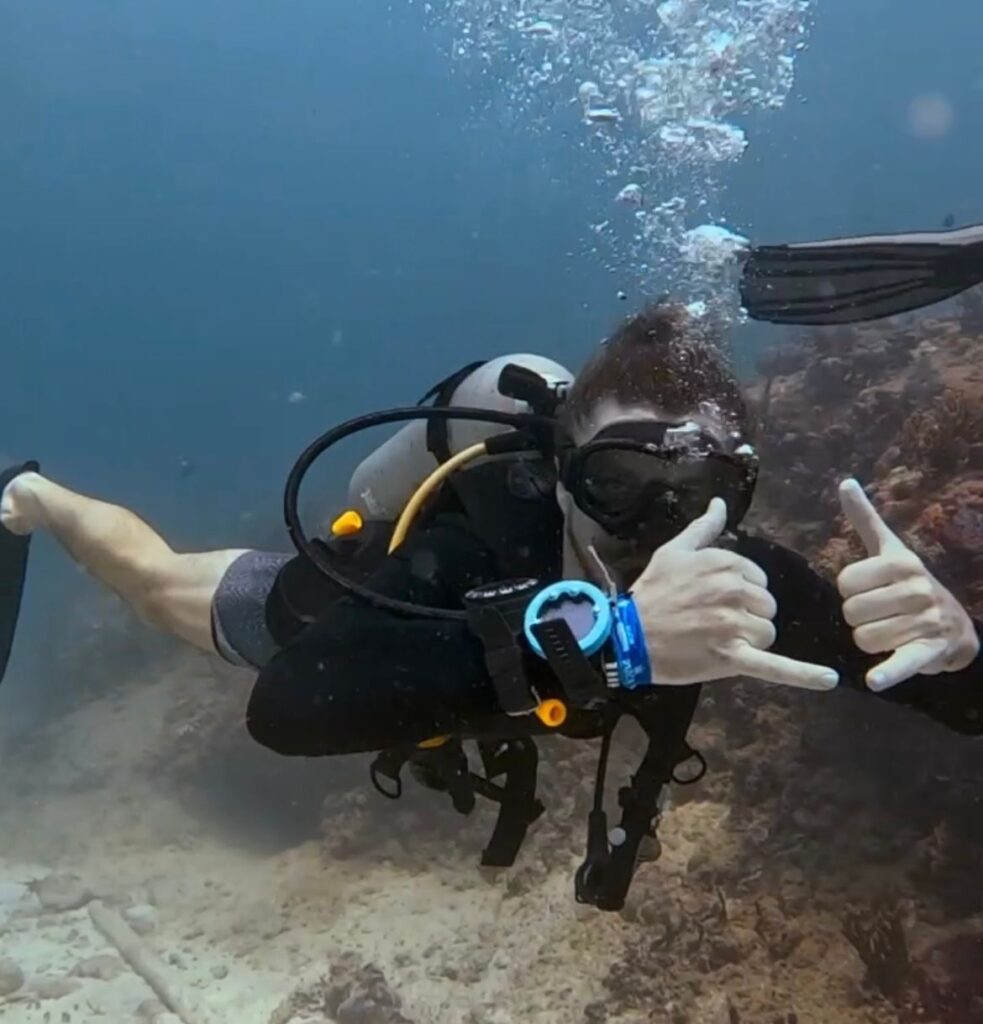
Scuba diving is more than an underwater activity. For many divers, it feels calming, exciting, focused, physical, social, and deeply connected to nature.
The benefits of scuba diving for mind and body are not about magic or medical promises. Scuba diving does not replace therapy, medical care, fitness training, or mental-health support. But many people find that diving helps them slow down, breathe with more awareness, move gently, build confidence, and experience the ocean in a completely different way.
This guide explains the real benefits divers often feel, while keeping the message honest and safe.
Fast answer: Many divers enjoy scuba diving because it can feel relaxing, focused, confidence-building, physically active, social, and connected to nature. It may support a healthier lifestyle, but it is not a treatment for anxiety, depression, trauma, panic disorder, or any medical or mental-health condition.
Why People Feel So Good After Scuba Diving
Many divers describe a good dive as peaceful, energizing, or mentally refreshing. Part of that comes from the environment itself: the sound of bubbles, slow movement, marine life, weightlessness, and being away from phones, noise, and daily distractions.
Underwater, you cannot rush in the same way you do on land. You move slowly, breathe continuously, pay attention to your body, and stay aware of your surroundings.
That combination can make scuba diving feel like a reset, especially for people who spend most of their time on screens, in traffic, at work, or in busy environments.
Scuba Diving Encourages Calm Breathing
Breathing is one of the first things divers notice underwater. You breathe through a regulator, and calm continuous breathing is part of safe diving.
Many divers find that slow breathing helps them feel more relaxed underwater. It can also improve buoyancy control, air consumption, and general comfort during the dive.
This does not mean scuba diving is a breathing therapy. It simply means that diving naturally encourages awareness of breathing because your comfort and safety depend on it.
Scuba Diving Can Feel Like a Digital Break
One underrated benefit of scuba diving is that it gives you time away from constant notifications. Underwater, there are no messages, no emails, no scrolling, and no phone calls.
You focus on the dive, your buddy, your breathing, your guide, your air, your buoyancy, and the underwater world around you.
For many people, that break from digital noise is one of the most refreshing parts of diving.
Scuba Diving Builds Confidence
Scuba diving can be intimidating at first. Breathing underwater, using equipment, controlling buoyancy, and trusting your training all feel new in the beginning.
As divers gain experience, many feel more confident. They learn to solve small problems, communicate underwater, manage nerves, and become more comfortable in a new environment.
For non-certified beginners, Discover Scuba Diving can be a good first step because it gives you a supervised introduction without committing to a full certification course immediately.
Scuba Diving Supports Gentle Physical Activity
Scuba diving is not the same as going to the gym, but it still involves movement. Divers swim, carry gear, climb boat ladders, control body position, and use core stability and leg movement underwater.
Because diving is usually slow and controlled, many people experience it as low-impact activity. The water supports the body, and the movement is generally smoother than many land-based sports.
That said, diving still requires basic physical ability, comfort in the water, and enough fitness for the dive conditions. If you have medical or fitness concerns, get proper medical advice before diving.
Scuba Diving Improves Body Awareness
Good diving depends on body awareness. You need to understand your position in the water, how your breathing affects buoyancy, where your fins are, how close you are to the reef, and how your movement affects the group.
This awareness improves with practice. Over time, divers often become more controlled, relaxed, and efficient underwater.
If buoyancy, trim, or movement feels difficult, the PADI Peak Performance Buoyancy course can help you work on better control.
Scuba Diving Connects You With Nature
One of the strongest benefits of scuba diving is the connection with the natural world. Seeing reefs, fish, turtles, rays, coral, cenotes, and marine life in their own environment can change how people think about the ocean.
Diving makes the underwater world feel real. It is no longer something you only see in documentaries or social media videos.
That connection often makes divers more interested in reef protection, marine life, eco-friendly habits, and responsible tourism.
Scuba Diving Can Support Mindfulness and Focus
Many divers say diving feels meditative. That does not mean scuba diving is meditation, but the experience has some similar elements: slow breathing, present-moment focus, awareness of movement, and reduced outside distractions.
You cannot think about ten things at once underwater. You need to pay attention to the dive. That focus can feel calming for many people.
For nervous divers, the goal is not to force relaxation. The goal is to choose the right dive plan, go slowly, and build comfort step by step.
Scuba Diving Can Be Social
Diving is often shared with a buddy, instructor, guide, group, partner, or family member. That social part can be one of the most enjoyable benefits.
Divers often bond over shared experiences: a turtle passing by, a beautiful cenote light beam, a first successful dive after a long break, or a funny boat story.
Good dive trips create memories that people talk about long after the vacation is over.
Scuba Diving Can Help People Face Fears Carefully
Some people are nervous before trying scuba. They may fear breathing underwater, deep water, equipment, marine life, or losing control.
With the right instructor, slow steps, and honest communication, many beginners learn that they can feel more comfortable than expected.
This does not mean every fear disappears, and nobody should be pressured into diving. But for some people, trying scuba in the right environment can become a positive confidence-building experience.
Scuba Diving Is Not a Mental-Health Treatment
It is important to be clear: scuba diving is not a treatment for anxiety, depression, trauma, panic disorder, or any mental-health condition.
If you have a medical or mental-health condition that could affect diving safety, speak with a qualified medical professional before diving.
A dive center can help recommend a suitable dive plan, but it cannot decide if you are medically or psychologically fit to dive.
Scuba Diving Can Encourage a Healthier Lifestyle
Many divers become more aware of their body because diving feels better when they are rested, hydrated, calm, and comfortable in the water.
Good dive days are easier when you sleep well, avoid heavy alcohol before diving, stay hydrated, and maintain basic fitness.
Diving can also motivate people to swim more, move more, improve flexibility, work on breathing control, or stay active for future trips.
Physical Benefits Divers Often Notice
The physical benefits of scuba diving are usually connected to gentle movement, water comfort, body control, and general activity.
- Low-impact movement in the water
- Improved body awareness
- Core control and trim awareness
- Leg movement through finning
- Breathing awareness
- Motivation to stay active for future dive trips
Scuba diving should not be treated as a full fitness program, but it can be part of an active lifestyle.
Mental and Emotional Benefits Divers Often Describe
Divers often describe emotional or mental benefits after a good dive, especially when the dive plan fits their level and conditions are comfortable.
- Feeling calmer after time underwater
- More confidence after learning a new skill
- A break from phones and daily stress
- More connection with nature
- A sense of achievement
- Shared memories with a buddy, partner, or group
These are personal experiences, not guaranteed medical outcomes. Every diver is different.
Best First Step Based on Your Situation
| Your Situation | Best First Step |
|---|---|
| You are not certified and want to try scuba | Discover Scuba Diving |
| You want to become fully certified | PADI Open Water Diver Course |
| You are certified and current | Local reef diving can be a good first dive day |
| You are certified but rusty or nervous | PADI ReActivate / refresher may be safer first |
| You want better control underwater | Peak Performance Buoyancy |
| You have medical or mental-health concerns | Medical clearance before diving |
Why Playa del Carmen Is a Good Place to Experience Scuba
Playa del Carmen can work well for many types of divers because it offers local reefs, cenotes, Cozumel access, beginner programs, certification courses, and relaxed dive plans depending on experience and comfort level.
For certified divers, local reef diving in Playa del Carmen can be a practical way to enjoy the ocean without overcomplicating the day.
For non-certified beginners, Discover Scuba Diving is usually the best first step before deciding whether to continue into a full course.
Ready to Experience Scuba Diving?
Tell us your certification level, last dive date, swimming comfort, and what kind of experience you are looking for.
We will recommend the option that fits your level, comfort, and goals, whether that is a first beginner dive, a local reef dive, a refresher, or a course.
Frequently Asked Questions About the Benefits of Scuba Diving
What are the main benefits of scuba diving?
Many divers enjoy scuba diving because it can feel calming, confidence-building, physically active, social, and deeply connected to nature. It can also encourage better breathing awareness, body control, and focus.
Is scuba diving good for mental health?
Many divers find scuba diving relaxing and mentally refreshing, but it is not a mental-health treatment. It should not replace therapy, medication, medical advice, or professional mental-health support.
Is scuba diving good exercise?
Scuba diving involves gentle physical activity, swimming, body control, and movement in the water. It is not the same as a workout program, but it can be part of an active lifestyle.
Can scuba diving help with stress?
Many people feel calmer after diving because of slow breathing, focus, nature, and time away from daily distractions. However, scuba diving is not a medical treatment for stress, anxiety, depression, or panic disorder.
Does scuba diving build confidence?
For many divers, yes. Learning to use equipment, breathe underwater, communicate, and manage small challenges can build confidence over time, especially with good instruction and the right dive plan.
Can beginners enjoy the benefits of scuba diving?
Yes. Beginners can often enjoy the calm, confidence, and nature connection of scuba diving through a supervised beginner program like Discover Scuba Diving.
Is scuba diving relaxing?
It can be relaxing for many divers, especially when the dive matches their level and conditions are comfortable. Slow breathing, gentle movement, and the underwater environment can make diving feel peaceful.
Can scuba diving replace therapy or medical treatment?
No. Scuba diving should not replace therapy, medication, medical care, or mental-health treatment. If you have a medical or mental-health condition, speak with a qualified professional before diving.
What is the best first scuba experience in Playa del Carmen?
If you are not certified, Discover Scuba Diving is usually the best first step. If you are already certified and current, a local reef dive can be a good first dive day.
Final Thoughts
The benefits of scuba diving are different for every person. Some people love the calm feeling underwater. Others love the adventure, the marine life, the challenge, the confidence, or the break from daily life.
Scuba diving is not a cure or a medical treatment, but it can be a powerful and memorable activity when it is done safely, honestly, and with the right dive plan for your level.