
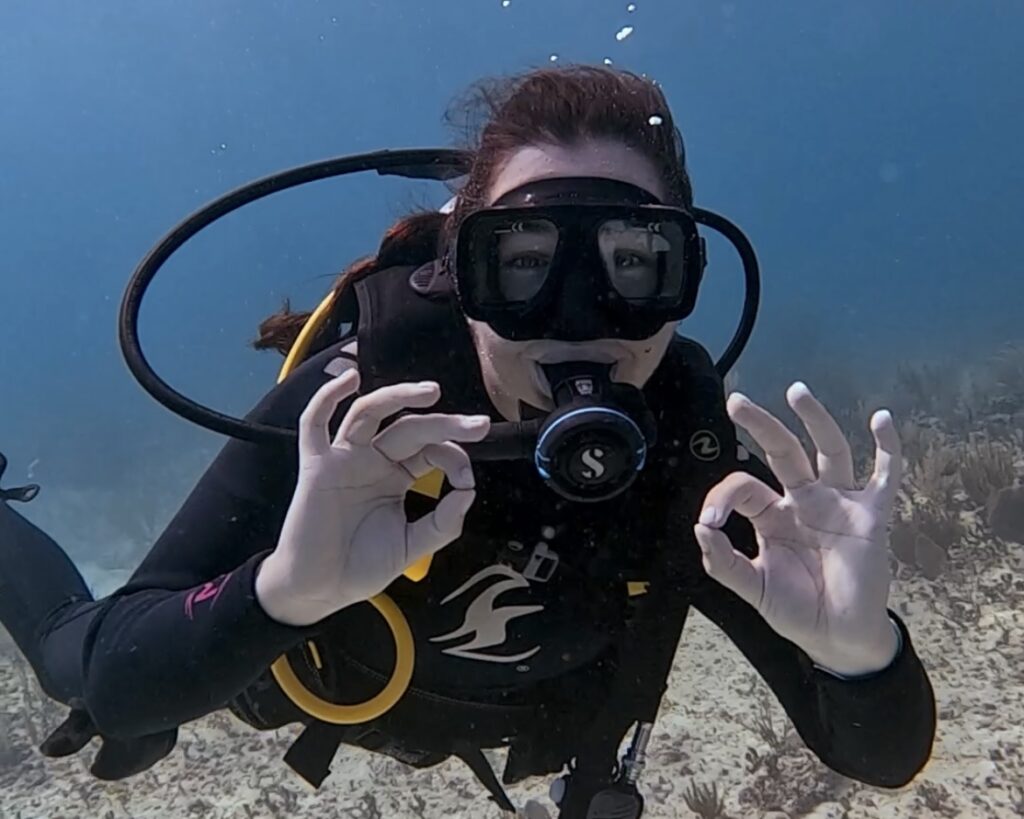
Feeling nervous before scuba diving is normal. Many first-time divers worry about breathing underwater, going too deep, using the equipment, seeing marine life, or not knowing what to do if something feels uncomfortable.
The good news is that fear of scuba diving can usually be reduced with the right instructor, clear explanations, slow steps, shallow practice, and a dive plan that matches your comfort level.
If you are not certified yet, the best first step is usually Discover Scuba Diving in Playa del Carmen. If you are already certified but nervous because you have not dived in a long time, a refresher may be the safer choice before joining normal dives.
Fast answer: To overcome fear of scuba diving, start slowly, choose a patient instructor, ask questions before the dive, practice breathing calmly, stay shallow at first, and be honest about your comfort level. You do not need to “push through” fear. You need the right first dive plan.
Why Are People Scared of Scuba Diving?
Fear of scuba diving usually comes from the unknown. Before your first dive, it can feel strange to imagine breathing underwater, wearing scuba gear, descending below the surface, or trusting equipment you have never used before.
Common fears include:
- Fear of breathing underwater
- Fear of deep water
- Fear of not understanding the equipment
- Fear of running out of air
- Fear of marine life
- Fear of losing control underwater
- Fear of panicking
- Fear of not being a strong swimmer
- Fear after a bad first experience somewhere else
These fears are common. A good dive center should not make you feel embarrassed. The right instructor will explain everything clearly and help you take the first steps at a pace that feels safe.
Start With the Right Program
If you are not certified and want to try scuba for the first time, Discover Scuba Diving is usually the best choice. It is made for beginners who want to experience scuba diving without committing to a full certification course immediately.
Discover Scuba Diving is not the same as a full Open Water certification. It is an introduction with instructor supervision, basic safety rules, equipment explanation, and a controlled first scuba experience.
If you enjoy the experience and want to become certified, the next step is the PADI Open Water Diver Course.
Tell Your Instructor Before the Dive
The worst thing you can do is hide your fear. If you are nervous, say it before the dive. A good instructor can adjust the pace, explain things more clearly, and keep a closer eye on your comfort.
Tell your instructor if you are worried about:
- Breathing underwater
- Mask clearing
- Equalizing your ears
- Going too deep
- Feeling claustrophobic
- Swimming ability
- Previous panic or anxiety underwater
- A bad dive experience in the past
This helps the dive team choose the right approach. Your first scuba experience should build confidence, not pressure you into something too fast.
Fear of Breathing Underwater
Breathing underwater is one of the biggest fears for new divers. It feels unnatural at first because your brain is used to holding your breath when your face is underwater.
With scuba equipment, you breathe normally through the regulator. The key is to breathe slowly and continuously. Do not hold your breath.
Before going deeper, take time to get used to the feeling of breathing through the regulator. Once your body understands that air is available, the fear usually becomes much easier to manage.
Fear of Deep Water
You do not need to start with a deep dive. A first scuba experience should begin slowly and in a controlled way.
For nervous divers, the goal is not depth. The goal is comfort. You want to feel safe with the equipment, breathing, communication, and your instructor before going further.
If you feel nervous about deep water, tell your instructor. A conservative dive plan is better than forcing yourself into a dive that feels too intense.
Fear of the Equipment
Scuba gear can look complicated before you understand it. The tank, regulator, BCD, weights, gauges, and mask all have a purpose, but you do not need to master everything alone on your first try.
Your instructor will explain what each part does, how you breathe, how you stay buoyant, and how to communicate underwater.
Understanding the equipment removes a lot of fear. Once you know what the gear does, it feels less like a mystery and more like a safety system.
Fear of Running Out of Air
Many beginners worry about running out of air. In scuba diving, you monitor your air with a pressure gauge or dive computer, and your instructor or guide checks with you during the dive.
Running out of air should not happen on a properly planned beginner dive. You start with a full tank, check your air during the dive, communicate with your instructor, and end the dive with a safe reserve.
This is one reason guided beginner dives are structured and conservative.
Fear of Marine Life
Movies and social media can make marine life seem more dangerous than it usually is. Most marine animals do not want anything to do with divers. They are not waiting to attack people.
The safest rule is simple: look, enjoy, but do not touch, chase, feed, or harass marine life.
When you dive calmly and respectfully, marine life becomes one of the best parts of the experience instead of something to fear.
What If You Panic Underwater?
If you feel panic building, the most important thing is to stop, breathe, signal your instructor, and avoid rushing upward.
Good instructors watch for signs of stress. You will also learn simple hand signals before the dive, so you can communicate if something feels wrong.
Panic is often reduced by slowing everything down. Small steps, shallow practice, and clear communication make a big difference.
How to Calm Yourself Before a Dive
Before the dive, give yourself time. Do not rush the equipment setup or pretend you are fine if you are not.
- Ask questions before entering the water.
- Check that your mask feels comfortable.
- Practice breathing slowly through the regulator.
- Listen carefully to the briefing.
- Stay close to your instructor.
- Use hand signals early if you feel uncomfortable.
- Remember that you can stop if you do not feel ready.
Calm diving starts before you enter the water.
Choose Small Groups and Personal Attention
If you are nervous, group size matters. A large, rushed group can make fear worse. A smaller group with a patient instructor gives you more time, attention, and confidence.
At Xico Dive Center, we prefer honest pre-qualification. Tell us if you are nervous, not a strong swimmer, or unsure about trying scuba. That helps us recommend the right experience for your comfort level.
What If You Are Already Certified but Scared?
Certified divers can also feel scared, especially after a long break or a bad experience.
If you are certified but have not dived in a long time, forgot basic skills, or feel nervous before a normal fun dive, a PADI ReActivate refresher course may be the better first step.
If you are current, comfortable, and only want an easier local dive to rebuild confidence, a normal local reef dive may be enough. The right choice depends on your certification level, last dive date, number of dives, and real comfort level.
Fear vs Medical Concerns
Fear and medical concerns are not the same thing. If you have medical conditions, panic disorder, medication concerns, recent surgery, breathing issues, heart concerns, or anything that could affect diving safety, get medical clearance before diving.
A dive center can help with the dive plan, but we cannot decide if you are medically fit to dive.
Best First Step Based on Your Situation
| Your Situation | Best First Step |
|---|---|
| You are not certified and want to try scuba | Discover Scuba Diving |
| You are nervous about breathing underwater | Beginner-friendly instructor, slow explanation, controlled first experience |
| You are certified but have not dived in a long time | PADI ReActivate / refresher may be best |
| You are certified, current, but want an easier confidence dive | Local reef dive may be enough |
| You want to get certified but are nervous | Start with Discover Scuba Diving or talk to us before Open Water |
| You have medical concerns | Medical clearance first |
Ready to Try Scuba Without Pressure?
If you are scared but curious, start with the right first step. You do not need to prove anything. You need a patient instructor, a clear briefing, and a dive plan that matches your comfort level.
Send us a message with your swimming comfort, previous experience, and what you are nervous about. We will recommend the safest and most comfortable option for you.
Frequently Asked Questions About Fear of Scuba Diving
Is it normal to be scared before scuba diving?
Yes. Many people feel nervous before their first scuba dive. Breathing underwater, using equipment, and entering a new environment can feel strange at first.
With a patient instructor and a slow first experience, many nervous beginners become much more comfortable.
How do I overcome fear of breathing underwater?
Start slowly. Practice breathing through the regulator, focus on calm continuous breathing, and give your body time to understand that air is available.
Do not hold your breath while scuba diving.
What if I panic during scuba diving?
Signal your instructor, stop, breathe slowly, and avoid rushing. A good instructor will help you calm down and decide the safest next step.
This is why clear communication and staying close to your instructor are important.
Can I try scuba diving if I am scared?
Yes, many scared beginners try scuba diving successfully. The key is choosing the right beginner program, telling the instructor about your fear, and not rushing the process.
What is the best scuba option for nervous beginners?
For non-certified beginners, Discover Scuba Diving is usually the best first step. It gives you a supervised introduction without committing to a full certification course immediately.
Should I take Open Water if I am nervous?
If you already know you want to become certified, Open Water can be a good choice. If you are very unsure, Discover Scuba Diving may be better first so you can see how you feel underwater.
What if I am certified but scared to dive again?
If you are certified but rusty, nervous, or have not dived in a long time, a refresher may be the better first step before a normal fun dive.
If you are current and comfortable but want an easier dive, a local reef dive may be enough.
Do I need to be a strong swimmer to try scuba diving?
You should be comfortable in the water, but you do not need to swim like an athlete for a beginner scuba experience.
If you are not comfortable in the water, tell us before booking so we can recommend the right option.
Can marine life hurt me while scuba diving?
Most marine animals avoid divers. The safest rule is to look, enjoy, and never touch, chase, feed, or harass marine life.
Your instructor or guide will explain how to behave respectfully underwater.
What if my fear is connected to a medical condition?
If your fear is connected to panic disorder, medication, breathing issues, heart concerns, recent surgery, or another medical condition, get medical clearance before diving.
A dive center can help with the dive plan, but only a qualified doctor can advise you about medical fitness to dive.
Final Thoughts: Fear Does Not Mean You Cannot Dive
Being scared does not mean scuba diving is impossible for you. It means you need the right first step, the right instructor, and a pace that respects your comfort.
For some people, that first step is Discover Scuba Diving. For certified divers, it may be a refresher or a calm local reef dive. The best option depends on your experience and why you feel nervous.
Tell us honestly what you are worried about. We will help you choose the safest and most comfortable way to start.