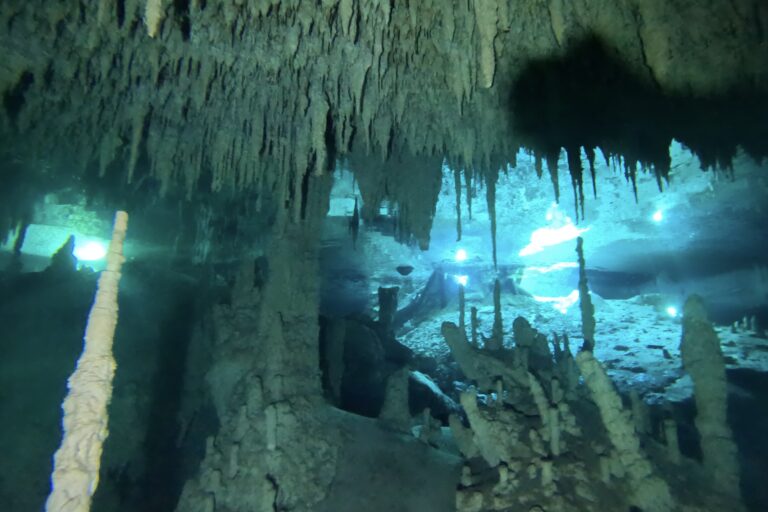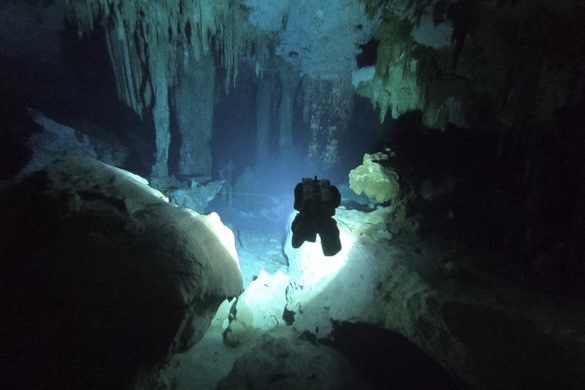
Cenote Dos Ojos is one of the most iconic dive sites in the Riviera Maya and a must-do experience for anyone interested in cenote diving in Mexico. Located near Tulum, this world-famous cenote is known for its crystal-clear water, stunning light rays, and massive cavern system that creates a truly unforgettable underwater adventure. Whether you are new to cenote diving or already experienced with cavern dives, Cenote Dos Ojos offers an incredible combination of beauty, accessibility, and safety when diving with a professional guide.
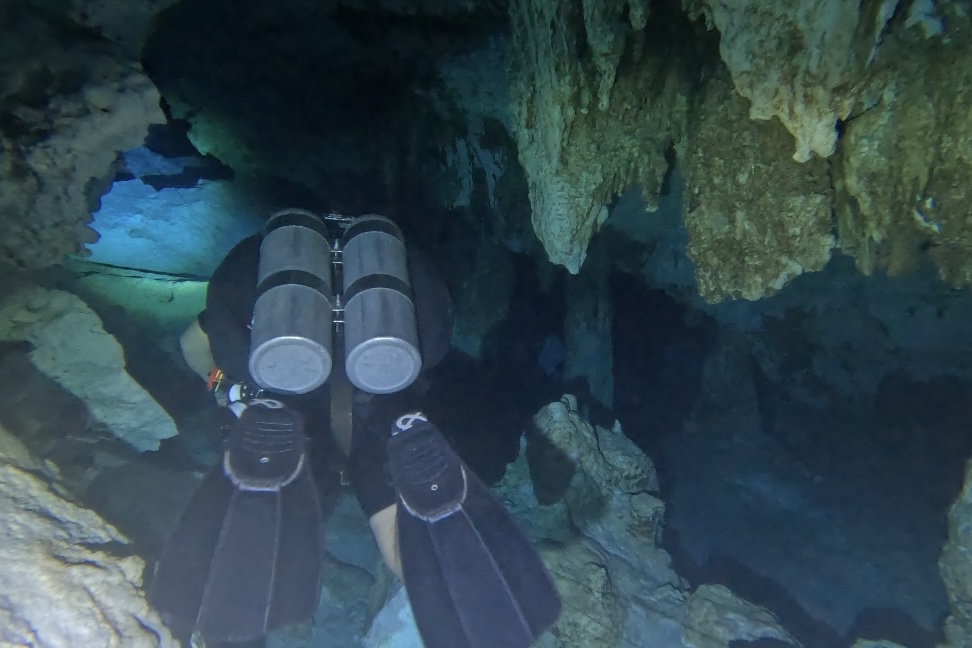
The name “Dos Ojos” means “Two Eyes,” which refers to the two connected sinkholes that form the entrance to the cenote system. From the surface, visitors can see two circular openings surrounded by jungle, and underwater these areas connect through a network of caverns. This unique layout makes the cenote feel like two different dive experiences in one location. Many divers love Dos Ojos because it offers a wide open cavern feel, easy navigation, and spectacular visibility that often reaches over 100 feet, creating a floating-in-space sensation that is very different from ocean diving.
One of the biggest reasons Cenote Dos Ojos diving is so popular is the light. During the dive, sunlight filters through openings in the ceiling and creates dramatic beams that cut through the clear water. These light rays are especially beautiful in the morning and early afternoon, and they make Dos Ojos one of the best cenotes in Mexico for underwater photography. Even divers who have done many cenotes often say Dos Ojos is one of the most visually impressive because the cavern ceilings, rock formations, and reflections create an almost surreal atmosphere.
Divers exploring Cenote Dos Ojos will usually follow one of the two main cavern routes, often called the Barbie Line and the Bat Cave Line. The Barbie Line is the most common route and is known for its open spaces, strong natural light, and easy, relaxed swimming. The Bat Cave Line is more advanced and includes darker sections where divers may experience less light and a more cave-like environment. While Dos Ojos is not a full cave dive for recreational divers, it is still considered cavern diving, meaning divers must always stay within the light zone and follow a guide who is trained and certified for cenote diving.
Water temperature in Cenote Dos Ojos stays cool year-round, usually around 24–25°C (75–77°F), which can feel cold compared to the Caribbean ocean. Because cenote dives are slow and calm, divers tend to lose body heat faster, so a 5mm wetsuit is highly recommended for comfort. Many divers also appreciate wearing a hooded vest or bringing extra exposure protection if they are doing multiple cenote dives in one day. Being warm helps divers stay relaxed, improves breathing, and makes the experience more enjoyable overall.
Unlike ocean dives, cenote diving requires excellent buoyancy control and careful finning technique. In Dos Ojos, the bottom is often covered with fine sediment that can easily be stirred up, reducing visibility for the entire group. Divers are encouraged to use gentle frog kicks, keep their fins up, and maintain neutral buoyancy throughout the dive. This is one of the reasons Dos Ojos is such a great cenote for improving diving skills, since it encourages divers to move slowly and focus on control and awareness.
Safety is a major priority when diving Cenote Dos Ojos, and professional guides follow strict procedures to ensure a safe experience. Divers should always stay close to the guideline, remain within the light zone, and follow the guide’s instructions at all times. It is also important to dive with proper equipment, including a dive light, and most dive centers will provide one. Even though the cenote is calm and has no waves or currents, it is still an overhead environment, which means it requires extra attention and responsible diving behavior. The good news is that Dos Ojos is one of the most established and well-managed cenote dive sites in the region, and when done correctly, it is considered safe for certified divers.
Cenote Dos Ojos is suitable for Open Water certified divers, and it is one of the best cenotes in Mexico for first-time cenote divers. Many people are surprised by how different it feels compared to reef diving, since the environment is silent, still, and incredibly clear. Instead of colorful coral and fish, divers experience ancient limestone formations, haloclines where freshwater and saltwater mix, and incredible light effects. Some divers even describe their first cenote dive as one of the most unique dives they have ever done.
For travelers planning a cenote diving trip, Dos Ojos is easy to combine with other cenotes near Tulum and Playa del Carmen. Many dive centers offer it as part of a two-cenote day, pairing it with another popular site like The Pit, Nicte-Ha, or Taak Bi Ha depending on your experience level. It is also a great option for divers who want an unforgettable dive day without needing advanced certifications, since it offers dramatic scenery while still remaining accessible to recreational divers.
Exploring Cenote Dos Ojos is more than just a dive—it is an experience that combines adventure, geology, and the natural beauty of Mexico’s underground world. From the moment you enter the water and see the first rays of light shining through the cavern, it becomes clear why Dos Ojos is considered one of the top cenote dives in the world. If you are visiting the Riviera Maya and want to add something truly unique to your trip, Cenote Dos Ojos diving should be at the top of your list.