
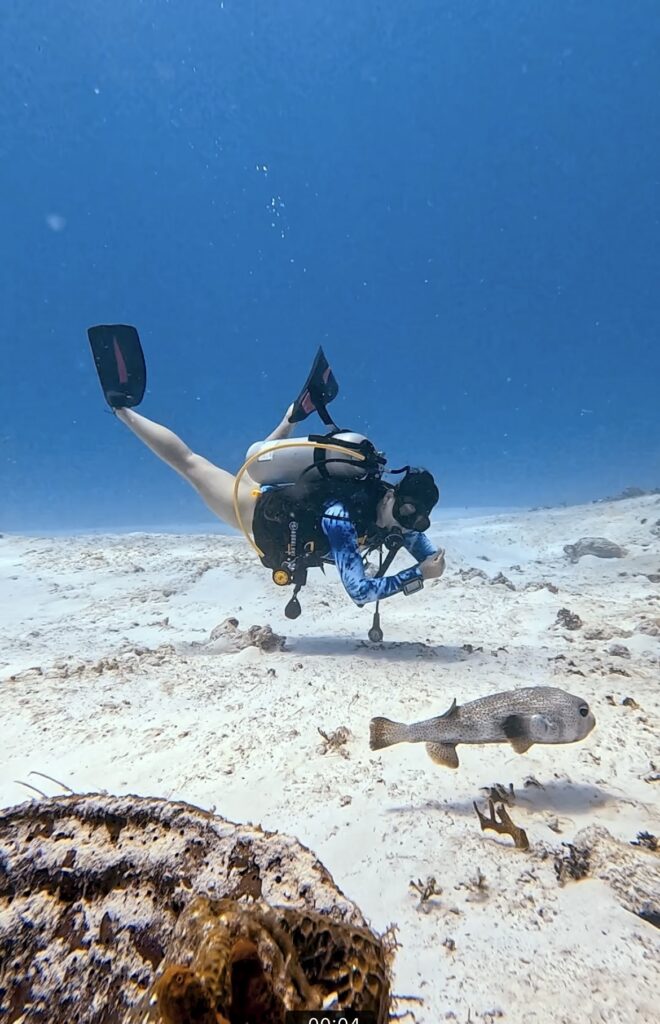
Good finning is one of the most underrated scuba diving skills. Many beginners think kicking is just about moving forward, but the way you use your fins affects your buoyancy, air consumption, comfort, visibility, and the reef or cenote environment around you.
Different scuba diving kicks are useful in different situations. A flutter kick can be good for open water movement, a frog kick is excellent for control and protecting the bottom, and skills like the back kick or helicopter turn help experienced divers position themselves without using their hands.
This guide explains the main scuba diving kicks, when to use each one, common beginner mistakes, and why good finning matters so much for reef diving, cenote diving, Cozumel drift dives, and better overall control underwater.
Fast answer: The main scuba diving kicks are the flutter kick, frog kick, modified flutter kick, modified frog kick, back kick, and helicopter turn. Beginners usually start with a flutter kick, but the frog kick is often better for reefs, cenotes, photography, and situations where you want more control without stirring up sand or silt.
Why Scuba Diving Kicks Matter
Your fins are not only for speed. Good kicking technique helps you move efficiently, stay relaxed, protect the environment, and keep better control underwater.
When divers kick too hard, too low, or with poor body position, they can stir up sand, damage coral, hit the bottom, scare marine life, or use more air than necessary. In a cenote, bad finning can create a silt cloud that reduces visibility for everyone behind you.
Good finning helps you:
- Use less energy underwater
- Improve air consumption
- Stay neutrally buoyant
- Avoid damaging coral or fragile environments
- Reduce sand or silt disturbance
- Stay in better position for photography
- Move more calmly with the dive group
Body Position Comes Before Kicking
Before learning different kicks, it is important to understand body position. If your trim is poor, even a good kick can become inefficient.
Good scuba trim usually means your body is horizontal in the water, with your knees slightly bent and your fins behind you instead of hanging below you. This position helps your kicks push water backward instead of downward.
If your fins point down, every kick can push water into the sand, reef, or cenote floor. If your body is flat and controlled, your kicks become smoother and cleaner.
Many divers improve their finning dramatically once they improve buoyancy, weighting, and trim. That is why finning technique is closely connected to good training and regular practice.
Flutter Kick
The flutter kick is the most common scuba diving kick and the one many beginners use first. It is similar to the kick used in swimming: one leg moves down while the other moves up, creating continuous movement.
When to use the flutter kick
The flutter kick can be useful in open water, when you have enough space behind and below you. It can also work well when swimming against light current or covering distance.
For new divers, the flutter kick feels natural because it is familiar from swimming. That is why it is often the first kick divers use during beginner training and easy reef dives.
When to be careful with the flutter kick
The problem with the flutter kick is that many divers kick downward. If your fins point toward the bottom, you may stir up sand or hit the reef. This is not ideal for shallow reefs, photography, cenotes, or delicate environments.
If you use a flutter kick, try to keep your body horizontal and your kicks small. Avoid big bicycle-style movements and avoid kicking from the knees only.
Frog Kick
The frog kick is one of the best scuba diving kicks for control. It is similar to the movement of a breaststroke kick, but slower and more controlled. Instead of kicking water downward, the frog kick pushes water behind you.
To do a basic frog kick, bend your knees slightly, bring your fins apart, rotate your ankles outward, then push water backward in a smooth circular motion. After the kick, glide for a moment instead of kicking constantly.
Why divers love the frog kick
The frog kick is efficient, relaxed, and environmentally friendly. It helps reduce silt, protects coral, and gives you better control near the bottom.
It is especially useful for:
- Reef diving
- Cenote diving
- Wreck diving
- Photography and video
- Diving near sandy bottoms
- Situations where visibility matters
For cenote diving near Playa del Carmen, a frog kick is one of the most useful techniques because it helps protect visibility and avoids disturbing the bottom.
Modified Flutter Kick
The modified flutter kick is a smaller, more controlled version of the normal flutter kick. Instead of using large leg movements, the diver uses shorter fin movements with bent knees and better trim.
This kick is useful when you need to move gently without creating too much downward force. It can be helpful near reefs, sandy areas, or other divers.
The modified flutter kick is not usually as clean as a good frog kick for silt control, but it is easier for many divers to learn and can be a useful transition skill.
Modified Frog Kick
The modified frog kick is a smaller version of the full frog kick. The movement comes more from the ankles and lower legs, with less wide movement from the knees.
This is useful in tight spaces, near fragile areas, or when you want to move slowly and precisely. It is also useful when you are close to other divers and do not want to create large fin movements.
For divers who want to improve control, the modified frog kick is one of the best techniques to practice after learning the basic frog kick.
Back Kick
The back kick allows a diver to move backward underwater. This is an advanced control skill, and it usually takes practice. Beginners do not need to master it immediately, but it is very useful for experienced divers.
The back kick helps you move away from coral, adjust your position for photography, create space from another diver, or avoid touching the bottom without using your hands.
Many divers struggle with the back kick at first because the movement is not natural. It requires good trim, relaxed body position, and controlled fin movement. The goal is not power. The goal is precision.
Helicopter Turn
The helicopter turn lets a diver rotate in place without swimming forward. It is a useful skill for positioning, photography, guiding, and diving in environments where you want to avoid unnecessary movement.
To make a helicopter turn, each fin creates gentle opposite movement so the body rotates slowly. This allows you to turn left or right while staying in almost the same place.
Like the back kick, this is a control skill. It becomes much easier when your buoyancy and trim are stable.
Which Kick Should Beginners Learn First?
Most beginners start with a flutter kick because it feels familiar. That is okay. A controlled flutter kick can work well for easy dives, especially when the diver has enough space and is not close to the bottom.
But beginners should also start learning the frog kick early. Even a simple frog kick can make diving more relaxed and controlled.
During the PADI Open Water Course in Playa del Carmen, new divers learn the foundation: buoyancy, trim, relaxed breathing, and controlled movement. Once those basics improve, different kicks become much easier.
Best Kick for Reef Diving
For reef diving in Playa del Carmen, the best kick is usually a controlled frog kick or modified flutter kick, depending on the site, current, and diver comfort.
The goal is to avoid kicking coral, stirring sand, or making unnecessary contact with the reef. Local reef dives often include sandy areas, coral structures, and marine life, so gentle finning matters.
If there is current, your guide will explain the best way to move with the group. Sometimes you do not need to kick much at all. You relax, maintain position, and let the water movement do part of the work.
Best Kick for Cenote Diving
For cenote diving, the frog kick is usually the best and most important kick. Cenotes often have very clear water, but poor finning can disturb silt and reduce visibility.
In cenotes, divers should avoid big downward kicks. Good buoyancy, horizontal trim, and controlled frog kicks help protect the environment and the experience for everyone.
If you are not confident with buoyancy or finning, tell your guide before booking cenotes. At Xico Dive Center, we can recommend the right cenote route based on your certification level, last dive date, and comfort in the water.
Best Kick for Cozumel Drift Diving
Cozumel diving from Playa del Carmen is famous for drift diving. In drift diving, the current often moves the group, so divers do not always need to kick constantly.
The most important skills are trim, buoyancy, awareness, and staying with the guide. Small controlled kicks are usually better than hard swimming.
If you kick too much in a drift dive, you may use more air, separate from the group, or fight the current unnecessarily. Relaxed movement is usually better than power.
Best Kick for Photography and Video
For underwater photography and video, precise movement matters. The frog kick, modified frog kick, back kick, and helicopter turn are all useful because they help you position yourself without disturbing the scene.
A strong flutter kick near the bottom can ruin visibility, scare marine life, or push you too close to the subject. Good photographers usually move slowly and deliberately.
Even if you do not take photos, learning these control skills makes you a better diver.
Common Finning Mistakes
Many divers use more effort than necessary underwater. Most finning problems come from poor trim, stress, or trying to swim like they are at the surface.
- Bicycle kicking: Kicking as if riding a bike creates little movement and wastes energy.
- Kicking downward: This stirs sand, silt, and can damage the environment.
- Using big movements: Large kicks are often unnecessary and can make buoyancy harder.
- Using the hands to swim: Hands should usually stay relaxed, not paddle constantly.
- Kicking while overweighted: Poor weighting can make divers work harder than necessary.
- Ignoring trim: Bad body position makes every kick less efficient.
- Rushing in current: Fighting current often wastes air and creates stress.
How to Practice Better Scuba Kicks
The best way to improve your kicks is to slow down and focus on control. You do not need to practice every kick at once.
Start with these steps:
- Check your weighting with your instructor or guide.
- Practice neutral buoyancy before focusing on advanced kicks.
- Keep your body horizontal.
- Use small, slow movements.
- Pause and glide after each kick.
- Ask your buddy or guide to watch your fins.
- Practice in easy conditions before trying harder dives.
If you are already certified but feel rusty with buoyancy, trim, or basic skills, the PADI ReActivate Refresher Course can help you rebuild confidence before joining cenotes, Cozumel, or more advanced dives.
How Advanced Training Helps Your Finning
Good finning improves naturally when your buoyancy, trim, and awareness improve. This is why continuing education can be valuable for certified divers.
The Advanced Open Water Course can help divers improve control, comfort, deeper-dive awareness, navigation, and overall confidence underwater.
You do not need to become a technical diver to improve your kicks. You just need practice, feedback, and enough awareness to move with purpose instead of habit.
Which Scuba Kick Should You Use?
| Situation | Best Kick | Why |
|---|---|---|
| Open water swimming | Flutter kick | Simple and familiar for beginners |
| Reef diving | Frog kick or modified flutter | More control and less contact with coral |
| Cenote diving | Frog kick or modified frog kick | Reduces silt and protects visibility |
| Photography or video | Modified frog, back kick, helicopter turn | Precise positioning without disturbing the scene |
| Drift diving | Small controlled kicks | Helps you stay with the group without fighting current |
| Moving backward | Back kick | Lets you adjust position without using hands |
Frequently Asked Questions About Scuba Diving Kicks
What is the best kick for scuba diving?
There is no single best kick for every situation. The flutter kick is common for beginners, but the frog kick is often better for reefs, cenotes, photography, and controlled movement near the bottom.
What is the frog kick in scuba diving?
The frog kick is a controlled finning technique where the diver pushes water backward in a circular motion, similar to a breaststroke movement. It is efficient and helps avoid stirring up sand or silt.
Is flutter kick bad for scuba diving?
No. The flutter kick is not bad, but it can cause problems if the diver kicks downward near the bottom. A controlled flutter kick is useful in open water, but a frog kick may be better near reefs or cenotes.
What kick should I use in cenotes?
A frog kick or modified frog kick is usually best for cenote diving because it helps reduce silt and protects visibility.
What is a back kick in scuba diving?
A back kick lets a diver move backward underwater. It is useful for positioning, photography, avoiding contact, and maintaining control without using the hands.
What is a helicopter turn?
A helicopter turn lets a diver rotate in place without swimming forward. It is useful when you need to change direction while staying in the same position.
Why do divers say not to use your hands?
Using your hands to swim usually wastes energy and shows poor control. Good buoyancy and finning allow divers to move more efficiently without constant hand movement.
How can I improve my finning technique?
Improve your buoyancy and trim first. Then practice slow, controlled kicks, glide between movements, and ask an instructor or guide for feedback.
Final Thoughts: Better Kicks Make Better Divers
Learning different scuba diving kicks is not only about looking more experienced. It makes your dives easier, safer, cleaner, and more enjoyable.
A controlled diver uses less energy, protects the reef, avoids silt, stays closer to the group, and enjoys the dive more. Whether you are diving local reefs, cenotes, Cozumel, or practicing new skills, better finning makes a real difference.
If you are new to diving, start with the basics during the Open Water Course. If you are already certified but rusty, consider a refresher before more demanding dives. If you want to improve control and confidence, advanced training can help you become a smoother, calmer diver.