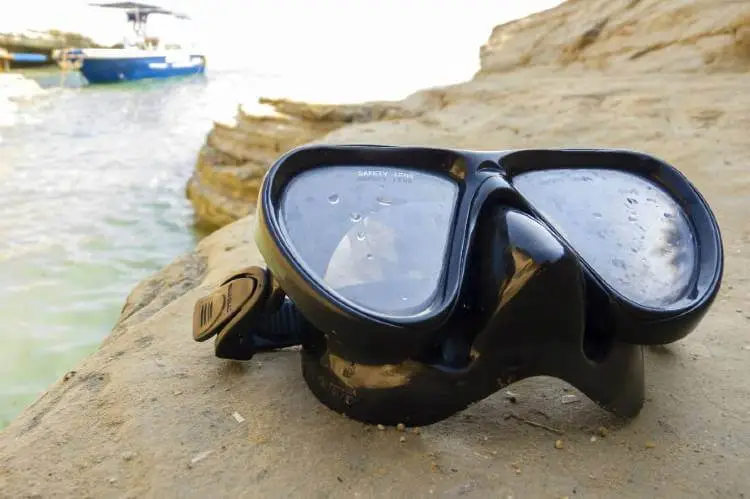
Water in your scuba mask can feel stressful the first time it happens underwater. Many new divers worry that a leaking or flooded mask means something is wrong. In reality, mask clearing is a normal scuba skill, and every certified diver learns how to do it.
The important thing is not to panic. Your mask helps you see, but it is not what lets you breathe. As long as your regulator is in your mouth, you can keep breathing calmly while you clear the water from your mask.
This guide explains how to clear your scuba mask underwater, why masks leak, what to do if your mask floods, and how beginners can stay calm while practicing this important skill.
Fast answer: To clear your scuba mask underwater, keep breathing through your regulator, press gently on the top of the mask, look slightly upward, and exhale through your nose. The air pushes water out from the bottom of the mask. If water remains, breathe normally and repeat the process calmly.
Why Learning to Clear Your Mask Matters
Your scuba mask is your window to the underwater world. It lets you see the reef, your guide, your buddy, your gauges, and your surroundings. But masks can leak, fog, or flood during a dive.
That does not need to ruin the dive. Mask clearing is one of the basic skills taught during scuba training because it helps divers stay calm and in control when water enters the mask.
For many beginners, the hardest part is not the technique itself. The hard part is staying relaxed while there is water around the eyes and nose. Once you understand that you can still breathe through your regulator, the skill becomes much easier.
Why Does a Scuba Mask Leak Underwater?
A scuba mask can leak for several simple reasons. Most leaks are not dangerous, but they can be annoying if you do not know how to handle them.
- Hair under the mask seal: Even a small piece of hair can break the seal and let water in.
- Mask strap too tight: A very tight strap can distort the silicone skirt and cause leaks.
- Poor mask fit: Not every mask fits every face shape.
- Facial hair: A mustache can make sealing more difficult.
- Smile lines or facial movement: Big smiles, talking, or moving the face can create small leaks.
- Looking down while clearing: If your head position is wrong, water may stay trapped in the mask.
A little water in the mask is normal. The goal is not to have a perfect mask forever. The goal is to know how to clear it without stress.
Can You Still Breathe If Your Mask Is Full of Water?
Yes. You breathe from your regulator, not from your mask. Even if your mask is partly or fully flooded, you can continue breathing through your mouth as long as your regulator stays in place.
This is the most important idea for nervous beginners. A flooded mask can feel uncomfortable, but it is not the same as being unable to breathe.
If water enters your mask, stop moving, keep the regulator in your mouth, breathe slowly, signal your instructor or guide if needed, and clear the mask step by step.
How to Clear a Partially Flooded Scuba Mask
A partially flooded mask means there is some water inside, but the mask is still on your face. This is the most common situation during a dive.
Step 1: Stay calm and keep breathing
Do not rush. Keep breathing through your regulator. A slow breath gives you time to think and prevents the feeling of panic.
Step 2: Press the top of the mask
Use one or two fingers to press gently on the top frame of your mask. This helps keep the upper seal in place so air can push water out through the bottom.
Step 3: Look slightly upward
Tilt your head slightly up. This helps the water collect near the lower part of the mask where it can escape.
Step 4: Exhale through your nose
Breathe out through your nose into the mask. The air you exhale pushes the water downward and out through the bottom edge of the mask.
Step 5: Repeat if needed
If some water remains, do not panic. Take another normal breath through your regulator and exhale through your nose again.
How to Clear a Fully Flooded Mask
A fully flooded mask means the mask is filled with water but still on your face. This can feel uncomfortable, but the technique is similar to clearing a partial flood.
First, stay calm and breathe through your regulator. Then press the top of the mask, look slightly upward, and exhale through your nose. You may need to repeat the process more than once to remove all the water.
Do not rip the mask off your face. Do not rush to the surface. A fully flooded mask is a training skill, not an emergency, as long as you keep breathing and follow the steps.
What If Your Mask Comes Off Underwater?
If your mask comes off underwater, keep breathing through your regulator and stay close to your instructor, guide, or buddy. You can put the mask back on, create the seal again, and clear it.
This skill is practiced during the PADI Open Water Course in Playa del Carmen, because certified divers need to be able to handle mask problems calmly.
For beginners, this may feel strange at first. That is why training starts in controlled water before open-water dives. You practice the skill step by step until it becomes less scary.
What If You Panic When Water Gets in Your Mask?
Many beginner divers feel nervous when water touches their eyes or nose underwater. That is normal. The solution is to slow everything down.
Use this simple process:
- Stop moving.
- Keep the regulator in your mouth.
- Breathe slowly through your mouth.
- Signal your instructor or guide.
- Clear the mask one step at a time.
Simple rule: Water in your mask does not stop you from breathing. Stay still, breathe through your regulator, signal if needed, and clear the mask calmly.
How Beginners Practice Mask Clearing
New divers do not need to master mask clearing alone. During Discover Scuba Diving in Playa del Carmen, your instructor explains basic skills and helps you feel comfortable before the ocean dive.
During a full Open Water Course, students practice mask clearing more thoroughly. You learn how to clear a partially flooded mask, fully flooded mask, and how to remove and replace the mask underwater.
The more you practice, the less stressful the skill feels. The goal is not just clear vision. The goal is confidence.
Common Mask Clearing Mistakes
Most mask-clearing problems come from rushing, forgetting to breathe, or using the wrong head position.
- Holding your breath: Keep breathing through your regulator before and after clearing.
- Looking down: Looking down can trap water inside the mask. Look slightly upward.
- Pressing the bottom of the mask: Press the top, not the bottom. Water needs to escape from the lower edge.
- Exhaling through the mouth: To clear the mask, the air must come from your nose.
- Over-tightening the strap: A very tight strap can make the mask leak more.
- Panicking over small leaks: A small amount of water is normal and easy to clear.
How to Prevent Your Mask From Leaking
You cannot prevent every leak, but you can reduce the chance of problems.
- Choose a mask that fits your face shape.
- Keep hair away from the mask seal.
- Do not over-tighten the mask strap.
- Check that the silicone skirt sits flat against your face.
- If you have a mustache, trim the area under the nose or use a small amount of mask seal product when appropriate.
- Ask your instructor or guide to check your mask fit before the dive.
At Xico Dive Center, our team can help you check whether your mask fit is likely to cause problems before you enter the water.
How to Stop Your Mask From Fogging
Fogging is different from flooding. A foggy mask happens when moisture collects on the lens and blocks your view.
To reduce fogging, use a suitable defog solution before the dive and rinse the mask lightly. Avoid touching the inside of the lens after applying defog. New masks may need special cleaning before use because factory residue can make them fog easily.
If your mask fogs during the dive, you may need to let a small amount of water in, rinse the lens, and clear the mask again. This is another reason mask-clearing confidence is useful.
Mask Clearing for Certified but Rusty Divers
If you are already certified but have not dived in a while, mask clearing may feel less automatic than before. That is normal. Skills fade when they are not practiced.
If you feel nervous about mask clearing, buoyancy, safety stops, equalizing, or basic emergency skills, the PADI ReActivate Refresher Course is a smart first step before joining more advanced dives.
A refresher is especially useful before cenotes, Cozumel, deeper dives, or multi-day dive plans.
Mask Clearing Before Reef Dives, Cenotes and Cozumel
Mask clearing matters on every dive, but it becomes even more important when the environment requires better control.
For reef diving in Playa del Carmen, you want to stay relaxed, keep good buoyancy, and enjoy the reef without worrying about small leaks.
For cenote diving near Playa del Carmen, calm skill control is even more important. Cenotes are not a place to panic, kick aggressively, or rush through a problem. Good buoyancy, trim, and calm breathing protect both the diver and the environment.
For Cozumel diving from Playa del Carmen, you should be comfortable handling small issues while drifting with the group. If mask clearing makes you nervous, tell your guide before the dive.
Should You Buy Your Own Mask?
If you dive or snorkel often, a personal mask can be one of the best pieces of gear to own. A mask that fits your face well can reduce leaks, improve comfort, and make diving more enjoyable.
But the most important thing is fit, not color, brand, or price. A comfortable mask with a good seal is better than an expensive mask that does not fit your face.
Xico Dive Center carries selected scuba and snorkeling essentials at the dive center. Availability changes depending on stock, so ask our team what masks and accessories are currently available when you visit.
Frequently Asked Questions About Clearing Your Scuba Mask
How do you clear a scuba mask underwater?
Press gently on the top of the mask, look slightly upward, and exhale through your nose. The air pushes water out from the bottom of the mask. Repeat if water remains.
Can I breathe if my mask is full of water?
Yes. You breathe through your regulator, not through your mask. Keep the regulator in your mouth, breathe calmly, and clear the mask step by step.
Why does my scuba mask keep leaking?
Common causes include hair under the seal, a poor-fitting mask, an over-tightened strap, facial hair, or movement in the face while diving.
Is mask clearing hard for beginners?
Mask clearing can feel uncomfortable at first, but the technique is simple with practice. Most beginners become more confident after practicing in controlled water with an instructor.
What should I do if I panic when water enters my mask?
Stop moving, keep breathing through your regulator, signal your instructor or guide, and clear the mask slowly. Do not rush to the surface.
Can contact lens users clear a mask?
Many divers use contact lenses, but you should close your eyes if you intentionally flood the mask during training. Ask your instructor for advice before practicing mask skills with contacts.
Do I need my own mask for scuba diving?
No, you can rent a mask, but owning a mask that fits your face well can improve comfort and reduce leaking if you dive or snorkel regularly.
Should I do a refresher if I forgot how to clear my mask?
Yes. If you are certified but not confident with mask clearing or other basic skills, a refresher is a smart choice before joining reef dives, cenotes, Cozumel, or advanced dive plans.
Final Thoughts: Mask Clearing Is About Calm Control
Clearing your scuba mask underwater is not only about removing water. It is about staying calm, breathing through your regulator, solving a small problem, and continuing the dive safely.
New divers often find this skill uncomfortable at first, but with patient instruction and practice, it becomes much easier. Certified divers should also keep the skill fresh, especially before cenotes, Cozumel, or longer dive trips.
If you are new to diving, Xico Dive Center can help you learn this skill step by step during Discover Scuba Diving or the Open Water Course. If you are already certified but rusty, a refresher can help you rebuild confidence before your next dives in Playa del Carmen.